Free NewsletterPro Login
S&P 500 6,287 +0.42%
DOW 44,521 -0.18%
NASDAQ 21,103 +0.71%
S&P 500 +12.4%
Briefs Finance Fund +24.8%
JOIN THE FUND →

Ford Embraces Sneaker-Drop Model to Grow Customization Profits

Published Jul 27, 2026
[tts_player]
Share:
Summary:
  • Ford is expanding its accessories and parts division to chase the $53 billion U.S. aftermarket.
  • The company plans exclusive, limited-run launches modeled on sneaker drops.
  • Offerings span exterior wraps and finishes through performance components.

The Sneaker Strategy Comes to Cars

Ford is growing its accessories and parts division to drive higher earnings and gain a larger share of the $53 billion U.S. aftermarket.

The automaker intends to expand its aftermarket offerings - covering everything from exterior finishes and wraps to performance components - and create exclusive product launches it likens to a "Nike shoe drop," with novel and limited-run models, said Matt Simpson, executive director of Ford Customization.

"Think like a 'Nike dropping a sneaker' is the vision," Simpson said to CNBC at the Michigan International Speedway racetrack. "We're significantly increasing our investment in this group to bring more choice and to engage customers in this aftersales."

The first "vehicle drop" from Ford Custom Garage happened on Monday, revealing a sunrise-themed Ford Bronco SUV. According to the automaker, it will manufacture 1,000 Broncos in the limited Desert Rising edition under the new Bronco Horizon Series. This $13,695 package raises the Bronco's total price to $57,350.

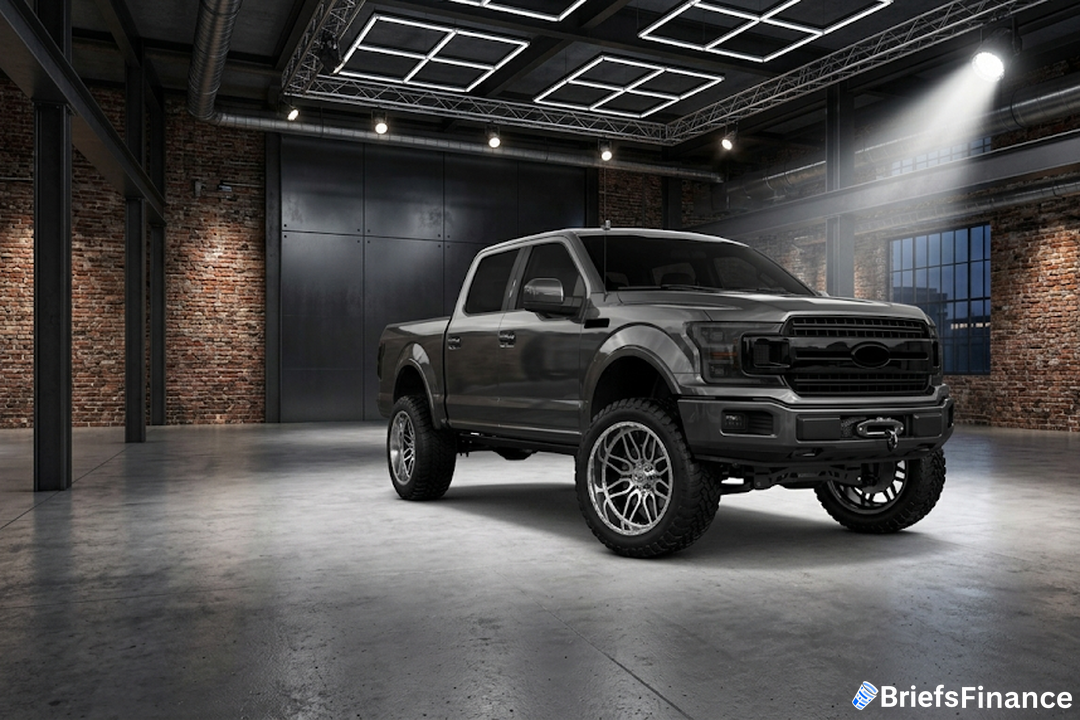
Ford Custom Garage also offers complete packages starting in the thousands, ranging from $16,000 to $18,000 for certain Mustang performance kits and close to $27,000 for a high-performance version of the F-150 pickup.

Get the market news that matters in a five-minute read with Market Briefs, our free daily newsletter

"It is a growth lever for us. It's been a good business for us. We think it can be significantly bigger, hence the investment," Simpson said.

These initiatives arrive as modern vehicles become more sophisticated, making it tougher for individual owners or shops not certified by the automaker to perform aftermarket modifications.

CEO Jim Farley has highlighted the aftermarket segment as a key growth area, emphasizing software services alongside conventional parts and accessories. Ford has stated it aims to expand its high-margin $15 billion software and physical services revenue - which incorporates customization - by 8% per year through 2030.

"We've never had a Ford showroom as prime for this as we have today," Simpson said. "Bronco, the Mustang, Maverick, the F-Series, this is the most passionate lineup of vehicles that Ford has ever had."

According to Ford, 46% of its U.S. new-vehicle purchasers modify their cars in some fashion, with Bronco owners at the top, followed by Mustang and pickup truck buyers. Simpson did not reveal precise growth targets for the customization unit, but noted that Ford wants to raise both the proportion of buyers selecting these packages and the amount they spend.

"The more that someone spends on accessories with us, the higher the loyalty is," Simpson said.

This loyalty-driven approach is key to Ford's strategy. By offering factory-backed customization, the automaker not only secures higher margins but also strengthens the customer relationship, making it less likely that owners will turn to independent modifiers. The limited Desert Rising Bronco, for instance, creates a sense of urgency and exclusivity, similar to Nike's sneaker drops.

American consumers invested $52.9 billion in vehicle accessories and upgrades in 2025, per the Specialty Equipment Market Association (SEMA). This aftermarket spending underscores the potential for Ford to capture a larger slice of a market that has historically been dominated by third-party vendors.

In contrast to adding parts after purchase, Ford integrates these customizations into the vehicle's warranty. Customers can also fold the expense of extra parts and packages into their monthly payments when buying or leasing a car, truck, or SUV.

"Even with declining sales and unaffordability squeeze, a lot of these accessories, especially the kind of basic, like I want to protect my vehicle, that's margin for the dealer to add in," Simpson said.

Join Market Briefs, our free daily newsletter, for a quick daily rundown of the markets
Disclosure

Recent News

1 2 3 42

Get Market Briefs delivered to your inbox every morning for free!

No fluff. No noise. No politics. Just finance news you can read in 5 minutes.

Blogs

June 29, 2026
Portfolio Diversification: Why Putting All Your Eggs in One Basket Destroys Wealth
  • Real diversification means spreading investments across all 11 economic sectors plus bonds, alternatives, and cash so no single bet can sink the portfolio.
  • Different sectors perform at different times, so a diversified portfolio captures upswings while smoothing the brutal drawdowns that wipe out concentrated bets.
  • Total market index funds offer the simplest path to diversification, and annual rebalancing is what keeps the structure working over time.
Read More
June 29, 2026
Non Taxable Income: What It Is and Why It Matters
  • Non taxable income is money you receive that you don't owe income tax on.
  • The tax code treats workers, investors, and business owners very differently, and investors often come out ahead.
  • Learning how income is taxed is a quiet superpower for keeping more of what you earn.
Read More
June 29, 2026
Semiconductor Stocks: A Simple Guide for Investors
  • Semiconductor stocks are companies that design and make computer chips, the brains inside nearly every modern device.
  • The AI boom has turned chips into one of the market's most important and most watched groups.
  • They offer big growth potential, but come with high valuations and a notoriously cyclical history.
Read More
June 25, 2026
How Stocks Work: A Simple Guide for Beginners
  • A stock is a slice of ownership in a company - buy one, and you own a piece of the business.
  • You make money two ways: the share price rising over time, and dividends paid to shareholders.
  • The simplest path for most beginners is buying into the whole market through a low-cost index fund.
Read More
June 25, 2026
Stop Loss vs Stop Limit: What's the Difference?
  • A stop loss order sells your stock once it hits a trigger price, prioritizing getting you out.
  • A stop limit order only sells within a price range you set, prioritizing price over a guaranteed exit.
  • The trade-off: a stop loss almost always executes; a stop limit might not if the price moves too fast.
Read More
June 25, 2026
Energy Stocks: A Simple Guide for Investors
  • Energy stocks are companies that produce and supply the power the world runs on, from oil and gas to newer sources.
  • They make up one of the 11 sectors of the market and tend to move with energy prices and big-picture shifts.
  • Like any sector, the key is diversification and understanding the forces driving demand.
Read More
June 18, 2026
What Is a Stop Loss Order? A Simple Guide
  • A stop loss order automatically sells a stock once it falls to a price you set.
  • It's a tool to cap losses or lock in gains without watching the market all day.
  • It works best for active strategies, and can backfire if used carelessly on long-term holdings.
Read More
June 18, 2026
Best S&P 500 Index Fund: How to Choose One
  • The best S&P 500 index fund for most investors is simply the cheapest, most established one that tracks the index well.
  • Funds like VOO, IVV, and SPY all hold the same 500 companies, so the biggest difference is the fee.
  • Pick one, automate your buys, and let time do the heavy lifting.
Read More
June 17, 2026
What Are Penny Stocks? Risks and Rewards Explained
  • Penny stocks are very low-priced shares of very small companies, often trading for just a few dollars or less.
  • They promise huge gains but carry huge risks: low liquidity, high failure rates, and wild price swings.
  • Most investors are better served by quality companies and funds than by chasing cheap shares.
Read More
June 17, 2026
Best Stocks for Beginners With Little Money
  • The best stocks for beginners with little money usually aren't individual stocks at all - they're low-cost index funds.
  • You can start with $100 or less and use small, regular investments to build wealth over time.
  • Focus on diversification and consistency, not on picking the next big winner.
Read More
1 2 3 24
Share via
Copy link












