Why factory-built housing is getting attention
When the number of homes falls short of the number of people who need them, prices climb. That supply gap is driving interest in assembly-line construction as a way to add units without sacrificing quality. The bipartisan 21st Century ROAD to Housing Act, now law, explicitly tries to nudge more factory-built homes into the pipeline.
Inside a modular factory
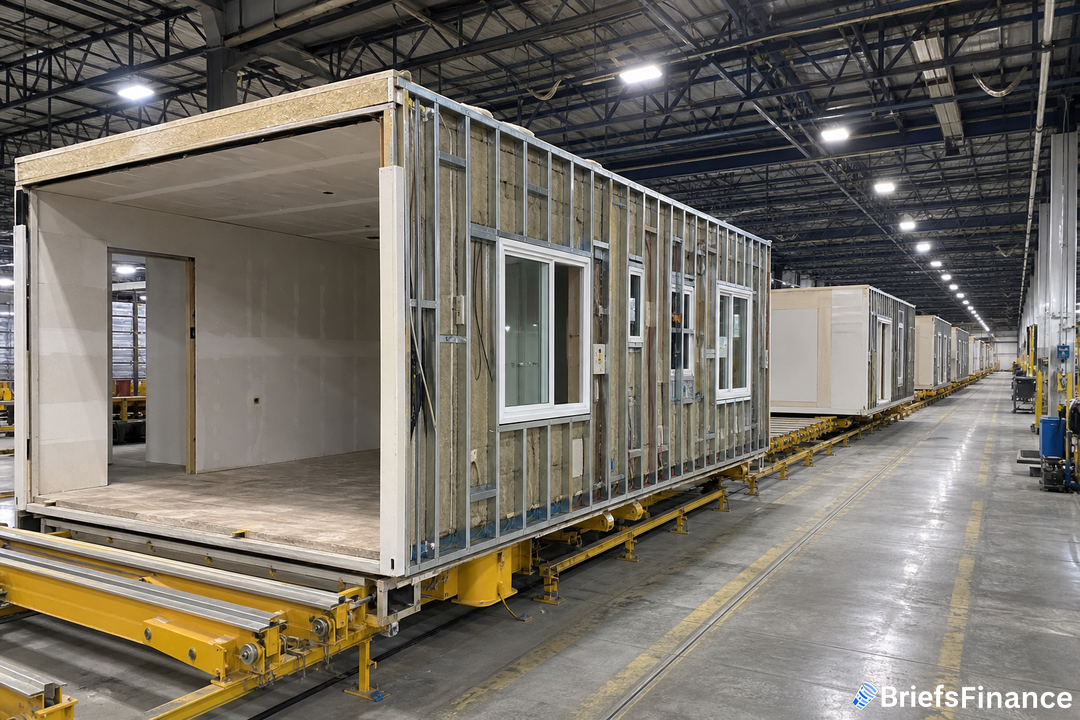
RISE Modular founder and CEO Christian Lawrence compares his product to "life-size Lego pieces." At a 150,000-square-foot facility in Owatonna, Minnesota - roughly an hour south of the Twin Cities - his crew turns out multifamily apartment modules. With modular, the structure takes shape in the plant and is later assembled on site under the local building code.
On the floor, wood-framed modules sit at different stages of completion, with openings for windows and doors. "We're building a three-dimensional, six-sided module that has all the finishes, kitchens, bathrooms finished, and then stacking these pieces like Legos," he said. "All the finishes are completed inside the factory before they arrive to the site." Pointing down a long run in the plant, he added, "This will be the corridor of the apartment building, and you can see units on either side of the corridor." Near the end of the line, he noted, "You can see the sink is in. We're about to install the plumbing fixtures, faucet, backsplash just got grouted," and "Appliances are in." RISE focuses on the Midwest and Rocky Mountains and is taking on more work along the West Coast.
Protecting your savings means staying thoughtful and adaptable as opportunities around you evolve. Join Briefs Finance CEO Jaspreet Singh on September 29th for a FREE live investor workshop, How to Profit From A Dollar That's Losing its Value, where he shows how we're spotting investment opportunities as the dollar falls. Save your spot.
What the new law does and how manufactured housing changes
Rachel Siegel, a senior officer with the Pew Charitable Trusts' Housing Policy Initiative, put the appeal simply: "You've got the efficiency of factory building, and that's true for manufactured housing and modular housing." Under the new federal housing law, HUD will be able to study how to expand modular development, such as assessing whether adopting a national building code tailored to modular housing would be beneficial.
Manufactured homes are a different category that are built and completed in factories to federal standards. For that segment, Siegel said the big shift in the law is eliminating the requirement that units include a permanent steel frame for transport. In her words, "That's going to allow manufactured homes to be built in more flexible designs, reduce waste, and lower the cost even a little bit more."
What this could mean for your portfolio
Speed and price are the draw here. Lawrence estimates factory construction typically finishes about 30% to 50% faster than building on site, produces less waste, and averages roughly 5% to 10% lower prices. None of this fixes the housing shortage overnight, but lowering costs and cutting build times is one practical way supply can start to catch demand.
A steady plan helps your wealth grow while weathering whatever changes lie ahead. Our CEO Jaspreet Singh is hosting a FREE live investor workshop, How to Profit From A Dollar That's Losing its Value, on September 29th. Sign up free to join him live.