The deal and the hardware
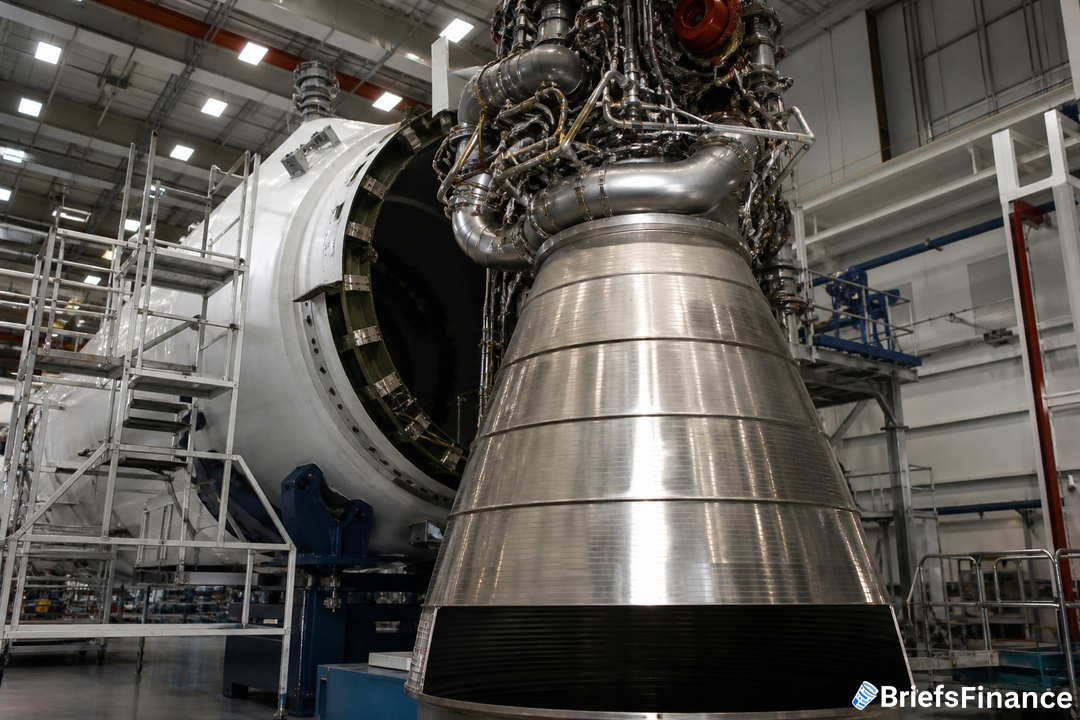
AST SpaceMobile said Friday it is developing an in-house rocket named Blacklift and has tapped Firefly Aerospace to provide the propulsion. The first tranche totals 36 engines and is valued at $1.3 billion.
Firefly's contribution includes 27 Miranda engines and nine Vira engines. The Miranda unit is being built for Firefly's forthcoming Eclipse rocket, and the Vira engine, also intended for Eclipse, is optimized for operation in space. Eclipse has not yet flown and is slated to debut by 2027. AST described Blacklift as reusable and expects it to be ready to begin launches in 2028.
Why AST says it matters for its satellites
AST expects Blacklift to deliver as many as five BlueBird satellites in a single mission. Those satellites are built to connect directly with ordinary smartphones from orbit, targeting global service on a path similar to SpaceX's Starlink mobile offering.
Owning a launcher would close a gap with SpaceX, which has used Falcon 9 to quickly expand Starlink to more than 11,000 satellites on orbit. To date, AST has launched only a small number of BlueBird satellites via SpaceX and via India's space agency, and it also holds agreements for missions on Blue Origin LLC's New Glenn. One AST mission on New Glenn in April ended up in the wrong orbit.
AST did not say whether Blacklift will be offered to third parties. The company framed the move as completing its push for end-to-end vertical integration and said it will keep buying outside launches through 2028 to continue building out its network.
When industries evolve, investors who learn the right tools gain a clear edge. We're hosting our first ever investor livestream on 11/17 to show you how to use ChatGPT and Claude to invest like a pro, hosted by Briefs Finance CEO Jaspreet Singh. Save your seat.
The industry picture and market reaction
Launch slots are tightening as SpaceX has signaled a shift away from Falcon 9 toward the larger Starship. Jefferies analysts wrote Friday that AST's move underscores the shrinking pool of Western launch capacity for constellations outside SpaceX, with Falcon reportedly not taking commercial bookings after 2028.
Falcon-class alternatives have struggled to scale. Blue Origin's New Glenn remains grounded after a May explosion destroyed much of its launchpad. The company said this week it aims to return to flight in January, after earlier indicating it would launch before year end. United Launch Alliance - the Boeing Co. and Lockheed Martin Corp. joint venture - has not flown Vulcan since a February launch anomaly, but it has a mission scheduled on Nov. 13 for Amazon.com Inc.'s satellite program.
The market responded quickly. By 10:55 a.m. New York time, AST was up roughly 4 percent and Firefly had climbed more than 20 percent. By Thursday's close, AST was down nearly 60 percent for 2026 and Firefly was off more than 30 percent.
What this means for your portfolio
In plain English: AST is trying to control more of its launch pipeline by building Blacklift and buying engines tied to Firefly's Eclipse, with first flights targeted around 2027 to 2028 for Eclipse and 2028 for Blacklift. The stock pop at 10:55 a.m. New York time came alongside a backdrop of limited non SpaceX launch options, as flagged by Jefferies. The timeline for Eclipse and Blacklift, plus broader launch availability after 2028, are the markers to track if you own or are watching AST or Firefly.
Exploring emerging technologies and smart strategies helps investors stay informed and prepared. On 11/17, our CEO Jaspreet Singh goes live for our first ever investor livestream on how to use ChatGPT and Claude to invest like a pro. Register to join him.