What changed
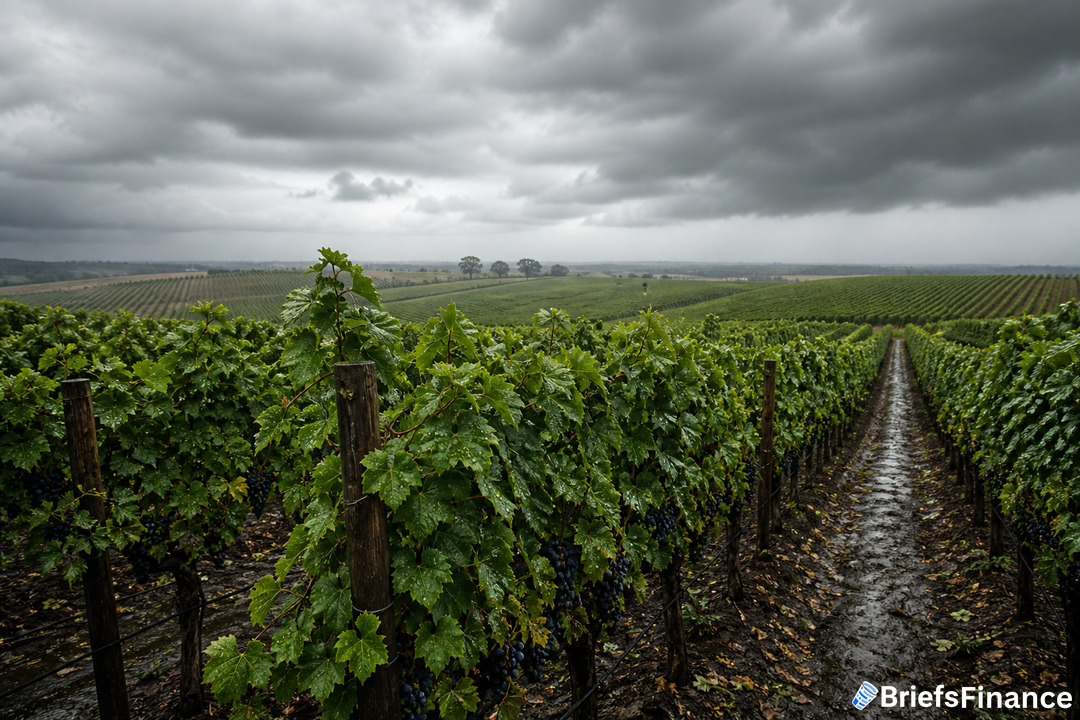
France's agriculture ministry, using first harvest declarations, nudged up its estimate for this year's wine output. Late-summer rain reduced drought stress enough to lift the projection to about 36.7 million hectoliters from October's 35 million. That puts output 3% above last year while remaining 10% below the five-year average.
Where the improvement came from
Better-than-expected yields in Languedoc-Roussillon and Charentes did most of the work, and those two regions produce about half of France's wine. The ministry also cited gains in Champagne and the southeast. Still, output has trended lower in recent years because vineyard area has shrunk and heat-and-drought episodes have cut yields.
Weather and supply shifts remind investors to watch signals and adapt their strategies. We're hosting our first ever investor livestream on 11/17 to show you how to use ChatGPT and Claude to invest like a pro, hosted by Briefs Finance CEO Jaspreet Singh. Save your seat.
The bigger picture and what it means for your portfolio
Extreme weather continues to damage French vineyards, and Champagne output is set to drop by almost half from 2025. The sector is also wrestling with weaker demand tied to changing drinking habits and a sluggish economy, while lower wine and spirits exports are dragging on France's food trade balance. The bottom line: a slightly larger harvest this year does not erase structural pressure on supply and sales, which can ripple through producers, distributors, and luxury names with Champagne exposure.
Fresh data and smarter tools can help investors find small advantages over time. On 11/17, our CEO Jaspreet Singh goes live for our first ever investor livestream on how to use ChatGPT and Claude to invest like a pro. Register to join him.