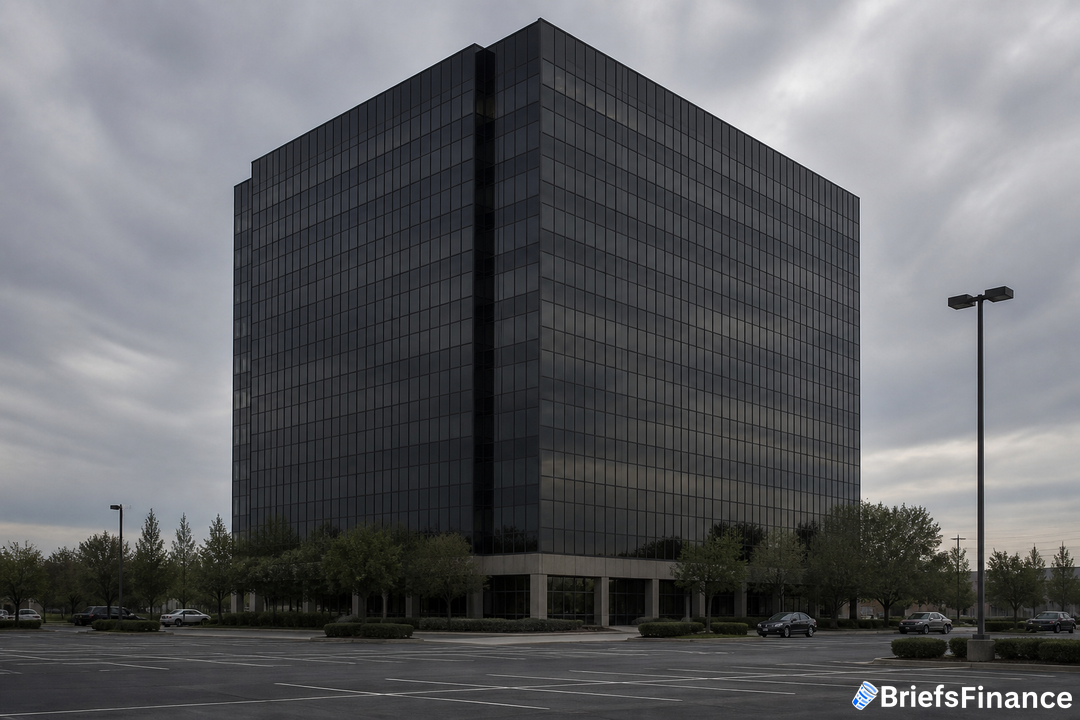
What happened at the Aon Center
If you've stared at Chicago's skyline, you know the Aon Center. Completed more than 50 years ago as the Standard Oil Building, the granite‑clad, 83‑story tower once ranked among the tallest anywhere and has hosted heavyweight names like Kraft Heinz, Jones Lang LaSalle and BP's Amoco.
601W Cos. bought the building for $712 million in 2015 and later refinanced, with $536 million of the debt landing in CMBS. After departures by major tenants in the tower and across the East Loop, the property was valued at $195 million in May. When the loan matured in July, 601W didn't pay it off and asked for a three‑year extension. The special servicer's answer: "unequivocally denied." The owner says it is now negotiating for another extension, and loan documents indicate any shorter arrangement would require the borrower "to make substantial upfront and ongoing capital investments."
JPMorgan ranks the Aon Center as the No. 3 U.S. office CMBS loan currently either in special servicing or over 60 days past due, behind New York's Worldwide Plaza and 230 Park Ave. Closer to home, tenant exits have rippled through the East Loop, with Kirkland & Ellis and Edelman relocating to newer buildings farther west. Nearby complexes such as Prudential Plaza and One and Two Illinois Center are also facing financial strain. CBRE pegs downtown Chicago's office vacancy rate at 27%.
The broader reset in office and CMBS
The post‑pandemic wager that time, lower rates and a return to the office would save the day is fading. Borrowing costs remain elevated, and with the Federal Reserve raising rates last week and hinting there could be more, easy fixes look scarce. Billions in property loans are maturing, and lenders' willingness to extend and pretend is wearing thin.
The stress is showing up most clearly in securities tied to offices. Trepp reports the U.S. office CMBS delinquency rate hit 12% last month, a level near records and above the aftermath of the 2008 crisis. In Chicago alone, almost $1.7 billion in office CMBS loans come due this year, and $1.45 billion of that is already delinquent. A Trepp chart notes its figures reflect loans in CMBS and cover performance through July 2026.
Across the country, roughly $64 billion in CMBS backed by offices is set to mature this year and next, and nearly $40 billion of it is already delinquent, in default, or on watchlists, according to Bloomberg. Polpo Capital Management's chief investment officer, Dan McNamara, said, "One of the scariest headlines is that office CMBS delinquencies are higher than after 2008," and added, "And it's going to go higher as we face more maturities."
While many CMBS investors have marked down positions, final losses can still surprise. Deutsche Bank notes that, so far this year, proceeds from distressed office sales have come in roughly 20% below recent appraisals, in part because extended workout fees erode recoveries. The flip side: lower prices are pulling buyers back to a market that had largely frozen.
Tough news about property underscores why steady diversification protects your financial future. Join Briefs Finance CEO Jaspreet Singh on September 29th for a FREE live investor workshop, How to Profit From A Dollar That's Losing its Value, where he shows how we're spotting investment opportunities as the dollar falls. Save your spot.
Cities are splitting: who has demand, who doesn't
Early in the pandemic, New York and San Francisco were the poster children for office pain. They still have plenty of troubled older buildings, but finance, legal and tech tenants are driving demand for new or revamped spaces near major transit. Colliers says that if today's momentum holds, Manhattan could log its strongest leasing year since 2000. San Francisco, despite one of the highest vacancy rates in the country, is getting a lift from an AI boom powered by hometown firms OpenAI and Anthropic.
Elsewhere, the strain is more stubborn. Capital Economics notes occupied space is growing in parts of Dallas, Atlanta and Miami as people and companies move in. On the flipside, vacancies continue to rise in Chicago, Los Angeles and Portland.
"Markets are made of neighborhoods and not all neighborhoods are created equal," said Barry DiRaimondo, CEO of SteelWave. No, I just wouldn't.
Denver shows how tough it can get. CBRE puts the city center's office vacancy at 39%, the highest among major U.S. downtowns. According to a debt filing, In July, Brookfield indicated plans to hand the property to its lender.
Kourtny Garrett, who leads the Downtown Denver Partnership, says values held up for a while, but reality is now coming through in appraisals and buyers are reappearing. She also credits Mayor Mike Johnston, elected in 2023, for clearing homeless encampments and speeding permits to convert outdated offices to housing.
What this means for your money
The split is clear: newer, well‑located towers are winning tenants, while older or out‑of‑the‑way buildings keep losing value. Borrowers are being pushed to choose between writing fresh checks or handing over the keys. For anyone with exposure through CMBS or real‑estate funds, the data points matter: a 12% office CMBS delinquency rate, distressed sale proceeds tracking about 20% below appraisals, and a heavy maturity wall with nearly $40 billion of office CMBS already in the danger zone. Add it up, and you're looking at a market where pricing is still resetting and outcomes depend heavily on location, quality and demand drivers in each city.
Long term investors benefit from calm habits that help preserve and grow savings. Our CEO Jaspreet Singh is hosting a FREE live investor workshop, How to Profit From A Dollar That's Losing its Value, on September 29th. Sign up free to join him live.