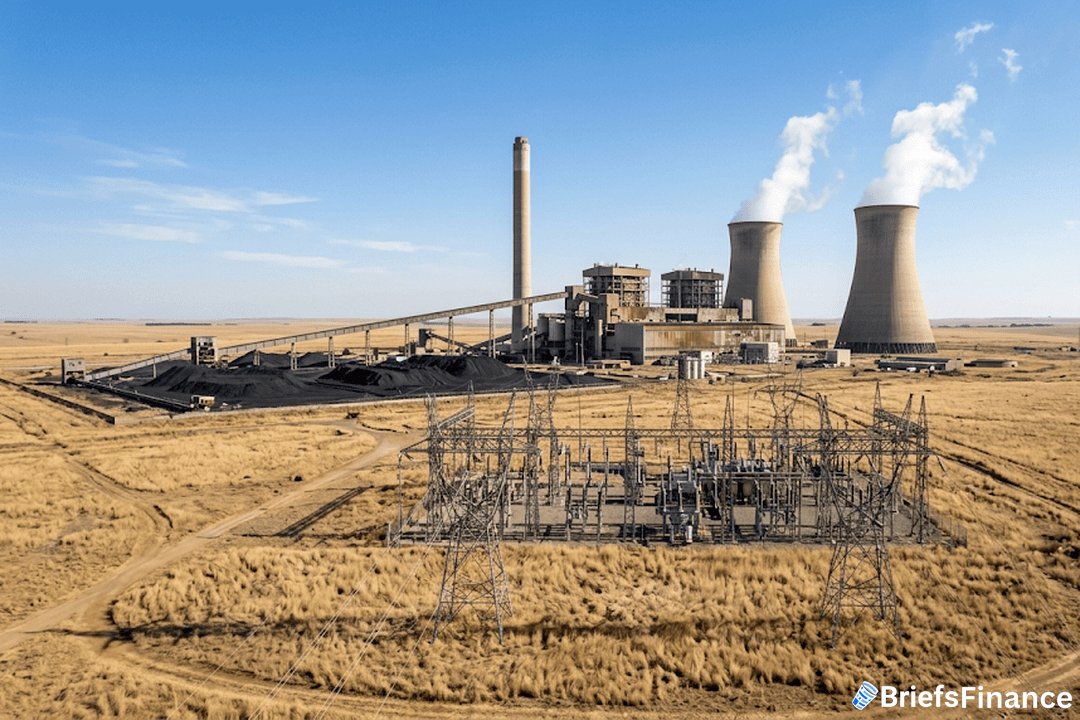
A Big Breakup Takes Shape
South Africa is moving ahead with a plan to break up Eskom, formally Eskom Holdings SOC Ltd., the government-owned electricity utility. The first step is to appoint transaction advisers who will negotiate with lenders on behalf of the government and Eskom.
Duncan Pieterse, director general of the National Treasury, said in Cape Town on Tuesday that the advisers will be hired in the coming weeks. Ramaphosa appointed Pieterse this year to lead the team charged with Eskom's restructuring.
The plan has presidential backing. The aim is to create an independent transmission system operator, often called a TSO, that sits outside Eskom. That structure is meant to give private companies a bigger role in the electricity market. Ramaphosa has endorsed that approach.
Pieterse said the immediate focus is hiring a transaction adviser.
Why the Grid Split Is Delicate
Eskom is the state-owned utility at the centre of South Africa's electricity supply. Because the government guarantees some of its debt, any restructuring can affect the national budget. The transmission business, which carries power from generators to customers, is the most profitable part of the company.
Get the free Always Be Buying eBook and learn the simple system for building wealth on any income
A standalone grid operator is intended to reassure private power producers that they can use the network on fair terms. At the same time, the plan must not strip Eskom of so much value that it cannot repay what it owes.
The Balancing Act
The transaction is complicated because the transmission business is Eskom's most profitable division. Taking it out could leave the rest of the utility weaker. That matters because the government guarantees some of Eskom's debt. If the utility's finances deteriorate, those guarantees could turn into a large bill for the state.
Pieterse insists that concern is built into the design of the deal. "The transaction is being carefully designed to ensure that Eskom is left no worse off, and that Eskom remains sustainable," he said. "The TSO itself also has to be sustainable."
He also acknowledged the need to keep bondholders involved. "There are ways of designing this transaction to achieve all of that," he said.
Eskom itself warned this week that the separation must be managed carefully. In the utility's view, putting the transmission operator into its own company would be a significant corporate event that makes its borrowing look riskier to creditors.
What It Means for Investors
The outcome matters beyond Eskom. Government guarantees tie the utility's borrowing to South Africa's budget. A messy breakup could strain the country's finances.
For bondholders, the main issue is whether they get a formal say. Asked whether the utility or the state would have to obtain bondholder approval for the separation, Pieterse did not say. He said the first step is hiring a transaction adviser.
His message to lenders was clear. "We have no interest in running a process where lenders are not brought along," he said.
Pieterse also said the process will be managed properly. The real test starts after the advisers are hired. By August 4, 2026, the shape of the deal and its effect on Eskom's debt should be clearer.
For investors with exposure to South African assets, the talks are worth watching. They provide a useful signal of how the government treats creditors who fund its state-owned companies. Can South Africa deliver a healthier grid without leaving Eskom unable to pay its debts? That is the question investors will be asking.
Download the free Always Be Buying eBook and start putting your money to work today