Free NewsletterPro Login

Free Live Investors Workshop

Seats limited

Tue, Sep 29.

The dollar is losing value.

Here’s how investors can still profit.

Hosted By

Jaspreet Singh

Founder, Briefs Finance

X

Warning: Undefined variable $stocks in /var/www/briefs.co/htdocs/wp-content/plugins/oxygen/component-framework/components/classes/code-block.class.php(133) : eval()'d code on line 448

Warning: foreach() argument must be of type array|object, null given in /var/www/briefs.co/htdocs/wp-content/plugins/oxygen/component-framework/components/classes/code-block.class.php(133) : eval()'d code on line 448

Warning: Undefined variable $funds in /var/www/briefs.co/htdocs/wp-content/plugins/oxygen/component-framework/components/classes/code-block.class.php(133) : eval()'d code on line 472

Warning: foreach() argument must be of type array|object, null given in /var/www/briefs.co/htdocs/wp-content/plugins/oxygen/component-framework/components/classes/code-block.class.php(133) : eval()'d code on line 472
/* the link was here */

Duluth-Superior Ship Traffic Slides as Coal Terminal Shuts; Tariffs Rattle Cross-Border Ties

Published Sep 19, 2026
Share:
Summary:
  • The American Century, a 1,000-foot laker built in 1981, still draws a crowd in Duluth-Superior as it loads Minnesota iron ore, nearly half a century into its Great Lakes career.
  • Through August, total ship calls at Duluth-Superior fell 23% from a year earlier, with U.S.-flag visits down about 19% and Canadian arrivals off 37%; domestic iron ore shipments sit 40% under the 2025 rate.
  • Coal totaled 4.7 million tons in 2025 but is on track for only 500,000 tons this year, the weakest since 1973; a coal terminal closure and thinner northbound iron ore have weighed on overall vessel traffic.

A fan-favorite freighter and a shifting Lakes economy

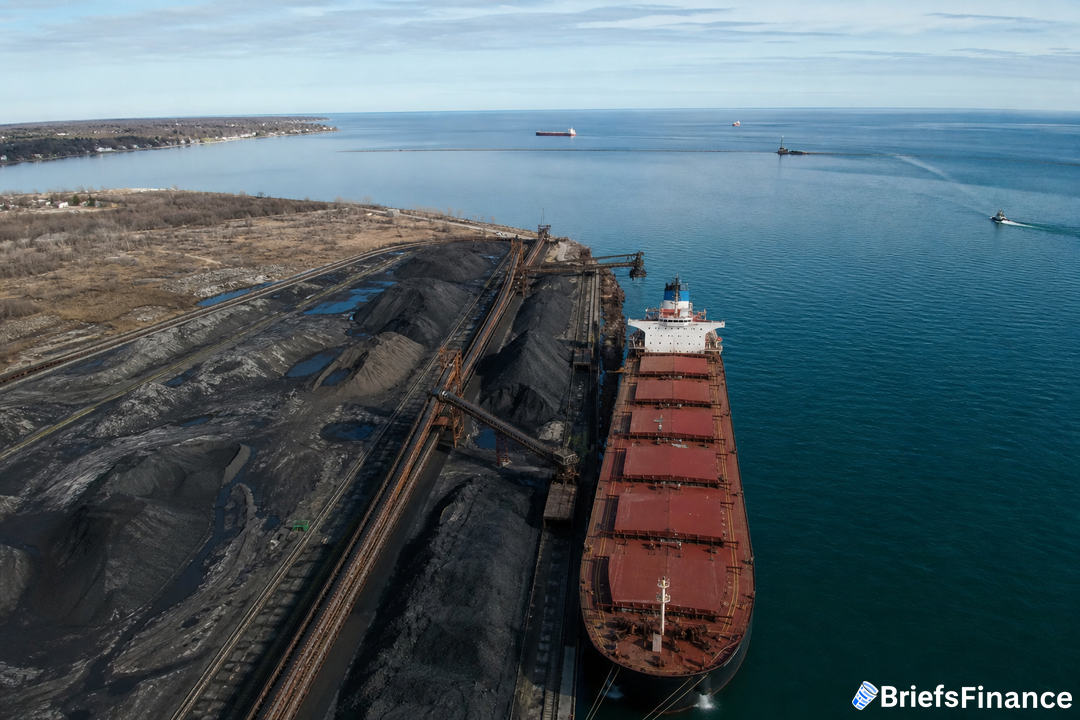
When the American Century glides into Duluth-Superior to take on Minnesota iron ore, it turns into a mini waterfront event: fog horn, cheering kids, and a running history lesson over the PA about a ship that has worked the Lakes for nearly 50 years. The 1,000-footer, built in 1981 in Sturgeon Bay, Wisconsin, runs on four General Motors diesel engines whose combined output tops that of a dozen Formula 1 cars, and it set coal payload records in the 1990s. Today it sails under American Steamship Co., part of Mainstay Maritime in Williamsville, New York, with roots back to a 1907 founding in Buffalo.

Pride aside, the fortunes of these aging lakers have for decades been yoked to a cross-border economy closely synchronized with Canada. Coal has slumped, U.S. tariffs have scrambled iron-ore trade, and a fresh rift between Ottawa and Washington now hangs over supply chains built for frictionless commerce. Kevin Beardsley of the Duluth Seaway Port Authority, where he serves as executive director, said, "Hope isn't a strategy, but we would expect that this trade war comes to an end at some point and we can get back to regular business." "Canada is looking at different supply chains and that type of thing, and that is a risk the longer this goes on."

The numbers in Duluth-Superior

Messages from the top have been mixed. In Ireland last weekend, President Donald Trump said there could be a deal with Canada "fairly soon," and when asked this week about Ottawa's outreach to the European Union, he issued fresh threats. Prime Minister Mark Carney told Bloomberg News on Monday that Canada is "ready to sit down" for talks.

On the docks, activity is down. By August, vessel traffic at Duluth-Superior was off 23% year over year, per port data. U.S.-flag calls fell about 19% and Canadian arrivals sank 37%.

Coal shipped 4.7 million tons in 2025 and is on pace for only 500,000 tons this year, the lowest since 1973. From Duluth-Superior, domestic iron ore shipments are 40% under the 2025 pace.

While the broad decline is blamed mostly on a coal terminal closure, there is also less iron ore moving north. The ore is mined near Duluth in the country's richest iron ranges and hauled across the Lakes, with the bulk now destined for mills in Ohio or Indiana. Canada's steel sector has taken substantial damage from Trump's tariffs on steel.

Zoom out and the stakes get clearer. By tonnage, Duluth-Superior is the largest Great Lakes port and anchors the western terminus of a 2,300-mile corridor that encompasses the St. Lawrence Seaway and a system of locks. Roughly two-fifths of the U.S.-Canada border runs across water, and about 200 million tons of bulk cargo traverse the Great Lakes and Seaway annually, including coal and grain, along with iron ore and limestone, plus salt, sand, and stone. As a yardstick, U.S. railroads move around 1.5 billion tons annually.

When trade routes shift, investors benefit from steady plans to protect and grow. Join Briefs Finance CEO Jaspreet Singh on September 29th for a FREE live investor workshop, How to Profit From A Dollar That's Losing its Value, where he shows how we're spotting investment opportunities as the dollar falls. Save your spot.

Built together, strained together

The Lakes economy is deeply intertwined. Ian Hamilton, president and CEO of the Hamilton-Oshawa Port Authority near Toronto, said the region's total output amounts to $6 trillion for the area. He added, "Over decades and decades of time, the Great Lakes, the states and the provinces have become a hugely integrated - the third-largest economy in the world if it was a country." Lately, U.S. counterparts are "all kind of scratching their heads going, 'Why are we disrupting this integrated market?'" he said, adding, "We've crossed the borders to drink in each other's bars and eat other's food and vacation at each other's properties."

Among its diversification moves, HOPA is working with Sault Ste. Marie, Ontario, on a proposed new port and on road and rail links to connect Canada's resource-heavy regions with domestic buyers and overseas trade. The U.S. could probably get by with less Canadian trade, Hamilton said, but he also warned, "I certainly appreciate that the United States could probably survive on less trade with Canada, but I also think that ultimately drives up the costs for everybody."

Operationally, the Great Lakes-Seaway is jointly managed: Canada runs 13 locks and the U.S. oversees two. In a late August speech, Unifor national president Lana Payne credited Canadians with building the seaway, while historian Ron Stagg noted that the major 1950s upgrades became a joint project after initial U.S. reluctance. As plans advanced, Canadian officials told Washington that if it didn't want to participate, Canada would proceed alone, Stagg said, and the U.S. then decided to take part.

Politics around the waterways can get quirky. A social media push urged Canadians to declare sovereignty over the "Strait of Our Moose," a tongue-in-cheek nod to the Welland Canal on the Canadian side that connects Lake Erie and Lake Ontario, and took a swipe at how Trump has yet to restore trade flows via the Strait of Hormuz in the U.S. war with Iran. For all the bluster, there is an old backstop: the 1871 Treaty of Washington says navigation on the St. Lawrence River "shall forever remain free and open for the purposes of commerce to the citizens of the United States."

The quieter fight over who carries the cargo

Tensions in Great Lakes shipping predate the latest tariff volleys. Jim Weakley, president of the Lake Carriers' Association in Westlake, Ohio, declined to comment on the dispute itself, saying it "has not impacted binational maritime trade on the Great Lakes." He pointed to long-term contracts and a thin spot market as reasons.

In a position paper, Weakley argued that "Canada has flagging laws, regulations and practices that endanger the economic viability, efficiency and service reliability of the US-flagged Great Lakes fleet's binational trade that also has resulted in the shrinking of the US-flagged Great Lakes fleet." The paper says the result "has created a Canadian monopoly on the binational Great Lakes trade," and lists grievances, including support for "the growth of the Chinese shipping building empire and receiving ships that have been subsidized by the Chinese government."

"It's difficult to find a shipyard that's willing to build a laker vessel," said Jason Card, the vice president of external affairs for the Ottawa-based binational Chamber of Marine Commerce.

Local disruptions remind us that a long term focus helps safeguard your savings. Our CEO Jaspreet Singh is hosting a FREE live investor workshop, How to Profit From A Dollar That's Losing its Value, on September 29th. Sign up free to join him live.

Disclosure

Recent News

1 2 3 80

Get Market Briefs delivered to your inbox every morning for free!

No fluff. No noise. No politics. Just finance news you can read in 5 minutes.

Blogs

September 18, 2026
Kevin Warsh Just Defied Trump: What the Fed Rate Hike Means for Your Money
  • The Fed raised rates for the first time since 2023 in a unanimous vote led by Kevin Warsh, the chairman President Trump appointed to cut them.
  • Higher rates make the $40 trillion national debt, business loan resets and mortgages more expensive, but they strengthen the dollar and pay investors holding cash.
  • The war with Iran is pushing up oil, grocery and chip prices, another hike is likely in 2026, and recession talk is about to get louder.
Read More
September 17, 2026
Why America Bailed Out the Yen: The Japan Carry Trade, the Dollar and Your Mortgage Rate
  • In July 2026 the US sent money to steady the yen because Japan is the largest foreign owner of US debt, and Washington needs Japan to keep lending.
  • For decades the Japan carry trade let Wall Street borrow yen at essentially 0% and pour it into US stocks, real estate and Treasuries, and rising Japanese rates are shutting that off.
  • A weaker yen means fewer buyers for the dollar and for US debt, which pushes Treasury rates up and drags mortgage, car loan and credit card rates up with them.
Read More
September 16, 2026
Treasury Yields Are Spiking Because Lenders Are Backing Away From U.S. Debt
  • The U.S. is paying its highest 30-year borrowing rate in about two decades because its biggest lenders, the Fed, foreign governments, and banks, are all pulling back from Treasuries.
  • Every mortgage, car loan, credit card, and business loan is priced off the 10-year Treasury yield, so when Washington pays more to borrow, so do you.
  • With about $40 trillion of debt against a $32 trillion economy, the country either outgrows its debt or slides into a doom loop, and investors need a plan for both.
Read More
September 15, 2026
Fiat Currency Runs on Trust, and the World Just Stopped Trusting the Dollar
  • Gold has overtaken US treasuries as the world's top reserve asset, and central banks are now buying less US debt and more gold.
  • The US dollar is a fiat currency, meaning it's backed by a promise rather than gold, so it loses value when fewer countries want to hold it.
  • Whether the US economy or its national debt grows faster from here decides which assets stand to benefit next.
Read More
September 14, 2026
Why RAM Prices Are Soaring - and Where the Money Is Moving
  • Memory chips - the RAM inside phones, laptops, fridges, and trucks - are in a shortage Tim Cook called a 100-year flood, and some memory prices have climbed about 90% in a single quarter.
  • Four forces hit at once: AI demand, a production shutdown in 2023, build times that push any fix to 2028 at the earliest, and a bombed helium plant in Qatar.
  • The last two supply shocks ended in aggressive Fed rate hikes and market drops of around 45% and 20%, and this time Washington is spending heavily to bring memory production home.
Read More
September 11, 2026
How Is the Economy Doing? Washington Says It's Fixed, but the Numbers Don't Agree
  • Treasury Secretary Scott Bessent says the economy is fixed because lower earners' incomes are now rising faster than top earners'.
  • The Atlanta Fed and Bank of America show different numbers, and Hilton, Marriott, and McDonald's can't agree on what they're seeing either.
  • Whichever side is right, the economy is built to make investors rich, and inflation is how it does it.
Read More
September 10, 2026
US National Debt Hits $40 Trillion: Why the Economy Hasn't Collapsed Yet
  • The US national debt crossed $40 trillion in 2026 and is growing faster than the economy. The debt to GDP ratio now sits at 125%, the highest outside the pandemic and higher than World War II.
  • On September 9, 2026, Treasury Secretary Scott Bessent rolled out an emergency plan for the government to lend money to itself. Ray Dalio now says the dollar has roughly three years before real pain.
  • Empires rarely default. They debase. Since 1971, median household income grew about 8x while houses grew 17x and the S&P 500 grew 360x, so investors got richer while workers fell behind.
Read More
September 9, 2026
Your 401k Is Fueling the AI Bubble
  • About $10 trillion of 401k money sits in a $77 trillion stock market, mostly through target date funds and S&P 500 funds. Roughly 30% of every S&P 500 dollar lands in five AI-heavy tech stocks.
  • Four bubble signals run hotter today than before the 2000 crash: top-ten concentration, tech's share of the index, the Buffett Indicator, and how much of the market index funds own.
  • You only lock in an AI bubble loss if you sell. The 2022, 2020, 2008, and 2000 crashes were all buying windows for long-term investors, and the US-China AI race means government money could keep flowing in.
Read More
September 9, 2026
What Is Wealth Preservation? How To Protect Your Money From Anything
  • Wealth preservation is an investing strategy built around keeping the money you've already made instead of chasing growth.
  • It leans on assets that hold steady when markets fall - gold, Treasury bonds, and companies that keep earning through wars, crashes, and pandemics.
  • The tradeoff is real: you give up some upside, and the two key numbers to check are maximum drawdown and correlation to the market.
Read More
September 8, 2026
Why Is Everything So Expensive? Why Prices May Never Come Back Down
  • Official inflation is 3.4% and prices are up 32% since 2020, but rent (41%), gas (47%), car insurance (64%) and ground beef (79%) all outran the 28% median wage.
  • The Federal Reserve targets 2% inflation on purpose. Rising prices push extra dollars to investors and shrink the real cost of a $40 trillion national debt.
  • Investors who simply owned the S&P 500 gained about 150% over the same six years, and the Fed's September 16 decision will show whether it protects the dollar or the economy first.
Read More
1 2 3 27
Share via
Copy link











