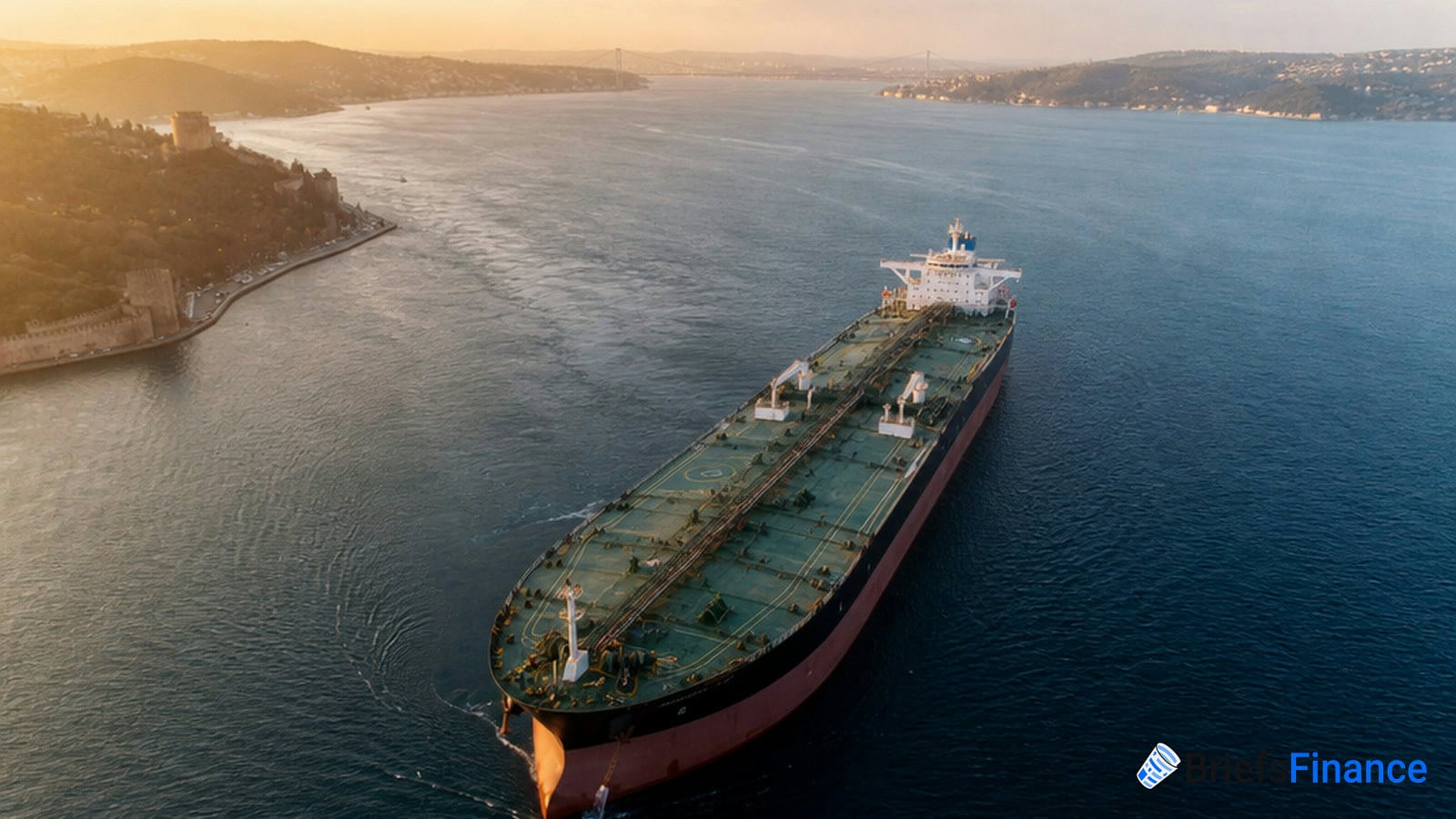
Saudi shipping giant Bahri sat out the entire war. Its supertankers stayed parked inside the Persian Gulf for months while riskier owners ran the strait with their signals off.
On Thursday, three Bahri ships turned on their signals and sailed out.
Bahri's largest shareholder is Saudi Arabia's sovereign wealth fund (PIF, which holds roughly 22%), so its decision to put ships back in the water is being read as Riyadh's vote of confidence in the deal.
Eight Million Barrels On The Move
Four supertankers loaded with roughly 8 million barrels are either past the Strait of Hormuz or moving through it, with three Saudi-owned and the fourth carrying crude from the UAE.
Qatar sent a liquefied natural gas (LNG) cargo through with its tracker on, and a second LNG ship turned up at a Qatari berth Thursday morning.
A Chinese fuel tanker also crossed in the open, while five Iran-linked vessels entered the strait, with several (including two supertankers) sailing with their signals on.
This is one of the biggest days Hormuz has seen since the conflict shut traffic down in early March, when Iran mined the strait and tanker owners pulled back.
Every weekday morning, Market Briefs breaks down what shifts like this mean for energy markets in five minutes - plus you get a free 45-minute investing masterclass when you sign up.
The 30-Day Test
The movement follows an interim US-Iran peace deal that runs for 60 days, under which the strait is supposed to reopen with no tolls and Iran has agreed to bring traffic back to prewar levels within 30 days.
Washington also agreed to lift its blockade of Iranian oil ports.
Over 100 tankers have been stranded inside the Gulf, and if owners start sending empty ships back in to load new cargoes, gulf producers can finally restart output that's been frozen since March.
About a quarter of the world's seaborne oil trade moves through Hormuz on a normal day (roughly a fifth of global oil consumption), which is why even a partial reopening matters for global energy markets.
Saudi Arabia, normally the world's biggest crude exporter, has kept shipments going through a pipeline to the Red Sea.
The catch: most ships heading out are clearing old cargo that was already loaded when the war started, and brokers say almost no new bookings have come in yet.
Worth Noting
The middle of the strait is still mined, and shipowner group Bimco says only the inshore lanes along Iran and Oman are clear.
Intertanko, the top trade group for tanker owners, wants a system to manage traffic before anyone calls this normal.
Lloyd's Market Association warned on Thursday that the deal alone doesn't give insurers enough certainty to flip the switch. Their estimate for when international shipping looks normal again: months, not days.
The Joint Maritime Information Center has already dropped its Hormuz threat level from severe to substantial.
Bahri's three tankers say the appetite is there, but the mines say not yet.
If you want this kind of read every morning, join 350,000+ investors reading Market Briefs - delivered daily, with a free masterclass on finding investments thrown in as a bonus.