Free NewsletterPro Login

Gold Falls 1.7% on Fed Hike Bets and US-Iran Peace Deal

Published Jun 18, 2026
Share:
Summary:
  • Gold fell 1.7% Wednesday to near $4,295 an ounce, its worst session in weeks, before a small 0.1% bounce in Thursday trading.
  • The Fed dropped forward guidance on rate cuts and futures are now fully pricing in a rate hike by October, putting direct pressure on non-yielding assets like gold.
  • A US-Iran interim peace deal signed Wednesday reduced safe-haven demand and could cool oil prices, weakening another key pillar that had driven gold higher this year.

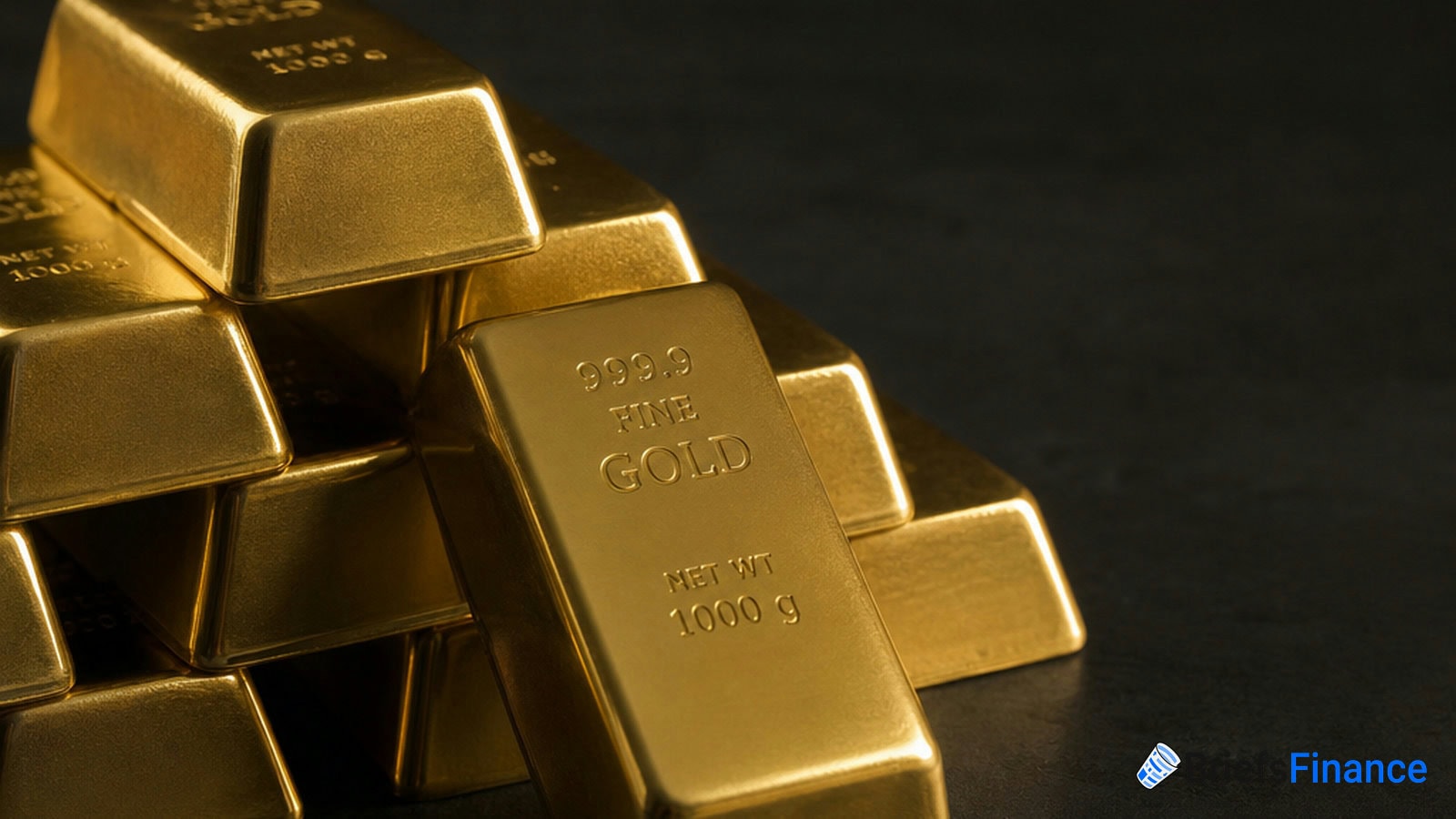
Gold just had its worst session in weeks, dropping 1.7% on Wednesday after two pieces of news landed at once: a U.S.-Iran peace deal and a Fed signaling higher rates by October.

Both work against gold for different reasons, and the metal is now sitting near $4,295 an ounce after a small 0.1% bounce in Thursday trading.

Gold had been on a record-setting run earlier in the year, with investors piling in to hedge inflation, war risk, and Fed rate cuts. Wednesday's drop knocked out two of those three pillars in a single afternoon.

The Fed Dropped Forward Guidance

The Fed held rates steady on Wednesday, which was widely expected. What surprised traders was the language change in the statement.

The central bank dropped a line about future rate adjustments and swapped in new wording about delivering price stability. The message: the Fed is done cutting, and the next move is probably up.

Futures are now fully pricing in a rate hike by October, sending bond yields higher and putting fresh pressure on gold.

Higher rates are a real problem for gold because gold doesn't pay interest, but bonds and savings accounts do. When rates rise, holding a metal that just sits there gets more expensive than parking cash somewhere that actually pays you.

The Fed is the story driving every market right now. Market Briefs breaks down what moves like this mean for your money in five minutes every weekday morning - and you get a free 45-minute investing masterclass when you join.

The Peace Deal Cut Demand for Safe Havens

The U.S. and Iran signed an interim peace agreement electronically on Wednesday evening, which should take some pressure off the energy spike that's been pushing inflation - and rate hike bets - higher.

Less war means less fear, which means less demand for gold as a safe haven.

Lower oil prices would also cool inflation, making the Fed's job easier and weakening one of gold's biggest tailwinds of the past year.

But there's a catch: it's still unclear whether the Strait of Hormuz has actually reopened, or how fast fuel prices can come down once it does.

Ryan Mckay, senior commodity strategist at TD Securities, said in a note that the rate hike was "already baked in" for gold even before Wednesday's Fed decision. His bigger-picture read: the tilt for precious metals is bearish, and only a real shift in the Fed outlook would change that.

What To Watch

The Strait of Hormuz is the next read. If transits return to pre-war levels quickly, oil falls, inflation cools, and the pressure on gold builds.

Silver moved with gold, dropping 3% on Wednesday before bouncing 1.2% to $68.75 an ounce. Platinum and palladium followed the same path with modest gains in Thursday trading.

The next Fed meeting is July 28-29, and traders will be watching every speech between now and then for confirmation the central bank really has shifted.

Both stories pushed the same direction, and gold got the bill.

If you want this kind of read on the market every morning, join 350,000+ investors reading Market Briefs - delivered every weekday, with a 45-minute investing course thrown in as a bonus.

Disclosure

Get Market Briefs delivered to your inbox every morning for free!

No fluff. No noise. No politics. Just finance news you can read in 5 minutes.

Blogs

June 17, 2026
What Are Penny Stocks? Risks and Rewards Explained
  • Penny stocks are very low-priced shares of very small companies, often trading for just a few dollars or less.
  • They promise huge gains but carry huge risks: low liquidity, high failure rates, and wild price swings.
  • Most investors are better served by quality companies and funds than by chasing cheap shares.
Read More
June 17, 2026
Best Stocks for Beginners With Little Money
  • The best stocks for beginners with little money usually aren't individual stocks at all - they're low-cost index funds.
  • You can start with $100 or less and use small, regular investments to build wealth over time.
  • Focus on diversification and consistency, not on picking the next big winner.
Read More
June 16, 2026
Tech Stocks: A Simple Guide for New Investors
  • Tech stocks are companies in the information technology and related sectors, from software to chips to the internet giants.
  • They've driven much of the market's growth, but they can be volatile and richly valued.
  • The smart approach is to understand what you own and not let one sector run your whole portfolio.
Read More
June 16, 2026
What Is a Joint Stock Company? A Simple Guide
  • A joint stock company is a business owned by many people, each holding shares of stock that represent a slice of ownership.
  • It's the basic idea behind every public company you can buy on the stock market today.
  • Owning a share makes you a part-owner, entitled to a piece of the profits and growth.
Read More
June 16, 2026
Capital Gains Tax in California: A Simple Guide
  • Capital gains tax is what you owe when you sell an investment for more than you paid for it.
  • How long you held it matters: long-term gains are taxed more gently than short-term gains at the federal level.
  • Smart investors lower the bill with tools like tax-loss harvesting and holding for the long run.
Read More
June 15, 2026
Top Covered Call ETFs: How to Compare Them
  • Top covered call ETFs are income funds that own stocks and sell call options against them to generate steady cash.
  • The best one for you is the fund whose income, holdings, and fees fit your goals, not simply the one with the flashiest yield.
  • They all share one trade-off: more income today, less upside in a big rally.
Read More
June 15, 2026
What Are Stock Options? A Plain-English Guide
  • Stock options are contracts that give you the right, but not the obligation, to buy or sell a stock at a set price by a set date.
  • There are two kinds: calls (the right to buy) and puts (the right to sell).
  • Options can multiply gains or wipe out your money fast, so they suit investors who already know the basics.
Read More
June 15, 2026
EBITDA Margin: What It Is and How to Calculate It
  • EBITDA margin measures how much core profit a company keeps from each dollar of sales, before interest, taxes, and accounting deductions.
  • The formula is EBITDA divided by revenue, shown as a percent.
  • A higher, steadier EBITDA margin usually signals a more efficient, more durable business.
Read More
June 15, 2026
What Is Taxable Income? A Simple Guide for Investors
  • Taxable income is the portion of your money the government can tax after deductions are applied.
  • Not all income is taxed the same: job income, investment income, and passive income face different rates.
  • Investors and business owners get more tools to legally lower their taxable income, which is a big edge over time.
Read More
June 15, 2026
What Is a Covered Call? How the Strategy Works
  • A covered call is an options strategy where you own a stock and sell someone the right to buy it from you at a higher price.
  • You collect cash, called the premium, up front, and keep it no matter what happens.
  • The trade-off: if the stock soars, your shares get sold at the set price and you miss the extra upside.
Read More
1 2 3 23
Share via
Copy link











