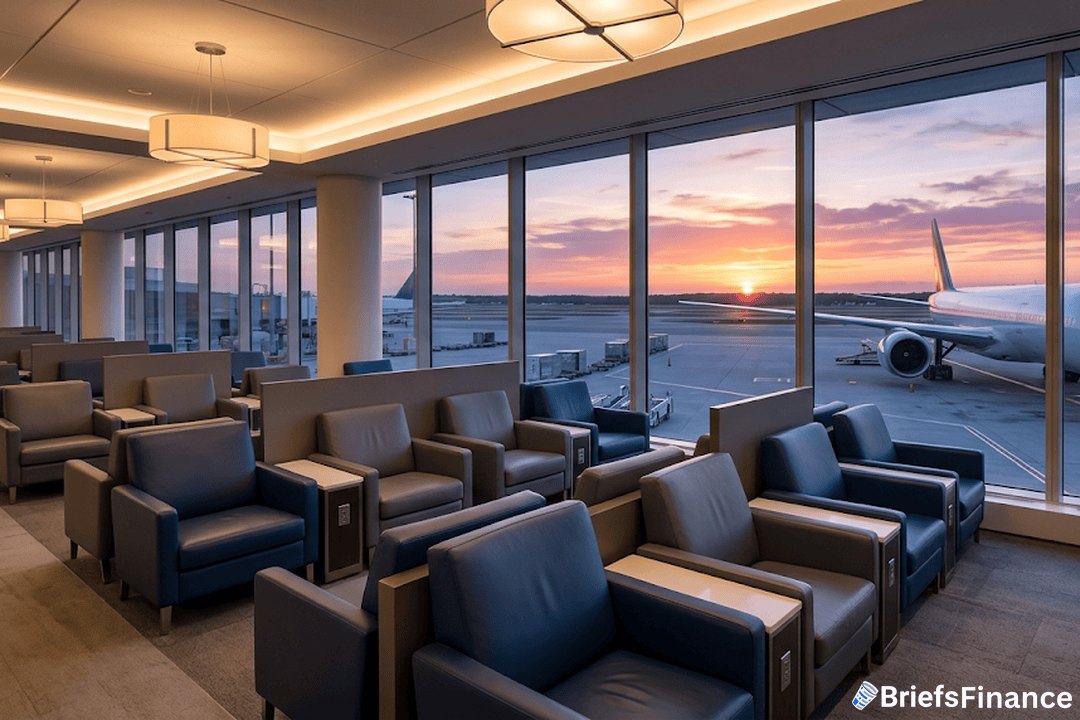
A New Kind of Business-Class Fare
For years, airlines have made economy tickets less costly and more restrictive. The same playbook is now reaching the premium cabin.
Last month Delta added restricted premium-cabin fares on select routes, following United's lead. It is the same concept as basic economy, the stripped-down coach ticket, applied to premium seats. Lufthansa and Etihad already offer bare-bones basic business fares.
United calls its business-class cabin on long flights Polaris. The cheapest Polaris fare still includes the lie-flat seat, but you lose lounge access, pay extra for seat selection, cannot change the ticket, and can only cancel with a fee.
United posted three fare tiers for a round trip between Newark and London Heathrow, with the outbound flight on Oct. 1 and the return on Oct. 8:
- The base Polaris fare cost $4,490.
- The standard fare cost $4,890.
- The flexible, refundable fare cost $5,390.
The Fine Print Adds Up Fast
Delta says the fares give customers more options, and they let corporate clients control which fare products employees can book. The airline also says it continues to see strong demand for premium travel. Delta's change fees on basic business fares range from no fee to $400, depending on route. Cancellation fees run from $99 to $500.
For a company, that fee schedule is a risk. Because itineraries often shift, an employer may end up paying much more for that restricted fare if a replacement ticket is required.
Get the free Always Be Buying eBook and learn the simple system for building wealth on any income
At AerSale, a plane-leasing and maintenance company in Doral, Florida, senior vice president Jackie Carlon oversees marketing and communications. She says the company probably won't ban the cheaper premium tickets entirely.
She compares paying a little more for flexibility to insurance. "Paying a bit more, it's not necessarily a cost to us," she said.
The price gap makes the trade-off tempting, with the base fare sitting hundreds of dollars below the regular premium fare. Sometimes the gap gets close to $1,000 or more.
Companies Are Already Pushing Back
Navan Group Travel Marketplace recorded $9.1 billion in total bookings in the year through Jan. 31. Dane Molter, of Navan, said travel managers are asking a sensible question: "Does the lower upfront fare still represent good value if it lacks flexibility, seat selection, lounge access or other benefits their travelers expect?"
American Express Global Business Travel logged $36.3 billion in bookings in 2025. It has seen few clients try to block the fares so far, according to vice president John Bukowski.
Scott Laurence, a partner at Oliver Wyman who used to work at JetBlue and American Airlines, says the cheap fares may appeal to cost-conscious small and mid-size companies. But he says travel managers will want simplicity and a fare that works with their expense systems and policies. American Airlines, Laurence notes, has no cut-rate business-class option.
But he also says lower prices draw attention, and the strategy is partly a push to get travelers to trade up.
"There's an interest in offering a lower price point," he says. "It also is, frankly, about driving buy up."
What It Means for Your Next Trip
The Global Business Travel Association's fresh forecast:
- Global average round-trip airfare will reach $756, close to 5% above last year.
- Premium airfare will rise 9.5% to $4,488.
Those numbers make a cheaper premium seat look even more appealing. They also make the fine print matter more. For a company, it can mean buying a second ticket.
Airlines have often judged basic economy's success by how many travelers paid more to avoid it. The same question now hangs over basic business.
They are betting that some travelers will pay more to avoid the limits, and some companies will do the blocking for them. The real cost of a premium seat isn't always the number on the booking screen. It's what happens when the schedule changes.
Download the free Always Be Buying eBook and start putting your money to work today