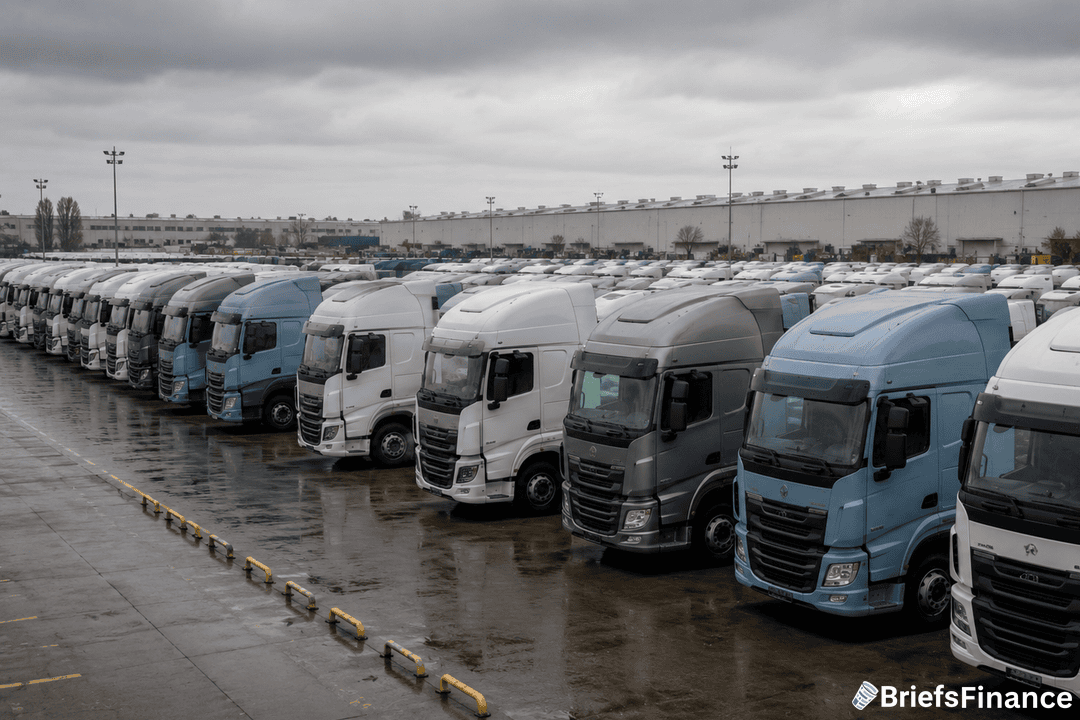
The Price of Missing a Target
Daimler Truck, the largest truckmaker in the world, says it has "done its homework." It has built several zero-emission truck types and invested in the products to make them work.
The EU's emissions rules set a 2030 target, and Daimler expects to come up short.
The penalty is tied to the size of the miss. For each percentage point it falls short, the fine grows by about €120 million.
Current projections show a shortfall of 10% to 15%.
On that basis, the executive estimates a penalty of roughly €1 billion.
CEO Karin Rådström said in an interview: "I think these penalties aren't fair." In her view, the company did its part and the market has not kept up.
Why the Trucks Are Hard to Sell
The trucks themselves are not the problem. Daimler's zero-emission lineup includes electric and hydrogen models.
"We have been preparing ourselves to be able to hit that target, we've invested also in product to make that happen," Rådström said.
What holds buyers back is that charging points are scarce and prices are high. Charging stations are sparse, and the sticker price is steep, so buyers are holding off.
Get the free Always Be Buying eBook and learn the simple system for building wealth on any income
That caution shows up in the sales data. Daimler holds around 38% of Europe's zero-emission truck segment.
That sounds like a commanding share, but the whole segment is still tiny. Battery-powered commercial vehicles make up roughly 6% of the overall truck market.
So Daimler is leading a race that hardly anyone has joined yet. The company is betting on both batteries and hydrogen.
The executive said the rules are out of step with actual market conditions, even as the company pushes ahead with battery and hydrogen models.
She points to her own workforce as proof the effort is real: "We have a lot of people who work here because they want to be part of like this change."
The Tariff Picture Clears Up
The emissions fight is one part of the story. The tariff fight has taken a turn in Daimler's favor.
According to the CEO, more than half of the US-made components that Daimler sends to its Mexican assembly plants are now exempt from tariffs.
That is a quick turnaround from the first quarter, when tariffs were still fully in force. The company's net tariff bill back then was in the low triple-digit millions of euros.
The change matters because those costs were hitting the company's results earlier this year. With exemptions in place, more of that money stays in Daimler's pocket.
What It Means for Investors
That €1 billion fine is not a done deal. It exists only if the EU rules stay as they are.
2030 is still a few years away, and a lot can change. The charging network could grow, prices could come down, or the rules could shift.
Daimler operates on both sides of the Atlantic, so its earnings are unusually exposed to policy decisions in Brussels and Washington. The same truckmaker that is counting on European emissions rules to spur demand is also watching its costs in North America shift with tariff exemptions.
For your portfolio, the bigger takeaway is that policy is part of the earnings picture. A tariff decision in Washington has lifted Daimler's outlook even as an emissions rule in Europe could hurt it down the line.
A company can be ready for the future and still feel the sting of today's rules. Daimler's story shows both forces pulling at the same time.
The trucks are built and the target is set. Whether the €1 billion fine ever becomes real will come down to how fast the world catches up, from buyers to charging stations to regulators.
Download the free Always Be Buying eBook and start putting your money to work today