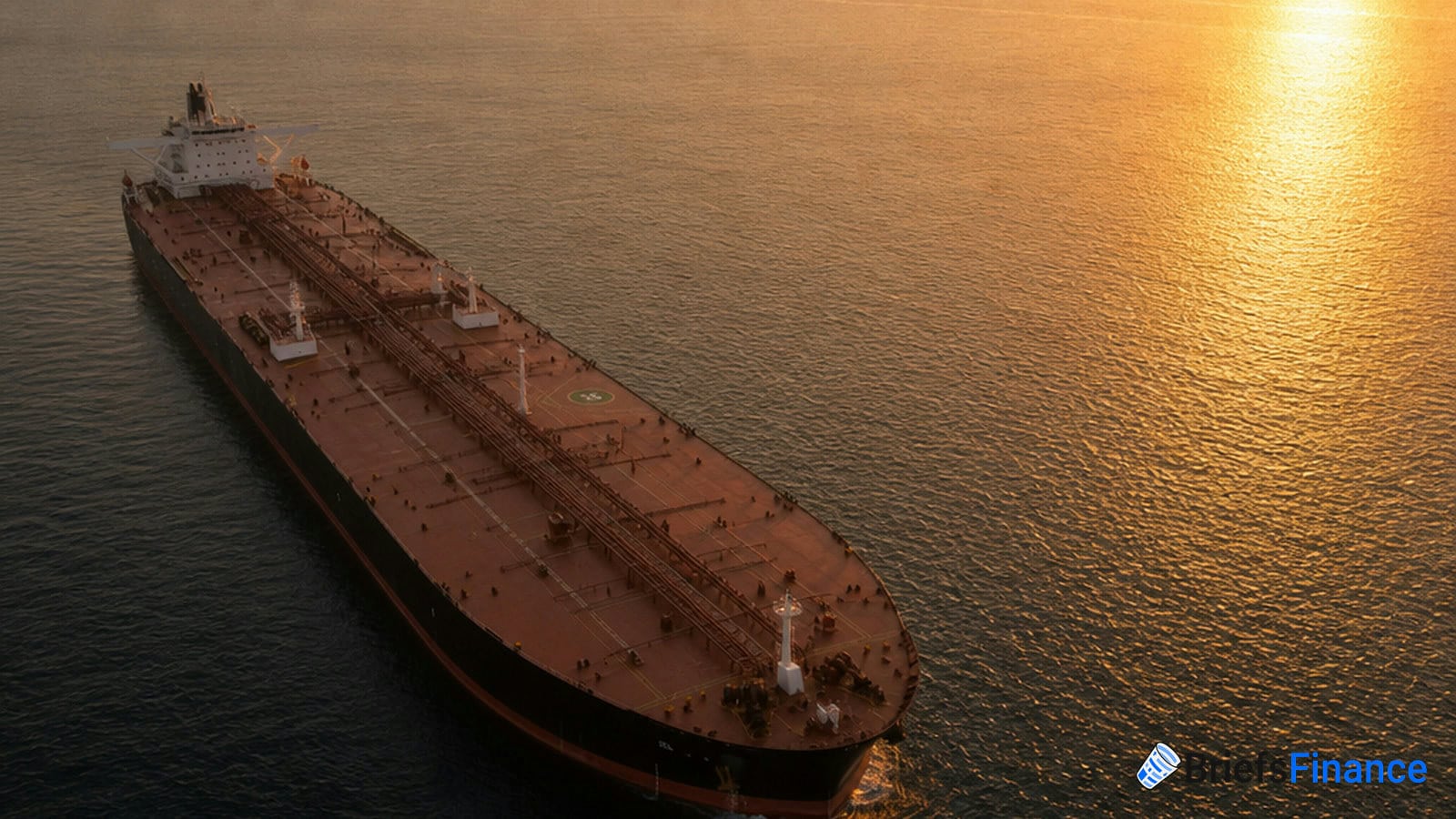
Saudi supertankers have been sitting on standby since April, burning millions in lost earnings while waiting for the Strait of Hormuz to reopen.
That happened Wednesday, when a US-Iran peace deal cracked the strait back open and triggered the biggest oil supply restart anyone has ever attempted.
Gulf Producers Plan A Two-Week Restart
When Gulf producers crank their wells back on, thousands of megawatts of heat will light up as fields burn off gas - bright enough for satellites to pick up from orbit.
Saudi Arabia and the UAE say they can return to prewar production in about two weeks, while Wood Mackenzie projects 70% of prewar flows back within three months and 90% within six.
Getting there won't be cheap. Iranian attacks did about $42 billion in damage to refineries and pipelines, according to Rystad Energy.
Gulf oil exports were down 60% at their worst - roughly 15 million barrels a day off the market.
We break down what shifts like this actually mean for your portfolio in Market Briefs - five minutes every morning, plus a free investing masterclass when you sign up.
The $600,000-A-Day Tanker Bet
Restarting wells is one problem - getting the oil out is another.
Clarksons Securities estimates the restart needs about 140 supertankers, but only 120 empty ones sit east of the Malacca Strait close enough to reach Hormuz within a week.
That gap is sending rates through the roof, with shipbrokers quoting above $600,000 a day - at least 10 times last year's rates.
Oil companies are pushing back on the rates, but shipowners reaching Hormuz first can lock in those payouts before the market normalizes.
Why Oil Is Still Headed Lower
You'd think the world's biggest supply crisis ending would send crude flying. It hasn't.
Oil sat near $79 a barrel on Thursday, down from a wartime peak above $126, with traders expecting prices to keep falling.
The world found workarounds during the war as Chinese oil imports plunged.
The US tapped its strategic reserve down to 1980s levels, while Japan released 15% of its stockpile since March.
Now that supply is coming back, several commodity traders expect 2026 to look like what was forecast before the war - a market where supply runs well ahead of demand.
What To Watch
The peace deal still needs to hold. Iran could impose tolls on tankers, demining the strait will take weeks rather than days, and senior oil executives warn some refineries could take months to fully restart.
Strategic reserves also need rebuilding, with the US strategic petroleum reserve at its lowest level since the 1980s.
Japan, China and others will be racing to refill tanks drained by the war. That refilling could put a floor under prices for the rest of the year, even as new supply hits the market.
If you want a daily read on the moves shaping the market, join 350,000+ investors getting Market Briefs - and grab a free 45-minute investing course while you're there.