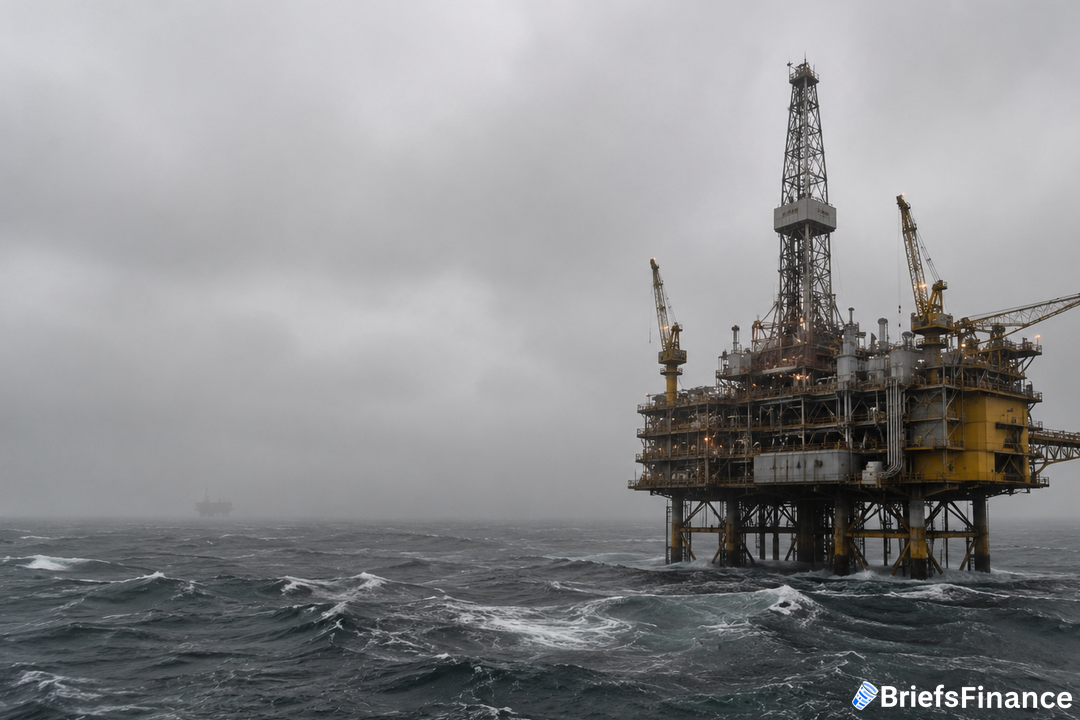
A new prime minister wants to pull more oil and gas out of the sea near Scotland. What could be wrong with that? Plenty, according to the investors who fund Britain's energy future.
Andy Burnham has been UK prime minister for less than a month. He has already signaled that his government might approve more drilling in the North Sea, including at a site called the Jackdaw field. Last week, he told US President Donald Trump that Britain would take a "pragmatic" approach to its offshore resources.
Energy investors said, "More drilling is a political crowd-pleaser that fails on every practical level."
Why More Drilling Misses the Goal
Laura Hillis is a responsible investment specialist at the Church of England Pensions Board, which oversees £3.4 billion ($4.6 billion) in assets.
Policymakers generally seek three outcomes at once from energy: low bills, secure supply, and reduced emissions. Hillis says expanding North Sea drilling "doesn't achieve any of those."
Oil is sold on a global market. Whatever comes out of the North Sea gets priced against crude from everywhere else. Hillis notes that "it makes no difference to the prices that you pay."
Crude oil was trading at 79.33 dollars a barrel when this story was published, up 6.31 percent.
The Human Cost Behind the Debate
Energy Secretary Miatta Fahnbulleh appeared on Sky News on Monday, the same day this article went live.
Get the market news that matters in a five-minute read with Market Briefs, our free daily newsletter
"We've got a community that used to be at the very heart of our energy sector that feels that they're being hollowed out," she said. "That can't be allowed to happen. That is not something we will let happen under our watch."
Burnham is prime minister, while Fahnbulleh took over Miliband's old role as energy secretary.
Hillis understands why voters like the idea. "I understand why this is very appealing to the average person who isn't steeped in the details of energy markets," she said.
Miranda Beacham, who leads responsible investment at Aegon Asset Management, pointed to the timing. "As we sit uncomfortably in heat-wave Britain, we are seeing and feeling undeniable real impacts of climate change on everyday life," she said. She worries that more drilling is a "reactive response that risks diverting attention from the structural barriers to the energy transition."
The Green Finance Institute's chief executive, Rhian-Mari Thomas, shares that concern. "The conversation around the Jackdaw and Rosebank fields risks becoming a distraction," she said. Additional gas fields could slow the fall in UK production, but they would not solve the underlying problem: how to channel private investment into clean power, grid upgrades, storage, and electrification.
The North Sea has been central to Britain's energy story, but the fields now under discussion are small and costly. The country still faces a wider choice: extend the old offshore model or build the low-carbon infrastructure investors want to fund.
What Investors Want Now
Bruno Gardner, who leads climate change and nature work at Standard Life, summed up the waiting game. "Decisions on the UK's energy future matter not only for energy security and the transition to a more resilient, lower-carbon economy, but also for creating the conditions for long-term investment and economic growth," he said.
The government has not released a formal energy plan yet. Bloomberg reports that Burnham is expected to approve Jackdaw but stop short of new licenses, which would continue the policy of former prime minister Keir Starmer.
"For investors, the key requirement is a clear and durable policy framework that provides confidence to allocate capital over the long term," Gardner said.
The debate over Jackdaw and Rosebank is about more than one field.
The bottom line: This matters for you because energy policy shapes your bills and your pension. If the UK waffles between old and new energy, investment stalls. That keeps the grid weaker, renewable projects slower, and prices higher than they need to be.
The next few months will show whether Burnham treats North Sea drilling as a political answer or an energy strategy. Your electricity bill will eventually tell you which one he picked.
Join Market Briefs, our free daily newsletter, for a quick daily rundown of the markets.
Join Market Briefs, our free daily newsletter, for a quick daily rundown of the markets