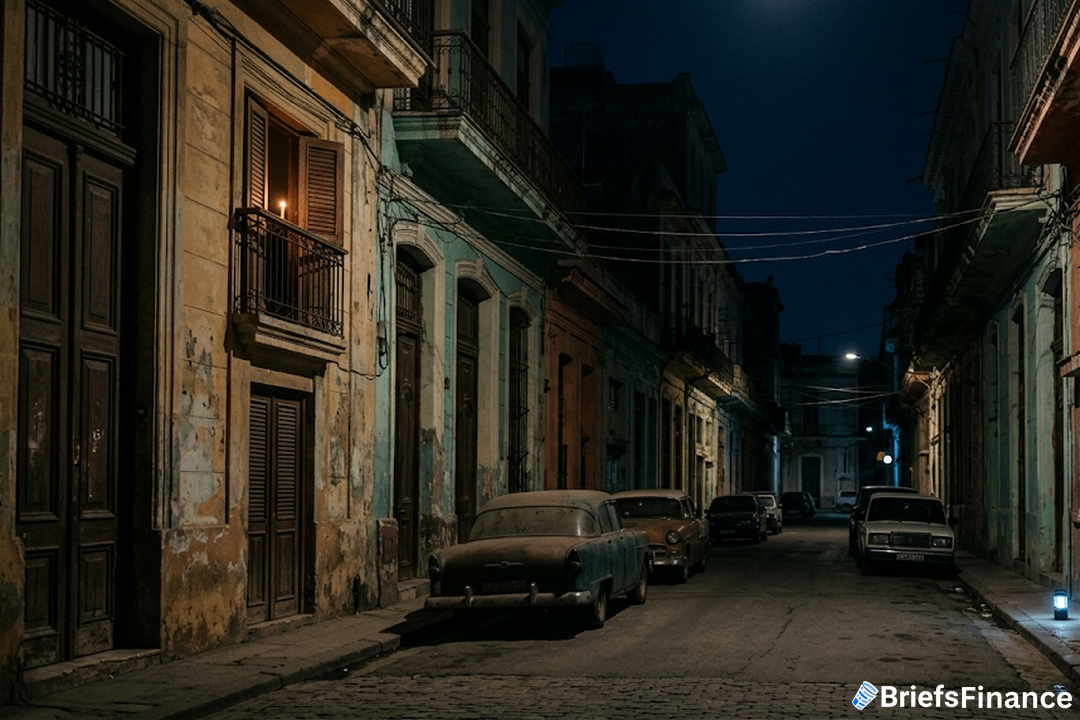
The Grid Collapses Again
Shortly before 11 p.m. Sunday, Cuba's power grid gave out once more. The island also suffered full outages before Trump took office, but in recent weeks the blackouts have become far more frequent.
On Monday, Havana's energy ministry said three power plants had been restarted, but it has yet to explain what caused the latest failure. Earlier outages were attributed by the government to U.S. sanctions choking off fuel and spare parts, as well as to outdated infrastructure.
Sunday's failure was the fourth time in a month that the national grid went down. The rapid sequence of failures shows how vulnerable Cuba's electricity system has become as fuel imports dwindle and aging plants fail. Cuban officials have said fuel deliveries have all but stopped.
Outages on this scale were rare until recently. Cuba's electricity system depends heavily on imported fuel and has little capacity to absorb supply shocks. When tankers do not arrive, generators cannot run, and the grid loses stability across the island.
Get the market news that matters in a five-minute read with Market Briefs, our free daily newsletter
Cuba's current energy troubles are rooted in the same pressures: the island depends on imported fuel, its plants have not been able to get enough spare parts, and much of the infrastructure is outdated. The government says these conditions, made worse by sanctions, have left the grid with no margin for missed tanker deliveries.
Sanctions and Fuel Shortages
The United States followed up with a warning that any country shipping oil to Cuba would face punitive tariffs. The strategy includes blocking large fuel shipments meant for the Cuban government. After that, President Trump and Secretary of State Marco Rubio intensified their sanctions campaign, aiming to loosen the Communist Party's decades-long hold on power.
"The economic and social implications of this collective punishment are not humanly bearable," Díaz-Canel wrote on X.
Secretary of State Marco Rubio told Fox News this weekend: "They actually are an influence and espionage superpower."
Separate from the sanctions push, in May the Justice Department charged former Cuban President Raúl Castro with murder in connection with the 1996 downing of civilian aircraft. The State Department also said last month that Havana had long sought to foment anti-American sentiment inside the United States and elsewhere.
Hotels Closed and Jobs at Risk
Cuba's economy is being battered by the lack of electricity. According to Cuban officials, more than 70 percent of hotels on the island are closed and more than 25,000 jobs are at risk. Most of those positions depend on hotels, which cannot function without steady electricity.
Cuba introduced more than 175 pro-market reforms in June, but U.S. officials were skeptical that the government would truly change direction. Díaz-Canel and his government insist the island's political system is not negotiable.
The government has repeatedly blamed the sanctions for the fuel shortage, saying the policy amounts to collective punishment against ordinary Cubans. Cuban officials say seven months have brought just one fuel tanker, leaving the island without enough fuel to keep its economy running. With hotels closed, the tourism sector is absorbing much of the economic pain caused by the blackouts.
Join Market Briefs, our free daily newsletter, for a quick daily rundown of the markets