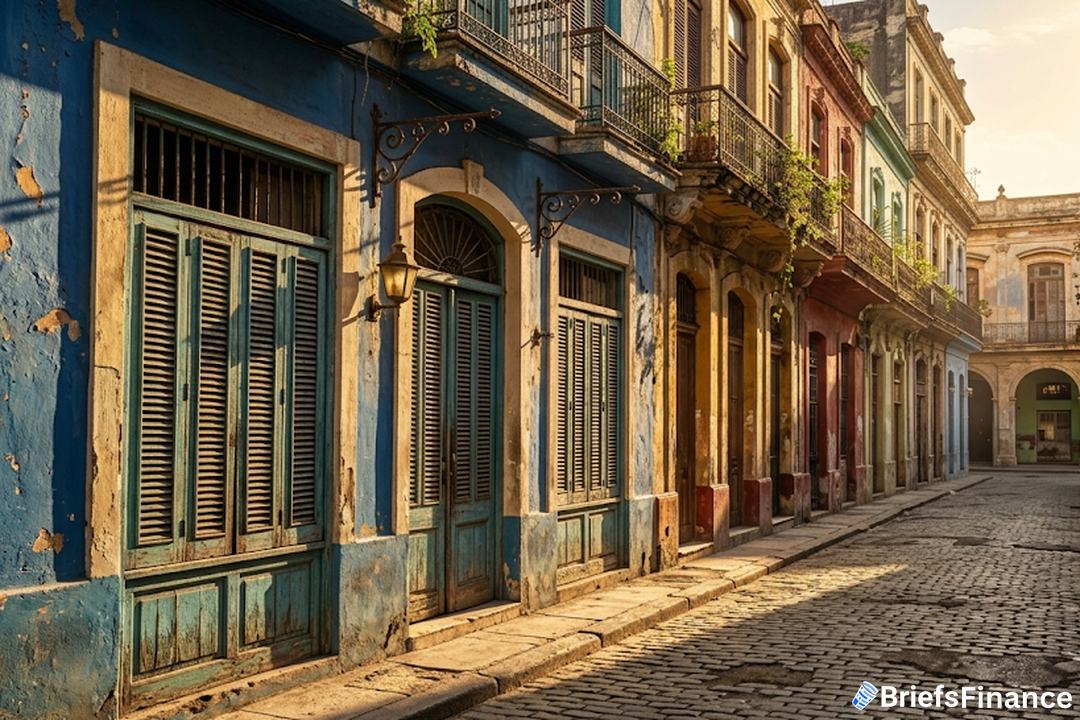
What Cuba Just Announced
The Cuban government is letting private businesses do more things. State-run newspaper Granma reported that Newly permitted areas include drug manufacturing, care for the elderly, power production, bulk commerce, seaport operations, and bringing in auto components for electric cars, according to Granma.
Lázara Mercedes López Acea, who oversees Cuba's regulatory agency for private business, said the changes are a direct response to "the tightening of the economic, commercial, financial, and energy blockade imposed by the United States government."
Why the US Is Pushing So Hard
The United States wants the current Cuban government out. That government has been in power for 67 years, and the Trump administration has a "maximum pressure" campaign aimed at ending it.
Get the market news that matters in a five-minute read with Market Briefs, our free daily newsletter
The US sanctions are meant to force President Miguel Diaz-Canel's government to step down.
The Broader Context of the Crisis
These liberalization measures are the latest in a series of stopgap adjustments Cuba has made since the collapse of the Soviet Union, which had long subsidized the island's economy. The Trump administration's renewed "maximum pressure" campaign, which intensified after Donald Trump returned to the White House in 2025, has squeezed Cuba's access to hard currency and energy. Cuba's non-state sector, long a lifeline for many families, now faces both increased opportunity and heightened risk as the government tries to offset the damage from sanctions without ceding political control.
Cuba's economy has been in crisis for years, with inflation soaring and shortages of basic goods becoming routine. The collapse of tourism during the pandemic and the tightening of US restrictions have compounded the problem, leaving the government scrambling for revenue. By allowing private businesses into sectors like power production and seaport operations, Havana hopes to attract foreign investment and local entrepreneurship to fill gaps left by the state. However, the government remains wary of any reforms that could erode its monopoly on political power, leading to a cautious, step-by-step approach that frustrates both pro-market reformers and hardline loyalists.
The blackouts have forced many Cubans to rely on kerosene lamps and generators, while businesses struggle to operate during the few hours of electricity. The fuel shortage has also disrupted public transportation, leaving many people unable to commute to work. These hardships have fueled growing discontent, though open protest remains rare due to the government's tight control.
The expansion of private sector activities is seen as a way to channel entrepreneurial energy and absorb some of the unemployed, but critics argue that without deeper political reforms, the measures will only provide temporary relief. Russia's single fuel shipment in January was a lifeline, but analysts say it is insufficient to meet Cuba's energy needs. The Cuban government has also sought help from China and other allies, with limited success.
The White House has not publicly responded to Cuba's latest reforms, but administration officials have previously stated that sanctions will remain until the Cuban government releases political prisoners and holds free elections.
Join Market Briefs, our free daily newsletter, for a quick daily rundown of the markets