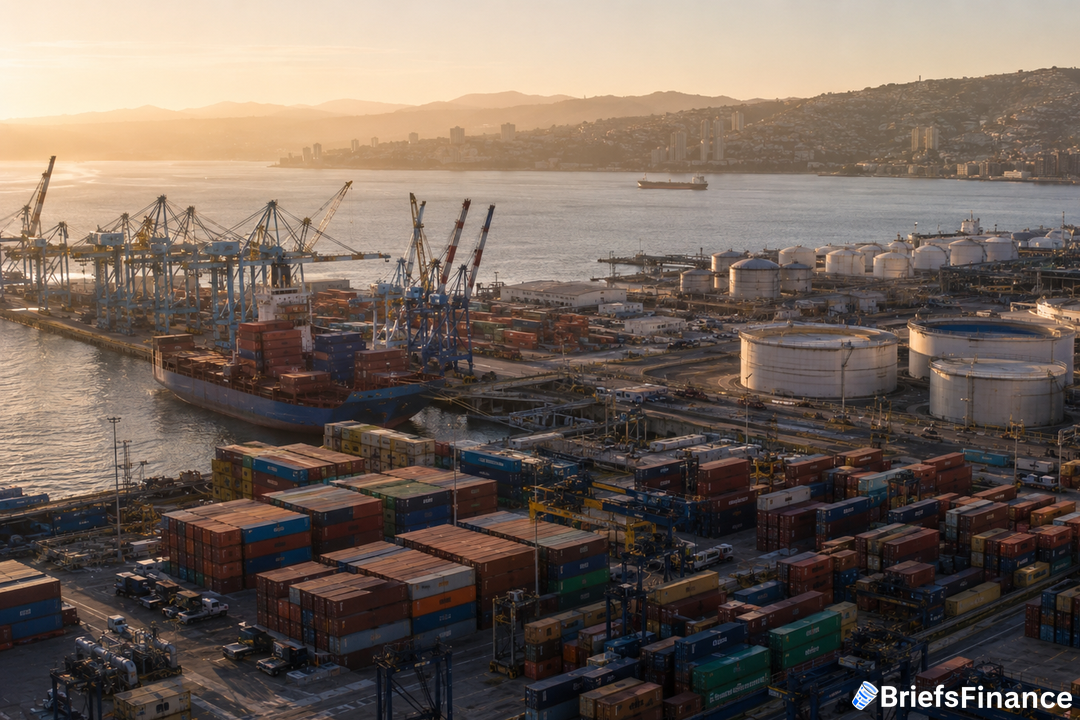
Peso Bonds Under Pressure
The Middle East conflict is now in its sixth month, and with the domestic economy still weak, Chilean peso bond issuers may face the most expensive borrowing of the year in August.
Three additional respondents in the Bloomberg survey see a smaller move of 1-5 basis points.
Chile is highly vulnerable because it imports nearly all of its fuel. Consumer prices have been climbing at the fastest annual rate since September, and gasoline costs have turned upward again after a short dip.
Above-target inflation leaves the central bank little room to ease, and a weak economy limits how much fuel-subsidy cost the government can absorb.
Fuel Costs and the Fiscal Squeeze
Chile's state-owned refinery increased gasoline prices by 32.9 pesos per liter last week, with diesel up 28.5 pesos. The adjustments took effect Thursday and will remain in place for three weeks, at which point the government must decide whether to put more money into its fuel stabilization mechanism.
"This time, the price increases will fall far short of what is required to align with international prices, representing a massive fiscal burden that we cannot sustain if this situation continues," Finance Minister Jorge Quiroz said Wednesday.
Get the market news that matters in a five-minute read with Market Briefs, our free daily newsletter
Jaime Achondo, executive director at brokerage firm Fynsa, said oil could return to $100 if the Strait remains closed, with inflation fever continuing in that scenario. "That is definitely a bad scenario for nominal bonds," he added. He projects a three-year yield of 5.45%, or as high as 5.60% in a severe panic or energy shock, which would be the strongest level since 1Q last year.
Friday's figures showed industrial output up 1.3% in June from a year earlier, the first annual gain since September. Unemployment stayed at a five-year high, and manufacturing fell for a sixth month.
June's inflation reading was above analyst forecasts despite lower energy costs. Inflation has hit target only three months since early 2021.
Survey Shows Shift to Inflation-Linked Debt
Bond weakness has moved in step with the oil rally. Bloomberg data show the link between crude and the three-year peso government yield is the strongest since March 2020.
"We estimate a 5-basis-point impact on the 3-year bond yield for every 10% increase in the price of oil," said Erick Martinez Magana, a Barclays strategist in New York.
Higher prices have pulled investors back into Unidades de Fomento, the inflation-linked accounting unit. In the survey, a majority of participants choose one- to five-year UF bonds; only about 25% favor peso notes in any maturity. Almost 53% expect CPI-linked note rates to fall 1-10 basis points over the coming month, and about 42% see the curve for those notes steepening.
"With accelerating inflation, demand for inflation-linked UF bonds should increase, pushing down short-term yields," said Diego Pino, who leads the credit and equity trading desk at Scotia Corredores de Bolsa.
Rates and Geopolitical Risk
If the inflation shock proves more persistent, investors may start expecting the central bank to tighten, and that would weigh further on peso bonds, Martinez Magana said.
Right now, market-based pricing puts the policy rate at 4.73% a year from now in Chile, signaling a 25-basis-point increase. A month earlier, traders had priced in a cut of equal size.
For the moment, though, Chile's central bankers are not changing course. Last week they left the benchmark rate at 4.5% and acknowledged a "higher-than-usual degree of uncertainty" in the macroeconomic outlook. The lone dissent in the survey marked the first rate-increase call for a policy meeting since the May survey.
"If the war continues to escalate and oil climbs closer to $110 a barrel, interest rates could begin to price in hikes for 2026. Unless the conflict broadens and oil reaches that level, however, rate hikes are unlikely," Pino added.
Monday morning, Brent crude fell sharply after President Donald Trump announced that negotiations with Tehran would start that day and scrapped a planned strike on Iran. Tehran denied any ongoing discussions with Washington.
Join Market Briefs, our free daily newsletter, for a quick daily rundown of the markets