Free NewsletterPro Login

Warning: Undefined variable $stocks in /var/www/briefs.co/htdocs/wp-content/plugins/oxygen/component-framework/components/classes/code-block.class.php(133) : eval()'d code on line 448

Warning: foreach() argument must be of type array|object, null given in /var/www/briefs.co/htdocs/wp-content/plugins/oxygen/component-framework/components/classes/code-block.class.php(133) : eval()'d code on line 448

Warning: Undefined variable $funds in /var/www/briefs.co/htdocs/wp-content/plugins/oxygen/component-framework/components/classes/code-block.class.php(133) : eval()'d code on line 472

Warning: foreach() argument must be of type array|object, null given in /var/www/briefs.co/htdocs/wp-content/plugins/oxygen/component-framework/components/classes/code-block.class.php(133) : eval()'d code on line 472
/* the link was here */

Real Wages Fall for Second Straight Month as Inflation Hits 4.3%

Published Jun 17, 2026
[tts_player]
Share:
Summary:
  • Real earnings fell 0.69% year-over-year in May, the second straight monthly decline, as inflation outpaced wage growth.
  • The Consumer Price Index rose 4.3% year-over-year in May, its highest reading in 38 months, well above the Fed's 2% target.
  • Fuel prices surged 23.5% year-over-year and core CPI hit a nine-month high, signaling price pressure beyond food and energy.

Workers got a raise last month, but they still ended up poorer after inflation took a bigger cut.

Hourly pay went up - prices went up faster, leaving the average paycheck worth less than it was a year ago for the second month in a row.

Wages Trail Inflation Two Months Running

Real wages - what your paycheck is actually worth after prices rise - fell 0.69% year over year in May, following a similar drop in April.

That means the typical worker is losing ground to inflation, even with bigger paychecks landing in their accounts.

The Consumer Price Index - the government's main measure of how fast prices are rising - jumped 4.3% year over year, well above nominal wage growth of 3.4% and far above the Fed's 2% target. May's 4.3% reading was the highest in 38 months.

The gap may sound small on paper, but it adds up. A worker earning $60,000 a year is effectively about $400 behind where they were 12 months ago, even after a nominal raise.

Why it matters: real wage drops tend to feed slower consumer spending, which feeds slower growth across the economy.

Two months of decline doesn't make a trend, but it's the kind of pattern economists watch closely - especially with the Fed already trying to thread the needle between inflation and a softening labor market.

Every morning, Market Briefs breaks down what numbers like these actually mean for your money - in five minutes a day, plus a free investing masterclass when you sign up.

Food and Fuel Are Driving the Squeeze

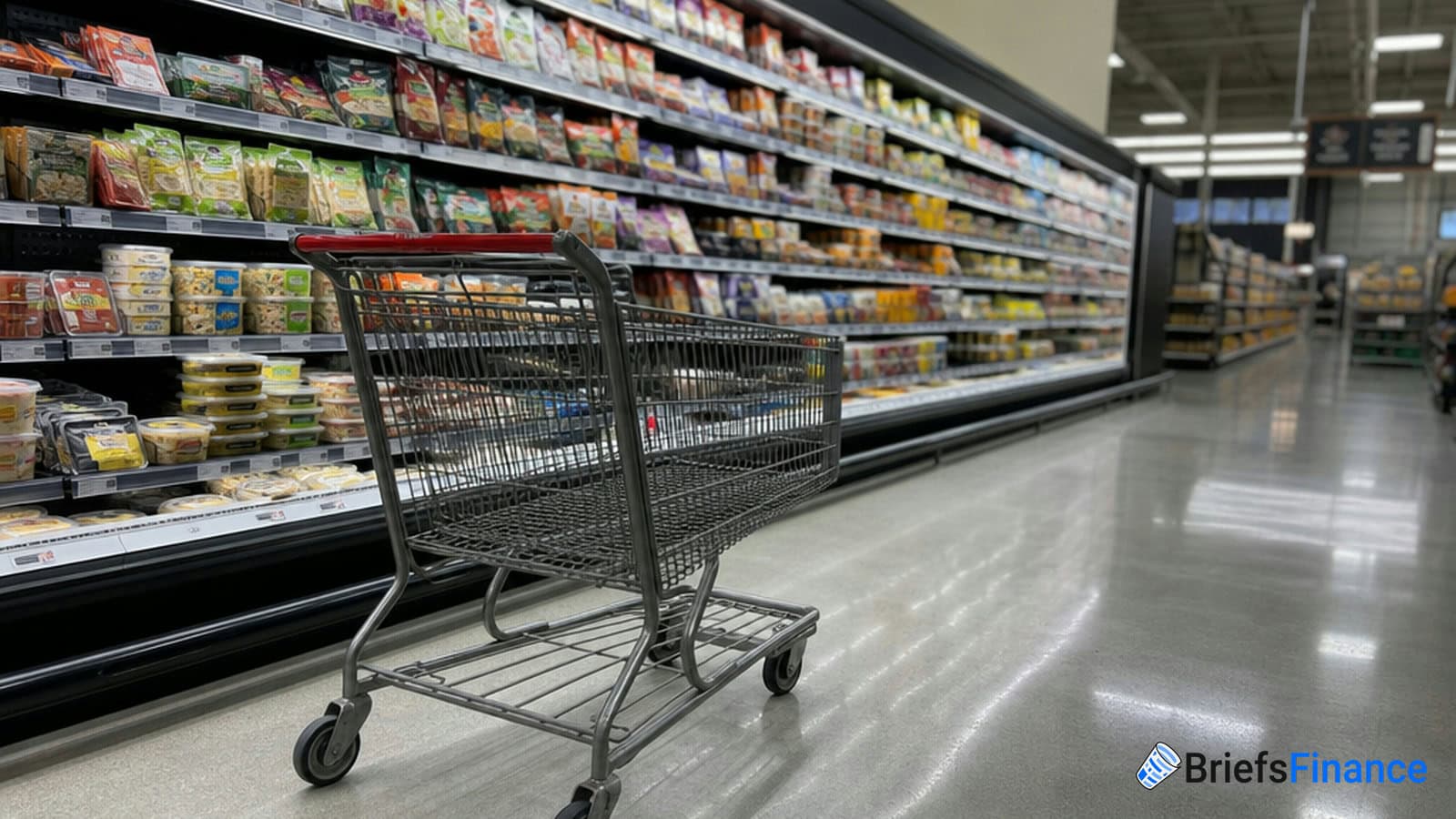
The New York Fed flagged the issue last month, warning that CPI inflation - driven partly by rising food prices - will keep pressuring consumers, and the pressure isn't expected to ease soon. But fuel was the bigger driver in May's CPI report, up 23.5% year over year, while food rose 3.1%.

Food is one of the hardest costs for households to cut - you can delay a vacation or skip a new TV, but you can't skip groceries.

When food prices run hot, lower- and middle-income households feel it first and hardest, since they spend a bigger share of their income on essentials.

The knock-on effect for investors: shoppers under price pressure tend to pull back on extras like restaurants, retail, and travel long before they touch the basics.

That's why discretionary categories often weaken before the broader economy shows cracks - they're the canary in the coal mine for consumer health.

The early signs are already showing up in earnings calls, with several major retailers and restaurant chains flagging softer traffic and shoppers trading down to cheaper brands in recent quarters.

What To Watch

Two months of falling real wages isn't a trend yet - six months would be.

But the direction matters - if June's data shows a third straight monthly decline, the read shifts from a temporary wobble to a consumer in real trouble. Core CPI also hit a nine-month high in May, suggesting price pressures go beyond food and fuel.

The next CPI print and the next round of corporate earnings will show whether May was a one-off or the start of something the consumer can't shake.

Keep an eye on retailers, restaurants, and any company that leans on shoppers having extra cash at month's end.

When the average paycheck shrinks in real terms, those are the first lines on the income statement to feel it.

Join 350,000+ investors reading Market Briefs every weekday morning - you also get a 45-minute investing course thrown in as a bonus.

Disclosure

Recent News

1 2 3 61

Get Market Briefs delivered to your inbox every morning for free!

No fluff. No noise. No politics. Just finance news you can read in 5 minutes.

Blogs

August 23, 2026
How to Get the Most From Your Guideline 401k
  • Guideline is a company that provides low-cost 401k plans, popular with small businesses and their employees.
  • A "Guideline 401k" follows the same core rules as any 401k: tax-advantaged growth, contribution limits, and often an employer match.
  • The biggest results come from capturing the full match, choosing low-cost funds, and picking Roth or traditional to fit your situation.
Read More
August 23, 2026
Principal 401k: What to Know About Your Plan
  • Principal is one of many companies that manage workplace 401k plans, so a "Principal 401k" is simply a 401k where Principal is the provider.
  • The rules of a 401k are the same no matter who runs it: pre-tax or Roth contributions, tax-advantaged growth, and often an employer match.
  • The biggest wins come from grabbing the full match, picking low-cost funds, and knowing whether Roth or traditional fits you.
Read More
August 23, 2026
What a Tariff Dividend Means for Your Money
  • A "tariff dividend" is the idea of taking money the government collects from tariffs and paying some of it back to citizens.
  • To judge the idea, you first need to know what a tariff is: a tax on imported goods, usually paid by the companies bringing them in.
  • Tariffs ripple through prices, businesses, and your investments, so the smart move is understanding those ripples, not just the headline.
Read More
August 23, 2026
No Tax on Overtime: How Overtime Pay Is Taxed
  • "No tax on overtime" refers to a tax break that lets certain workers deduct some overtime pay, lowering the income they get taxed on.
  • A deduction does not mean overtime is truly tax-free. It means part of that pay is subtracted before your tax is figured.
  • The bigger money lesson: how you earn money changes how it is taxed, and investors often get the friendliest treatment of all.
Read More
August 23, 2026
Reading the Silver Price Forecast for 2026
  • Nobody can honestly promise a specific silver price for 2026. Any exact number is a guess, so treat forecasts as opinions, not facts.
  • Silver is unusual because it is both a precious metal and an industrial metal, so its price answers to two very different forces.
  • Instead of chasing a forecast, learn the drivers - inflation, interest rates, recession fear, and industrial demand - so you can judge any prediction yourself.
Read More
August 23, 2026
What to Do When Reddit Stocks Go Viral
  • "Reddit stocks" usually means stocks getting hyped in online communities, where crowds can send a price soaring or crashing fast.
  • These tips can be entertaining and sometimes useful, but they are opinions, not research, and often come loaded with hype.
  • The safe move is to treat every online tip as a starting point, then do your own homework before risking a dollar.
Read More
August 23, 2026
Why Is Bitcoin Dropping Right Now?
  • Bitcoin drops for a mix of reasons: interest rates, big-picture money policy, regulation news, and simple shifts in how much risk investors want to take.
  • Bitcoin has a fixed supply and no earnings, so its price runs almost entirely on supply, demand, and sentiment.
  • Sharp drops are normal for bitcoin. Understanding the drivers matters more than reacting to any single day.
Read More
August 23, 2026
The Fidelity 500 Index Fund, Made Simple for Beginners
  • The Fidelity 500 Index Fund is a low-cost fund that tracks the S&P 500, an index of 500 large U.S. companies.
  • Buying it means owning a tiny slice of 500 businesses at once, which spreads your risk in a single purchase.
  • Index funds like this win over time mostly by keeping fees low and letting compounding do the work.
Read More
August 23, 2026
USA Penny Stocks: Risks and Rewards Explained
  • USA penny stocks are very low-priced shares of very small companies, often trading under $5 and sometimes under $1.
  • They dangle the dream of huge, fast gains, but carry brutal risks: low liquidity, wild swings, and high failure rates.
  • Most investors build wealth faster with quality companies and funds than by chasing cheap shares.
Read More
August 23, 2026
Finding Cheap Stocks to Buy Now Without Getting Burned
  • A low share price does not mean a stock is cheap. Real value compares the price to what the business is actually worth.
  • The best cheap stocks to buy now are quality companies trading below their true value, not the tiniest, riskiest shares on the market.
  • For most beginners, a low-cost index fund is the simplest "cheap" way to own great companies at once.
Read More
1 2 3 25
Share via
Copy link










