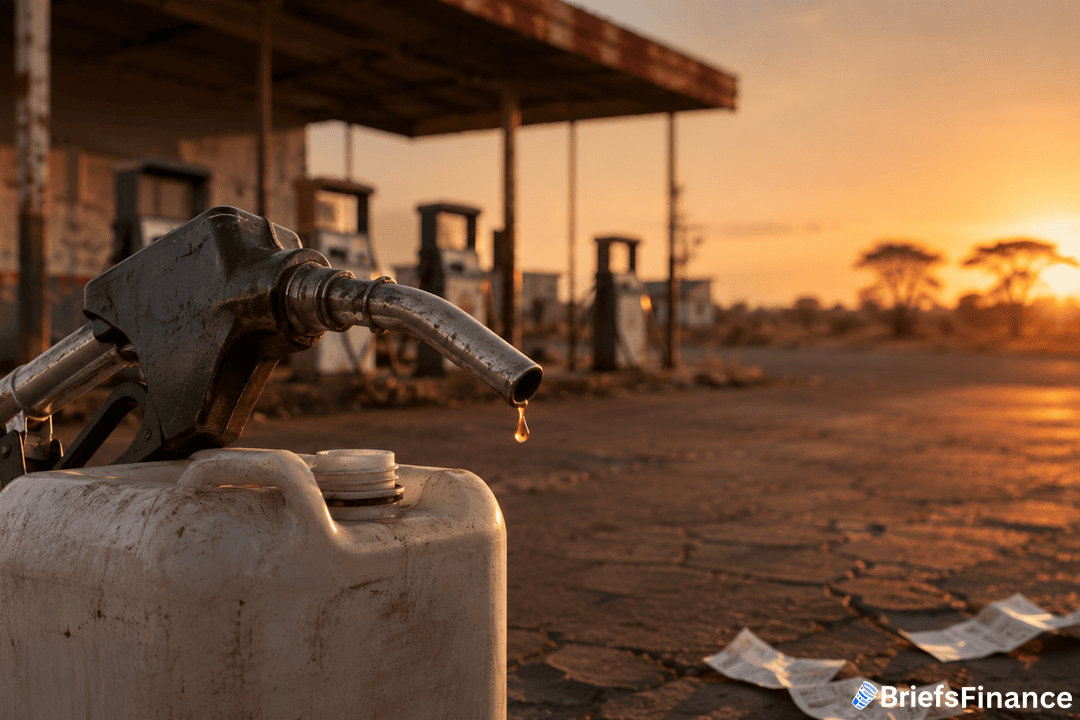
Four dead. Dozens hurt. A two-day transport strike that brought Nairobi to a halt.
That was the price of a fuel-tax fight that Kenya's president now says is over.
One Cut, Then A Hard Stop
President William Ruto told the country this week that Kenya can't keep cutting fuel taxes. The math no longer works.
The government already cut the VAT on fuel from 16% to 8%. That gave up real revenue.
Kenya then spent about 28.2 billion shillings on fuel since the U.S.-Israeli war on Iran sent prices higher. That is roughly $217 million in subsidies.
Ruto said any more cuts would gut basic services that Kenyans rely on.
The one win for the protests: diesel will drop by 10 shillings per liter in next month's price review. That move alone should cost the state nearly $21 million in lost revenue. After that, the line is drawn.
For a daily read on how global conflicts hit local markets, check Market Briefs - five minutes a day, with a free investing masterclass when you join.
Why The Protests Got So Big
Kenyan transport firms called a two-day strike that froze the capital. Marches followed almost right away.
Police then fired live rounds at the crowd. Four people died and more than 30 were hurt. The transport union called off another planned strike only after the state pledged the diesel cut. The harm to Ruto's standing was already done.
Kenya is not alone. Comoros paused its own fuel price hikes over the weekend after riots broke out.
Europe is still wrestling with the same war-driven inflation. South Africa is staring down faster price growth. Goldman Sachs expects its central bank to raise rates by 25 basis points - or one-quarter of one percent - at the next meeting.
The common thread is Middle East oil flows. The war has cut into them.
What To Watch
Ruto's bigger problem is fiscal. The state needs to plug a budget hole ahead of next year's vote. Fuel taxes are one of the cleanest revenue tools left.
Cut them more and the hole grows. Hold the line and the riots could come back.
Buyers with skin in East African markets, frontier-market bond funds, or sub-Saharan cash should track how Kenya handles this next quarter. A wobble here gets priced into the rest of the region fast.
The next fuel review is the test. Did one cut buy peace, or did it just buy time?
The Kenyan shilling is the next thing to watch. A weaker shilling pushes import prices up. That hits fuel even before any tax is added on top.
Aid talks with the IMF are also live. Cuts to fuel taxes tend to slow those talks down. Kenya gets less room to move when the fund is watching the books.
So Ruto's hard line is part fiscal math and part bargaining chip. Both fights run into the same wall.
For more reads on the policy moves that move markets, sign up for Market Briefs and get a free 45-minute investing course as a sign-up bonus.