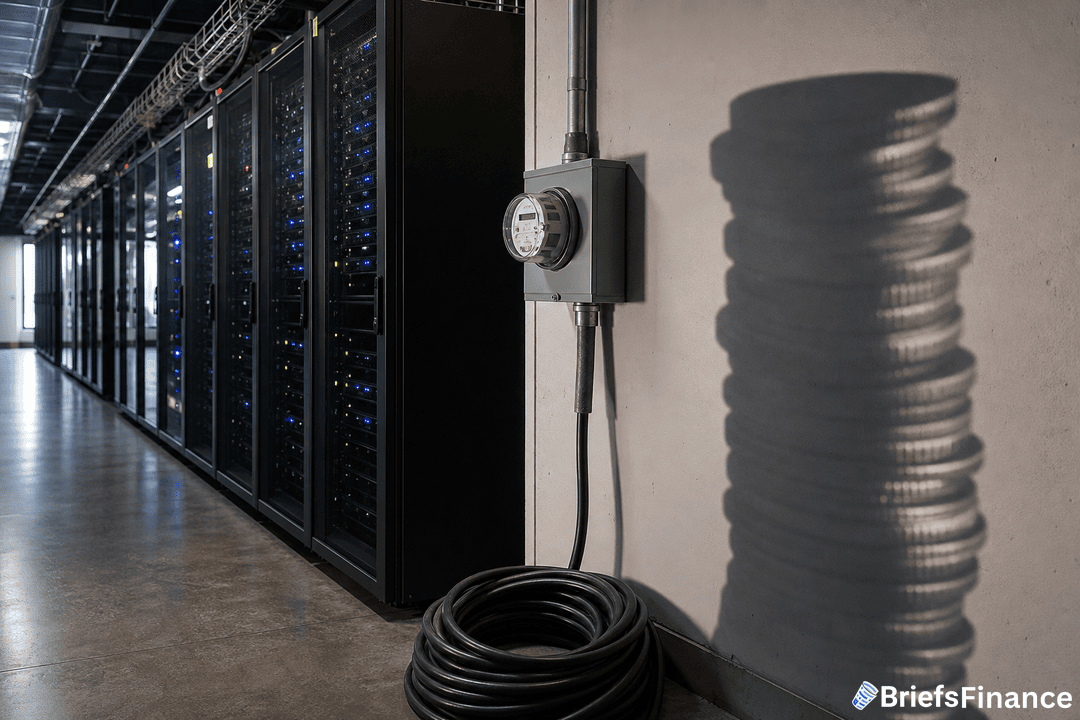
Two big forces, pulling in opposite directions
Kristalina Georgieva described a global economy being tugged between constrained energy supplies linked to an eight-month conflict in the Gulf and surging demand from an AI expansion. The mix hits countries unevenly. "Love it, hate it, or fear it, AI is here," she said, calling it "rapidly becoming a key driver of countries' relative fortunes in the world economy."
The AI buildout: big upside, but not for everyone
Relative to GDP, worldwide AI outlays are set to match - and likely surpass - what earlier generations spent on railways, electric grids and telecoms. Gear for AI and adjacent tech already makes up more than one tenth of global goods trade. If the rollout is handled well, the IMF estimates AI could add as much as 0.5 percentage point to annual global growth over the next decade. That is like bolting an economy the size of ASEAN onto the world.
The catch: the payoff will cluster where the AI supply chain is anchored, raising the risk that countries on the sidelines fall further behind. Georgieva invoked Amara's Law and warned that the shift from today's building phase to tomorrow's benefits is the window when risks run highest.
Energy costs and debt levels are now the two biggest drags on global growth. Market Briefs covers the macro picture free every weekday.
Inflation pressure is back on, and markets feel it
Georgieva was blunt: "The AI building boom is inflationary," with inflation pressure also coming from shocks to energy and food, from tariffs, and from defense outlays. Crude has held above $100 a barrel as the Middle East conflict drags on with little sign of a diplomatic exit, while retail diesel has hit records amid tight refining capacity.
That heat shows up in markets. In the U.S., Germany and Japan, government borrowing costs have risen to heights last witnessed decades ago. A wave of longer maturity private bond sales from AI-linked companies is also competing with governments for investor cash, though she noted some of the yield move may reflect stronger growth expectations.
Debt, deficits and the stability watch-outs
Global public borrowing is hovering near its postwar high and is poised to cross 100% of world GDP soon, with advanced economies "the worst offenders." For 17 years, governments benefited from interest rates running below growth. That tailwind is gone. The interest-to-growth balance is now "much less favourable" and "set to climb higher," making it unrealistic to count on growth alone to shrink debt burdens any time soon.
Signs of strain are emerging in Europe, as spreads to German bunds are expanding; the move now extends beyond France and Italy to include Ireland, Portugal, and other countries that rebuilt their public finances following the euro-area crisis. A succession of shocks has inflated debt loads and kept most deficits above pre-pandemic levels, leaving fiscal space, in Georgieva's words, "crying out for replenishment."
She also flagged a market fragility inside the AI trade itself. Strong earnings are pushing up share prices and boosting wealth effects, but "should earnings fall short, however, hyperscaler leverage and large and growing global holdings of U.S. equities could turn a disappointment into a far-reaching shock." First lines of defense, in her view: regulation and supervision, plus "a prudently hawkish bias" in many countries' monetary policy.
Why it matters for your money
This mix - pricey energy, an inflation-leaning AI capex wave, higher yields and heavier public debt - can push assets in different directions at once. Think stronger performance concentrated in AI winners alongside pricier government borrowing and wider gaps among European sovereigns. Policy is not a safety net here, but Georgieva's priorities are clear: tighter oversight, rebuilding fiscal buffers and a cautious tilt in rates.
AI investment is lifting output and power bills at the same time. Join Market Briefs free and follow both.