Free NewsletterPro Login

Warning: Undefined variable $stocks in /var/www/briefs.co/htdocs/wp-content/plugins/oxygen/component-framework/components/classes/code-block.class.php(133) : eval()'d code on line 448

Warning: foreach() argument must be of type array|object, null given in /var/www/briefs.co/htdocs/wp-content/plugins/oxygen/component-framework/components/classes/code-block.class.php(133) : eval()'d code on line 448

Warning: Undefined variable $funds in /var/www/briefs.co/htdocs/wp-content/plugins/oxygen/component-framework/components/classes/code-block.class.php(133) : eval()'d code on line 472

Warning: foreach() argument must be of type array|object, null given in /var/www/briefs.co/htdocs/wp-content/plugins/oxygen/component-framework/components/classes/code-block.class.php(133) : eval()'d code on line 472
/* the link was here */

Mark Carney Is Racing To Clear Hurdles For Pipelines and Power Projects

Published Oct 7, 2026
Share:
Summary:
  • With US tariffs still biting, Mark Carney is using strong political momentum to strip out bottlenecks and supercharge building, especially in energy and infrastructure.
  • His flagship bill, C-39, sets a one-year federal decision clock, forces coordinated reviews, opens the door to conditional pre-clearance in national-interest zones, and expands ministerial leeway.
  • Public support has bounds: while two-thirds want speedier construction, enthusiasm wanes if it means shortening environmental assessment timelines or greenlighting developments that lack Indigenous consent.

Why Carney is moving fast

President Donald Trump's trade war with Canada has given Prime Minister Mark Carney cover to run a far more muscular industrial strategy than would have flown a few years ago. The former central banker is unwinding rules from his predecessor and arming Ottawa with new tools to speed big builds, centering on energy and trade infrastructure.

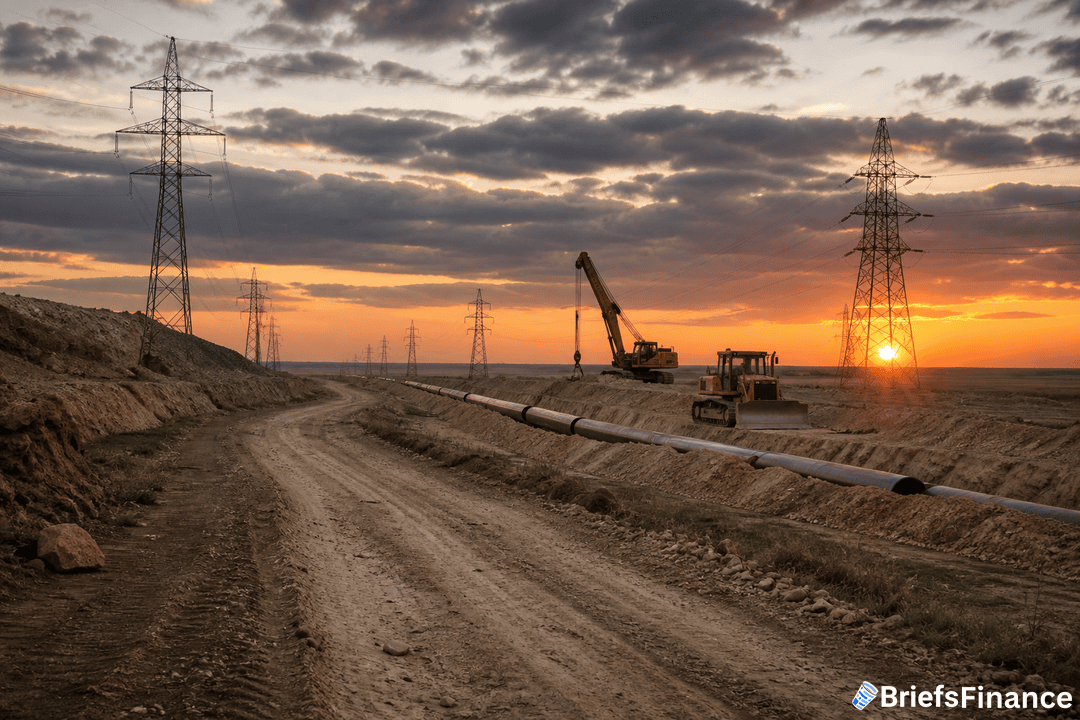
His highest priority is a new oil pipeline to the Pacific, tagged last week as a project of national interest. That label effectively puts it in the pre-approved column, with conditions. At the same time, Carney is pitching a sweeping reset of how Canada gets projects done, calling it the most ambitious upgrade to the country's building capacity in a generation.

"Decade after decade, year after year, we built less. We added more and more restrictions," Carney said last month. "We identified that issue at a time of great risk for our country, when our sovereignty was threatened and to some degree continues to be threatened."

What Bill C-39 would actually do

Over a period of under two weeks, Carney convened the country's first investment summit, rolled out a major new tax incentive for capital spending, and tabled legislation to overhaul the project-approval system and ease the ending of labor strikes. Heather Exner-Pirot of the Macdonald-Laurier Institute put it this way: "I called it 12 days of Christmas for the oil and gas sector."

Bill C-39, the Building Canada Strong Act, would cap federal decisions for all projects at one year. Departments would evaluate proposals at the same time rather than one after another, with tighter coordination so each project goes through a single federal review. It builds on Bill C-5, enacted last year to accelerate major projects that are classified as being in the national interest.

The bill goes further by letting Ottawa designate regions of national interest, where projects could receive conditional pre-approval. According to the government, a region would receive that designation only after a study lays out which activities are permitted and which mitigation steps are required. Ministers would also gain more case-by-case flexibility, including the ability in some situations to instruct work to start before a final approval and to change or waive environmental requirements.

Not everyone likes the direction.

Pipeline approvals determine where energy investment goes for decades. Market Briefs covers infrastructure free every morning.

Pipelines, timelines and the pushback

Carney's strategy leans heavily on energy and trade routes to reduce reliance on the US, which took 85% of Canada's energy exports last year. Canadian oil shipments to Asia are climbing, and an expanded west-coast pipeline opened in 2024.

C-39 would give the federal cabinet earlier influence on pipelines too. If cabinet gives the go-ahead, the regulator would keep working to determine the conditions. The government could also extend a review if more time is needed for consultations with Indigenous communities.

Skeptics are vocal about the clock. George Vegh, who previously chaired the board of the Canada Energy Regulator, said, "I just don't think you can actually have an effective review of a proposal within six months." He noted that a shorter review poses a key hurdle: consulting Indigenous communities can be time-consuming, and those communities often seek to hire their own experts.

Politics, business mood and what it means for your money

Carney is moving from a position of strength: his approval ratings reached record levels this fall, and polling indicates broad backing for his agenda, at least for the moment. He took over the Liberal Party from Justin Trudeau last year and has overhauled its energy posture.

There is real resistance too. Critics warn the plan could strain relations with Indigenous communities, weaken environmental safeguards, and inject more politics into approvals by letting the government of the day pick which projects advance. Environmental groups are zeroing in on specific clauses.

The bill would allow project backers whose activities damage fish to contribute to a fund rather than offset the impacts directly. It would also require decision makers to consider the "technical, economic and practical feasibility" of any conditions they add. At Ecojustice, the environmental law charity, the director of climate, Charlie Hatt, said, "Bill C-39 is not thoughtful reform." "This bill helps clear the way for massive oil and gas projects that will only worsen the extreme weather already harming our health and threatening our communities."

Public opinion shows a similar split: research conducted by Abacus Data and Vantage found that two-thirds of Canadians support speeding up major project construction, but support drops when it involves shorter environmental assessments or approving projects without Indigenous consent.

One more driver here: higher commodity prices. Exner-Pirot credits US trade tensions for jolting Canada out of complacency and says natural resources are the "lowest-hanging fruit for diversifying trade relationships." She adds that geopolitical strains and the data center boom are lifting energy demand, a trend already benefiting Canadian producers.

Bottom line for your wallet: Ottawa is leaning into faster timelines, richer writeoffs for capital spending and tighter coordination, while legal and political risks around environmental rules and Indigenous rights remain very real. If Canada really does build more, quicker, it could speed up the energy and infrastructure you depend on day to day, not just the projects traders track.

Permitting speed is becoming a competitive advantage between countries. Get the free Market Briefs daily newsletter and follow it.

Disclosure

Recent News

1 2 3 … 95

Get Market Briefs delivered to your inbox every morning for free!

No fluff. No noise. No politics. Just finance news you can read in 5 minutes.

Blogs

October 5, 2026
What Is the Briefs Connector? A Simple Guide
  • The Briefs Connector lets your favorite AI read Briefs research, like Pro reports and the Briefs Score.
  • Without it, an AI asked about investing can give answers that sound right but aren't backed by that research.
  • It explains the research, but it won't tell you what to buy or sell.
Read More
October 5, 2026
Is a Recession Coming? What the Last Five Rate Hiking Cycles Say
  • The Fed has started raising rates again, and in the last five hiking cycles going back to 1994, a recession never started while the hikes were underway.
  • The pain showed up where there was a bubble to pop - housing in 2008, dot-coms in 2000, the pandemic money-printing boom in 2022 - and usually after the hikes ended.
  • Private equity and private credit are feeling this cycle first, and how far the pain spreads depends on how high rates go and how long they stay there.
Read More
October 2, 2026
Fed Interest Rates May Rise Again in 2026 - and the Newest Culprit Is AI
  • Fed Governor Barr told a meeting our head of investing research attended that higher rates are likely in 2026, lower inflation may not come soon, and AI is now pushing prices up.
  • The same week, President Trump asked the biggest AI companies to police themselves under an accord that's morally but not legally binding, because the White House sees AI as a race with China.
  • Higher rates put downward pressure on asset prices and squeeze borrowers, but the way through hasn't changed: own investments, buy on a schedule, and treat downturns as discounts.
Read More
October 1, 2026
Housing Market 2026: Why Office Buildings Are Cracking Before Houses Do
  • Office buildings are selling for 80% to 95% off because their five-year loans are resetting at much higher rates while half-empty floors have gutted the income those buildings are valued on.
  • Housing is under pressure, not cracking: a $400,000 mortgage costs $975 more a month than at 3%, but six of every seven mortgages are still under 6% and those owners are staying put.
  • Whether pressure turns into cracks is a race between unaffordability and the economy, and either way Jaspreet's rule is to treat your house as a liability and buy only what you can afford.
Read More
September 30, 2026
Dividend Investing vs. Growth Investing: Why the Slower Portfolio Can End Up Bigger
  • "What stock should I buy?" is the wrong first question. Growth, income, or wealth preservation comes first, and the goal changes which stocks even make sense.
  • At $500 a month for 30 years, 13% growth builds about $1.75 million. 10% growth plus a reinvested 4% dividend builds a little more than $2.2 million and pays a little more than $80,000 a year.
  • Income investors have US dividend ETFs, REITs, and international dividend funds to study. Growth investors have the Nasdaq 100, AI and chip funds, and small caps. None of it is a recommendation.
Read More
September 29, 2026
Why Is Gold Going Down? A 5.2% Treasury Yield Just Took Its Job
  • President Trump rejected Iran's deal to reopen the Strait of Hormuz, oil prices jumped back up, and gold fell instead of rising.
  • Treasury yields hit their highest level in more than 20 years, so investors sold gold and bought Treasuries that pay interest.
  • Higher Treasury yields make the national debt, mortgages, car loans, and credit cards more expensive, with the Fed's next rate decision due October 28.
Read More
September 28, 2026
The Strategic Bitcoin Reserve: Why the Government Wants Bitcoin to Explode
  • The US government holds about 328,000 Bitcoin, worth roughly $25 billion, and since a 2025 executive order it keeps seized coins instead of selling them.
  • Washington wants a bigger pile of assets so its $40 trillion national debt looks smaller next to them, which lets it keep borrowing and spending.
  • Bitcoin's wild price swings, and a government holding a coin built to escape governments, are the two risks investors need to watch.
Read More
September 25, 2026
BRIEFS EXCLUSIVE: 43% Of Respondents Say Bills Outran Their Income Over Past Two Years
  • 43% of the 494 Market Briefs readers surveyed said their bills grew faster than their income over the past two years, even though 79% could cover a surprise $5,000 expense tomorrow.
  • Half of readers own gold or crypto, the two classic bets against a weaker dollar, and only 13% bought nothing at all in the last 12 months.
  • The median reader says it takes $150,000 a year to feel financially secure, about $62,000 above the U.S. median household income.
Read More
September 25, 2026
The Economy Is Booming. So Why Did Stocks and Bonds Fall Together?
  • S&P Global says the US economy is growing at its fastest rate since 2021, with corporate profits up 28.9% in a year, almost four times the historical average.
  • Stocks and bonds fell at the same time, which is not how the two markets normally behave, because Treasury yields above 5% now compete with stocks for investors' money.
  • Jaspreet Singh lays out three ways to invest through a shift like this: always be buying, buy the crash, or follow the money before it hits the headlines.
Read More
September 24, 2026
The 2026 Economic Reset Is Starting: Are We in a Recession, or Is the Pain Still Ahead?
  • The Federal Reserve has flipped from stimulating the economy to fighting inflation with higher interest rates, while the White House still wants growth at almost any cost.
  • The national debt tops $40 trillion, has outgrown the entire U.S. economy, and its interest payments are now the government's fastest-growing expense.
  • Higher rates bring pain for private equity, private credit, and speculative assets, but they open opportunities for investors holding cash, treasuries, and value assets.
Read More
1 2 3 … 28
Share via
Copy link










