Warning: Undefined variable $stocks in /var/www/briefs.co/htdocs/wp-content/plugins/oxygen/component-framework/components/classes/code-block.class.php(133) : eval()'d code on line 448
Warning: foreach() argument must be of type array|object, null given in /var/www/briefs.co/htdocs/wp-content/plugins/oxygen/component-framework/components/classes/code-block.class.php(133) : eval()'d code on line 448
Warning: Undefined variable $funds in /var/www/briefs.co/htdocs/wp-content/plugins/oxygen/component-framework/components/classes/code-block.class.php(133) : eval()'d code on line 472
Warning: foreach() argument must be of type array|object, null given in /var/www/briefs.co/htdocs/wp-content/plugins/oxygen/component-framework/components/classes/code-block.class.php(133) : eval()'d code on line 472
/* the link was here */
×
Free investor livestream — Nov 17
How To Use ChatGPT & Claude To Research Stocks Like A Pro
Brussels is readying safeguard measures that could curb imports of Chinese-made hybrid cars after a surge that now gives Chinese brands roughly a quarter of hybrid sales.
A time-limited cap using tariff-rate quotas is on the table, and officials want it low enough to avoid provoking Beijing.
Europe's trade gap with China runs above €1 billion ($1.1 billion) per day, with new tools due by year end to rebalance and diversify supply chains.
What the plan would do
The European Commission is weighing safeguard measures that let the EU rein in imports when a sector faces a sudden influx. One option under consideration is a tariff-rate quota that keeps volumes under a set cap and applies a levy to shipments above it. People familiar with the talks say the cap would be temporary.
Hybrids are being used as the trial balloon. If the approach works, the commission could extend it to other areas where it sees trade distortions. A key goal, according to the same people, is to set any hybrid cap low enough to avoid sparking retaliation from China.
Why hybrids are in the crosshairs
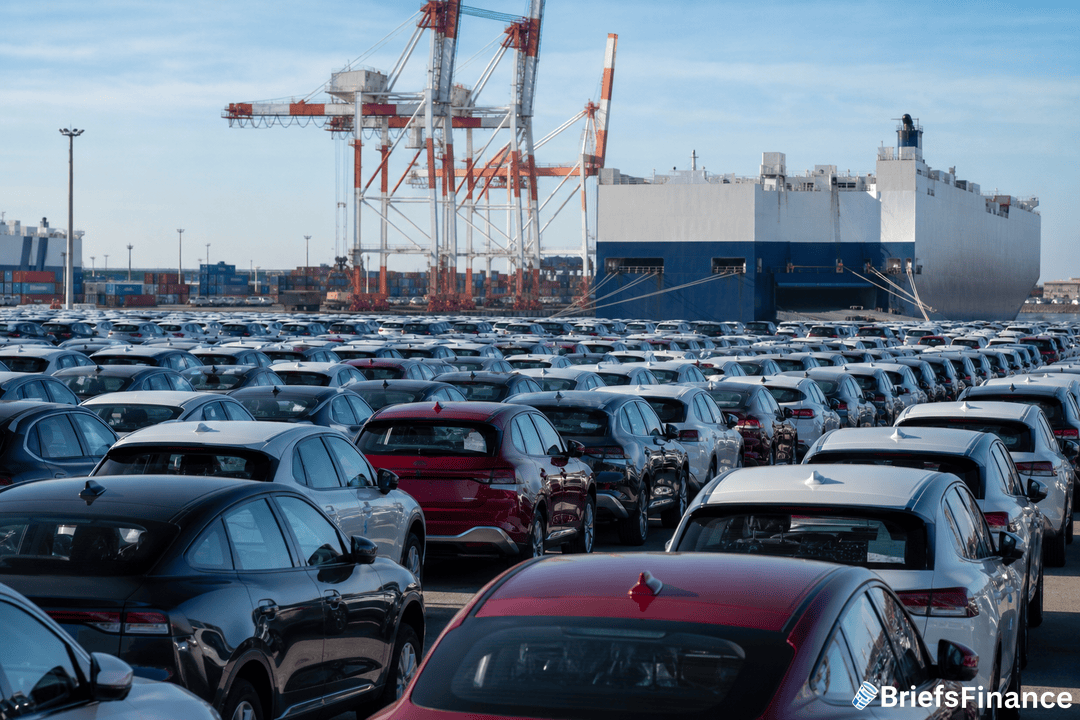
Sales of Chinese-made hybrids in Europe have jumped. By August, Chinese automakers hit a new high in Europe's car market, with brands including BYD Co. accounting for close to 12% of all new cars sold in the region. They made up roughly one quarter of hybrid sales overall, and about one third for plug-in hybrids.
The hybrid tally includes models with and without plugs. The market-share data counts brands such as Polestar, DR, Evo, Chery-Ebro and Stellantis-Leapmotor ventures, based on unit sales across the EU, EFTA and the UK, according to Dataforce.
By contrast, the growth of Chinese electric-vehicle imports has cooled, and those EVs already face steep EU duties. Hybrids from China do not currently face the same tariff burden. Beijing has pushed to swap those EV levies for so-called price undertakings that set minimum prices to regulate export volumes.
Automaker shares popped on the news: Volkswagen rose as much as 4.6%, Renault gained up to 6.1%, and Mercedes-Benz Group advanced as much as 2%. The people discussing the plans requested anonymity, and a commission spokesperson declined to comment.
Later this week, EU trade chief Maros Sefcovic is scheduled to be in Beijing to hold talks with Commerce Minister Wang Wentao. The hybrid plan could shift depending on how those meetings go. Earlier this year, Brussels and Beijing opened talks aimed at a more balanced trade relationship, with the EU setting an October target for concrete progress.
Discussions cover investment and trade but also intellectual property, reform of the World Trade Organization, and export controls, where the EU wants a faster application process to speed deliveries of critical raw materials. The bloc is also pushing for better market access in China, lower trade barriers, and fewer restrictions on goods such as brandy, pork and dairy.
China has been willing to discuss investment and buying more from the EU, but has been hesitant to curb its own exports. Whether Beijing will entertain a cap on hybrid shipments remains uncertain.
It previously rejected the idea of a voluntary export cap, with a Commerce Ministry spokesperson saying last month: "These so-called voluntary export restrictions seriously violate WTO rules and run counter to the laws of the market economy and the principle of fair competition. China firmly opposes this." China has asked the EU to ease its export controls, but the commission argues those decisions sit with member states. EU ambassadors will be briefed on this week's outcomes on Sunday, and EU leaders meet in mid-October to weigh the broader toolkit.
France and Germany also floated a new instrument that could limit access to the EU single market if a trade war breaks out, and urged fresh probes in key areas like chemicals.
What this could mean for your money
The commission is moving to toughen trade policy to shield industries exposed to Chinese imports and plans to roll out a broader toolbox by year end to address imbalances and diversify supply chains. If a hybrid cap or tariff-rate quota lands, it would likely be targeted and temporary to minimize blowback, which could affect how quickly competitive pressure eases on European automakers and suppliers.
Keep an eye on two swing factors: whether Beijing entertains limits on hybrid exports, and how cautious the EU is in setting the cap. Those choices will determine how much any policy shifts ripple through car prices, parts demand and margins that ultimately show up in European manufacturing and consumer wallets.
Anthropic has gone public at a valuation of about $1.5 trillion, while Amazon went public in 1997 at around $440 million. Anthropic has about $33 billion in revenue this year and no profit, and investors are paying more than 40 times its sales, against about 3 times for Amazon. Briefs Finance CEO Jaspreet Singh says nobody knows what comes next, and that long-term investors use downturns to buy instead of panic selling.
Tech stocks are selling off because investors don't know who will lead Nvidia, the company that has been funding the AI industry and selling it chips.
Inflation has the Federal Reserve planning to raise interest rates, with a hike expected in December, and that puts pressure on homebuyers, private equity and the $40 trillion national debt.
Briefs Finance CEO Jaspreet Singh says nobody has a crystal ball, so his rules are to buy when markets are low, hold long term and invest only what you're willing to lose.
The national debt is above $40 trillion, and the Federal Reserve has gone from sending Washington its profits to losing money.
President Trump's four-part plan leans on shorter-term debt, stablecoin companies buying Treasuries, a bigger balance sheet and government stakes in private companies.
The goal is to outgrow the debt, not pay it off, so Jaspreet Singh points investors to the seven industries where Washington wants growth.
The Fed makes its next rate decision on December 9 and is now talking about jumbo interest rate hikes of 0.5%, though one in December looks unlikely.
Washington will pay a record $1.05 trillion in interest this year on $40 trillion of debt, and that debt resets at higher rates as the Fed hikes.
Jaspreet Singh's five moves are to pay down variable-rate debt, earn interest on your savings, know which stocks feel the pressure, look at value and hedge.
Margin debt, the money investors borrow to buy stocks, is at a record of around 4.6% of GDP, up from 3.9% in 2021.
ETF money has more than tripled in five years to 7% of GDP, while corporate buybacks and 401(k) money sit below their earlier peaks.
Margin calls and panic selling can make the next downturn deeper, so Jaspreet Singh keeps buying broad market funds and says most investors should skip margin debt.
Jensen Huang is out at Nvidia over affairs with multiple people, and the company he founded has been the bank of American AI, with about $30 billion into OpenAI and $10 billion into Anthropic.
A hotter-than-expected inflation report has Fed officials talking about a possible 0.5% hike in December, and gold, silver, and bitcoin fell on the news.
President Trump said the US may not need a deal with Iran, keeping oil prices and inflation risk high. Jaspreet Singh breaks down what it all means for AI stocks and your portfolio.
Stocks are booming at the fastest pace in years, jobless claims just hit a 57-year low, and most investors still feel like nobody is hiring.
The Fed is protecting the dollar over the economy, oil swings on every Iran headline, and a few AI companies are carrying an S&P 500 where four of five stocks sit in a correction.
Jaspreet Singh explains why circular financing between Nvidia, OpenAI, Anthropic, and SpaceX rhymes with 2008's house of cards, and how his three investing pillars handle a stock market bubble.
The Fed has raised rates, cut them, then raised them again only twice in the last 60 years, and both times the economy fell into a recession and stocks crashed.
The same stop-and-go cycle is playing out now, with one big difference: US debt is 125% of GDP today versus about 30% in 1980.
In the 1970s gold rose roughly 24x, real estate 157%, stocks lagged, and cash lost half its value. Jaspreet Singh lays out five assets to consider before the next flip.
The IRS 2027 tax plan keeps the same seven rates but widens every bracket and lifts the married-filing-jointly standard deduction to $33,200.
The 0% long-term capital gains bracket rises to $102,100, so a household living on $135,300 of investment income could owe $0 in federal income tax.
C corporations still pay 21%, small businesses keep the 20% QBI deduction, and the 401(k) limit climbs to $25,500 with an $8,500 catch-up for investors over 50.
Make sure to check your inbox for the first email.
Before you go
We’re hosting our first ever livestream on how investors can use ChatGPT & Claude to invest like a pro. It’s on 11/17 and is hosted by our CEO Jaspreet Singh.