Free NewsletterPro Login
Free Live Investors Workshop
Seats limited
Tue, Sep 29.
The dollar is losing value.
Here’s how investors can still profit.
Hosted By
Jaspreet Singh
Founder, Briefs Finance
X

Warning: Undefined variable $stocks in /var/www/briefs.co/htdocs/wp-content/plugins/oxygen/component-framework/components/classes/code-block.class.php(133) : eval()'d code on line 448

Warning: foreach() argument must be of type array|object, null given in /var/www/briefs.co/htdocs/wp-content/plugins/oxygen/component-framework/components/classes/code-block.class.php(133) : eval()'d code on line 448

Warning: Undefined variable $funds in /var/www/briefs.co/htdocs/wp-content/plugins/oxygen/component-framework/components/classes/code-block.class.php(133) : eval()'d code on line 472

Warning: foreach() argument must be of type array|object, null given in /var/www/briefs.co/htdocs/wp-content/plugins/oxygen/component-framework/components/classes/code-block.class.php(133) : eval()'d code on line 472
/* the link was here */

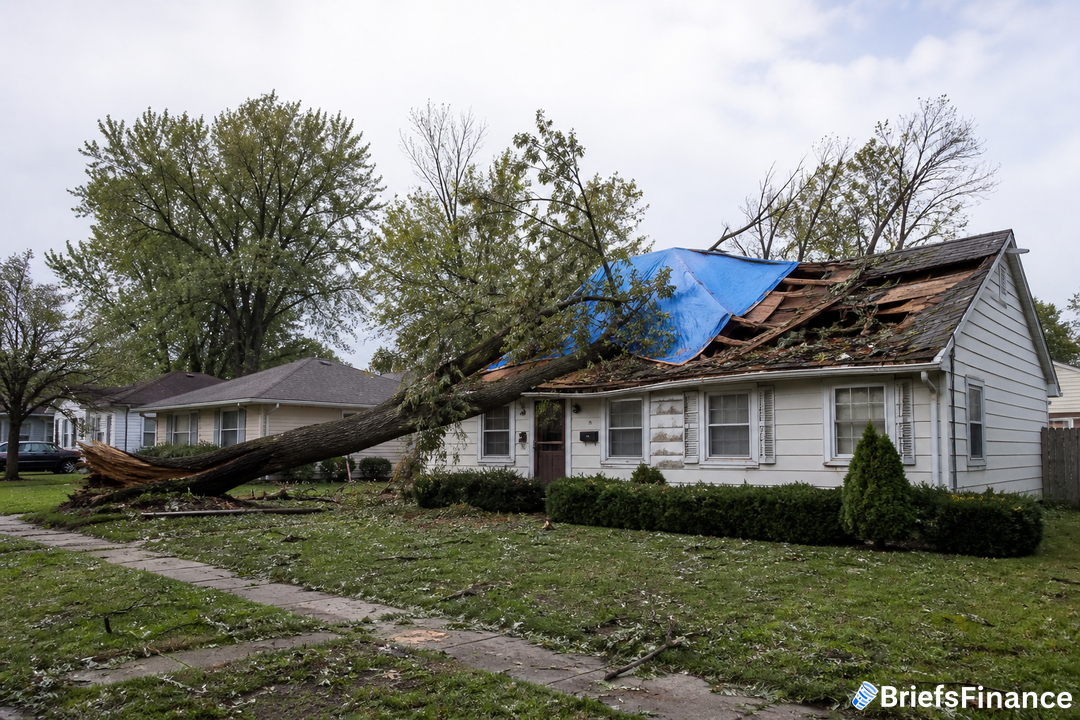
Most Homeowners Are Underinsured, Experts Warn

Published Sep 26, 2026
Share:
Summary:
  • Many households think they are fully covered but are not, even as premiums have jumped; roughly nine in ten owner-occupied U.S. homes carry insurance.
  • A review of 74,000 California fire claims from 2018 to 2023 found more than 70% of insured owners were underinsured by about 20% on average.
  • Gaps stem from exclusions like floods and earthquakes, payout caps on specific items and mold, and a 45% surge in replacement costs from 2020 to 2023.

The size of the shortfall

Kenneth Klein, who teaches at California Western School of Law, framed it starkly: "A supermajority of homeowners want to fully and adequately insure their homes, are willing to pay for it, and think they have it. But most of them are wrong and are short by a lot." In a Lewis & Clark Law Review article this year, Klein said the desire to be fully insured is real, but the coverage often is not.

Klein noted that about 90% of owner-occupied homes carry a policy. Yet when he examined California Department of Insurance records for 74,000 fire claims filed between 2018 and 2023, he found more than 70% of insured homeowners came up short by roughly 20% on average. He added the pattern is not unique to California, calling it a "barely hidden nationwide crisis of underinsurance" that keeps families from making a full recovery after a loss.

What policies often leave out

Standard policies trim exposure in lots of small print ways, from carving out certain disasters to capping payouts for particular categories of damage or belongings. Experts say earthquakes, landslides and floods commonly sit outside a typical homeowner policy. To cover flood damage to the structure itself, owners generally need a separate policy. For insurance purposes, a flood is when water comes up from ground level into the home, whether from storm surge, intense rain or a river or lake spilling over.

Flooding is the most frequent and most expensive natural disaster in the country, according to the Insurance Information Institute. FEMA estimates that just an inch of water can rack up about $25,000 in damage to a home, and from 2020 through 2024 the average payout on flood claims was $82,614. FEMA's floodsmart.gov also notes that roughly 99% of U.S. counties have seen at least one flood over the past twenty years.

Even so, a 2025 FEMA blog post indicates fewer than 4% of households have a National Flood Insurance Program policy. NFIP provides most of the residential flood coverage in the U.S. Standard home policies may still cover some water losses, like wind driven rain that gets in from above after a storm damages a roof. But, as Amy Bach of United Policyholders points out, insurers often exclude or limit mold coverage and may cap water damage payouts at around $5,000, $10,000 or $15,000 per loss.

Protecting your biggest assets starts with steady planning and understanding your true exposure. Join Briefs Finance CEO Jaspreet Singh on September 29th for a FREE live investor workshop, How to Profit From A Dollar That's Losing its Value, where he shows how we're spotting investment opportunities as the dollar falls. Save your spot.

This week, California Insurance Commissioner Ricardo Lara pressed residents to go over their policies and to look into flood insurance before a likely historic El Niño, warning people not to wait until a disaster is close. Flood insurance typically starts 30 days after purchase. Even then, traditional flood policies often have tighter limits for basements.

Why cost and policy design matter

Peter Kochenburger - a visiting law professor at the Southern University Law Center who also serves as managing fellow at its Insurance Law and Policy Institute - said, "The cost of building and repairing has gone way up." If the policy limit does not match today's replacement cost, families can be stuck unless they have other savings.

A report from the Treasury Department released last year concluded that replacement costs for property and casualty losses climbed 45% from 2020 to 2023. Hiring workers for single family construction got costlier too, with employment costs up 37% from 2018 to 2022, and climbed 45% between 2014 and 2023. Lareesa Klingler, Lockton's director of national claims within its private risk solutions group, put it bluntly: "coverage gaps are often discovered at the time of the loss - which is when you don't want to discover them."

Consumers can look at policy add ons that flex with real world costs. Extended replacement cost coverage, an upgrade to a standard policy, typically boosts the dwelling limit by roughly 10% to 50%, according to insurance marketplace Policygenius. Owners of older homes might also consider ordinance or law coverage to pay for code upgrades like wiring, plumbing or insulation when rebuilding.

Valuables and the fine print

Insurers also set specific dollar ceilings for categories of personal property, including items like artwork, collectibles, rugs, furs and other high ticket pieces. You can typically raise those limits by adding scheduled coverage for individual items. Brenda Cude, professor emeritus with the University of Georgia, as well as a consumer representative to the National Association of Insurance Commissioners, said owners of antiques, firearms, electronics and jewelry should confirm how those pieces are treated and whether extra coverage is necessary.

The upshot for your wallet: know what is and is not covered before a loss, not after. If you live far from the shoreline, you may still face flood risk. If your home is older, bringing it up to code can be a bigger swing than you expect. And if you have valuables, the standard limits might not come close to replacing them.

A sound approach to risk can help your savings weather unexpected costs. Our CEO Jaspreet Singh is hosting a FREE live investor workshop, How to Profit From A Dollar That's Losing its Value, on September 29th. Sign up free to join him live.

Disclosure

Recent News

1 2 3 … 86

Get Market Briefs delivered to your inbox every morning for free!

No fluff. No noise. No politics. Just finance news you can read in 5 minutes.

Blogs

September 25, 2026
BRIEFS EXCLUSIVE: 43% Of Respondents Say Bills Outran Their Income Over Past Two Years
  • 43% of the 494 Market Briefs readers surveyed said their bills grew faster than their income over the past two years, even though 79% could cover a surprise $5,000 expense tomorrow.
  • Half of readers own gold or crypto, the two classic bets against a weaker dollar, and only 13% bought nothing at all in the last 12 months.
  • The median reader says it takes $150,000 a year to feel financially secure, about $62,000 above the U.S. median household income.
Read More
September 25, 2026
The Economy Is Booming. So Why Did Stocks and Bonds Fall Together?
  • S&P Global says the US economy is growing at its fastest rate since 2021, with corporate profits up 28.9% in a year, almost four times the historical average.
  • Stocks and bonds fell at the same time, which is not how the two markets normally behave, because Treasury yields above 5% now compete with stocks for investors' money.
  • Jaspreet Singh lays out three ways to invest through a shift like this: always be buying, buy the crash, or follow the money before it hits the headlines.
Read More
September 24, 2026
The 2026 Economic Reset Is Starting: Are We in a Recession, or Is the Pain Still Ahead?
  • The Federal Reserve has flipped from stimulating the economy to fighting inflation with higher interest rates, while the White House still wants growth at almost any cost.
  • The national debt tops $40 trillion, has outgrown the entire U.S. economy, and its interest payments are now the government's fastest-growing expense.
  • Higher rates bring pain for private equity, private credit, and speculative assets, but they open opportunities for investors holding cash, treasuries, and value assets.
Read More
September 23, 2026
Are We in a Recession? Without AI, America Might Already Be in One - and Washington Knows It
  • The White House attributes about three quarters of U.S. economic growth to AI, and many believe the economy would already be in a recession without it.
  • Washington has three reasons it cannot let the AI boom slow down: staying the world's superpower, outgrowing $40 trillion in national debt, and protecting a government stock portfolio worth billions.
  • Every market goes through booms and busts, and investors who understand the cycle get to buy the downturn instead of panic-selling with the crowd.
Read More
September 22, 2026
Will Interest Rates Go Down in 2026? Where the Money Moves Either Way
  • The Fed is leaning toward higher rates to fight 4% inflation, while the White House and a cracking job market push the other way.
  • If rates rise, money has tended to move toward short-term Treasuries, floating-rate loans, energy, banks and dividend payers.
  • If rates fall, it has tended to move toward gold, silver and Bitcoin, real estate, small caps, the S&P 500 and speculative bets.
Read More
September 21, 2026
How the Federal Reserve Makes Money - and Why It Just Posted Its Biggest Loss Ever
  • For 109 years the Federal Reserve created money, lent it to the U.S. government and handed the interest it collected back to Washington - almost $1 trillion in the decade starting in 2011.
  • Pandemic-era lending locked the Fed into earning about 2% on trillions of dollars while it now pays banks around 4%, producing a record loss of hundreds of billions in 2026.
  • The Fed covers its losses by creating money and the government covers its lost revenue by borrowing, and both feed the inflation that eats at the dollars in your account.
Read More
September 18, 2026
Kevin Warsh Just Defied Trump: What the Fed Rate Hike Means for Your Money
  • The Fed raised rates for the first time since 2023 in a unanimous vote led by Kevin Warsh, the chairman President Trump appointed to cut them.
  • Higher rates make the $40 trillion national debt, business loan resets and mortgages more expensive, but they strengthen the dollar and pay investors holding cash.
  • The war with Iran is pushing up oil, grocery and chip prices, another hike is likely in 2026, and recession talk is about to get louder.
Read More
September 17, 2026
Why America Bailed Out the Yen: The Japan Carry Trade, the Dollar and Your Mortgage Rate
  • In July 2026 the US sent money to steady the yen because Japan is the largest foreign owner of US debt, and Washington needs Japan to keep lending.
  • For decades the Japan carry trade let Wall Street borrow yen at essentially 0% and pour it into US stocks, real estate and Treasuries, and rising Japanese rates are shutting that off.
  • A weaker yen means fewer buyers for the dollar and for US debt, which pushes Treasury rates up and drags mortgage, car loan and credit card rates up with them.
Read More
September 16, 2026
Treasury Yields Are Spiking Because Lenders Are Backing Away From U.S. Debt
  • The U.S. is paying its highest 30-year borrowing rate in about two decades because its biggest lenders, the Fed, foreign governments, and banks, are all pulling back from Treasuries.
  • Every mortgage, car loan, credit card, and business loan is priced off the 10-year Treasury yield, so when Washington pays more to borrow, so do you.
  • With about $40 trillion of debt against a $32 trillion economy, the country either outgrows its debt or slides into a doom loop, and investors need a plan for both.
Read More
September 15, 2026
Fiat Currency Runs on Trust, and the World Just Stopped Trusting the Dollar
  • Gold has overtaken US treasuries as the world's top reserve asset, and central banks are now buying less US debt and more gold.
  • The US dollar is a fiat currency, meaning it's backed by a promise rather than gold, so it loses value when fewer countries want to hold it.
  • Whether the US economy or its national debt grows faster from here decides which assets stand to benefit next.
Read More
1 2 3 … 27
Share via
Copy link












