Why Berlin is knocking on Uniper and SEFE's door
Following the collapse of an early truce in the Middle East and a renewed upswing in gas prices, officials began looking at ways for Uniper SE and SEFE to bolster inventories without the state buying fuel itself. The talks do not include any formal mandate to buy gas for the state, and in true emergencies those interventions typically run through Trading Hub Europe GmbH, the country's gas market manager. Conversations are continuing, with further discussions planned in the coming weeks.
SEFE declined to comment. Uniper said it regularly coordinates on security of supply matters with government officials, regulators, and industry players. The Economy Ministry said it maintains regular contact with SEFE and Uniper but would not discuss confidential talks.
Storage is thin and the market math flipped
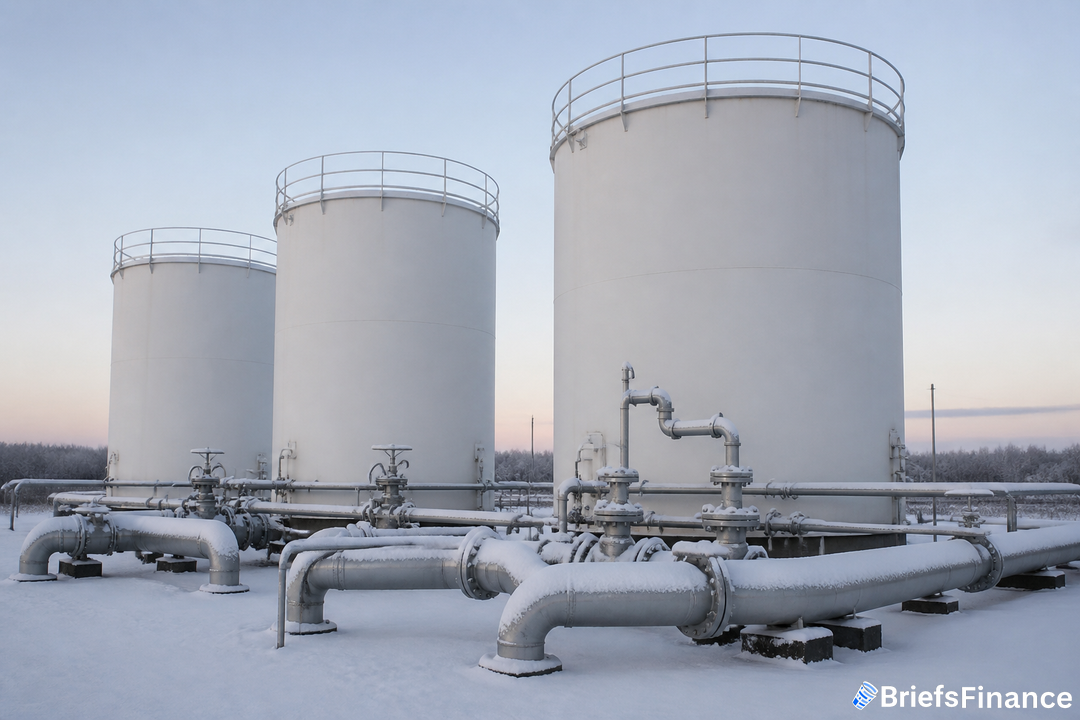
Germany's storage sites sit just above 54% full, behind the European Union's 67% and the weakest level for this time of year in records going back to 2009. Grid and storage operators caution that at the current pace, getting to the roughly 70% legal target by Nov. 1 will be nearly impossible.
Berlin had largely waited for the market to refill facilities that were drawn down after last winter. Then the Iran war upended that approach, lifting near term futures above winter prices and draining the incentive to inject gas now.
Markets move every day, and most of it never reaches you in time. Get the free Market Briefs daily newsletter and stay ahead of it.
What the state expects, and what it wants to avoid
The Economy Ministry expects Uniper and SEFE, both nationalized during the 2022 energy crisis, to contribute to security of supply. So far, the government has avoided stepping in directly, says there are no immediate supply risks, and has brushed off warnings about what low stockpiles could mean for energy security. With under a month remaining before heating season and the conflict still unresolved, the discussions indicate Berlin could lean harder on the companies instead of stepping in directly. It remains unclear whether the state will ultimately get involved before winter.
Government involvement might protect supplies but could skew pricing and raise expenses for gas customers. Last year, even speculation about intervention triggered sharp price swings and made refilling uneconomic.
The decision window is closing
In parallel with the storage discussion, the government has launched a formal process to sell Uniper and is getting one ready for SEFE; the name expands to Securing Energy for Europe, and the company used to be a local Gazprom PJSC unit.