Free NewsletterPro Login

Warning: Undefined variable $stocks in /var/www/briefs.co/htdocs/wp-content/plugins/oxygen/component-framework/components/classes/code-block.class.php(133) : eval()'d code on line 448

Warning: foreach() argument must be of type array|object, null given in /var/www/briefs.co/htdocs/wp-content/plugins/oxygen/component-framework/components/classes/code-block.class.php(133) : eval()'d code on line 448

Warning: Undefined variable $funds in /var/www/briefs.co/htdocs/wp-content/plugins/oxygen/component-framework/components/classes/code-block.class.php(133) : eval()'d code on line 472

Warning: foreach() argument must be of type array|object, null given in /var/www/briefs.co/htdocs/wp-content/plugins/oxygen/component-framework/components/classes/code-block.class.php(133) : eval()'d code on line 472
/* the link was here */

European Bond Selloff Accelerates as Gas Prices and Politics Weigh

Published Sep 7, 2026
[tts_player]
Share:
Summary:
  • Longer-dated European government bonds are slipping faster than peers, driving multi-year yield highs across parts of the region.
  • Gas is the swing factor: prices are up more than 120% since the Iran war began, storage is at a record seasonal low, and a 1-year inflation gauge is back to May levels.
  • France, Italy and the UK lead G7 yield jumps, while buyers now want the fattest premium since 2011 to own Germany's 30-year debt.

Markets are repricing Europe in a hurry

Europe's bond rout is outpacing other major markets. Over the past month, longer-term borrowing costs in France, Italy and the UK have climbed the most in the G7, pushing yields to multi-year highs.

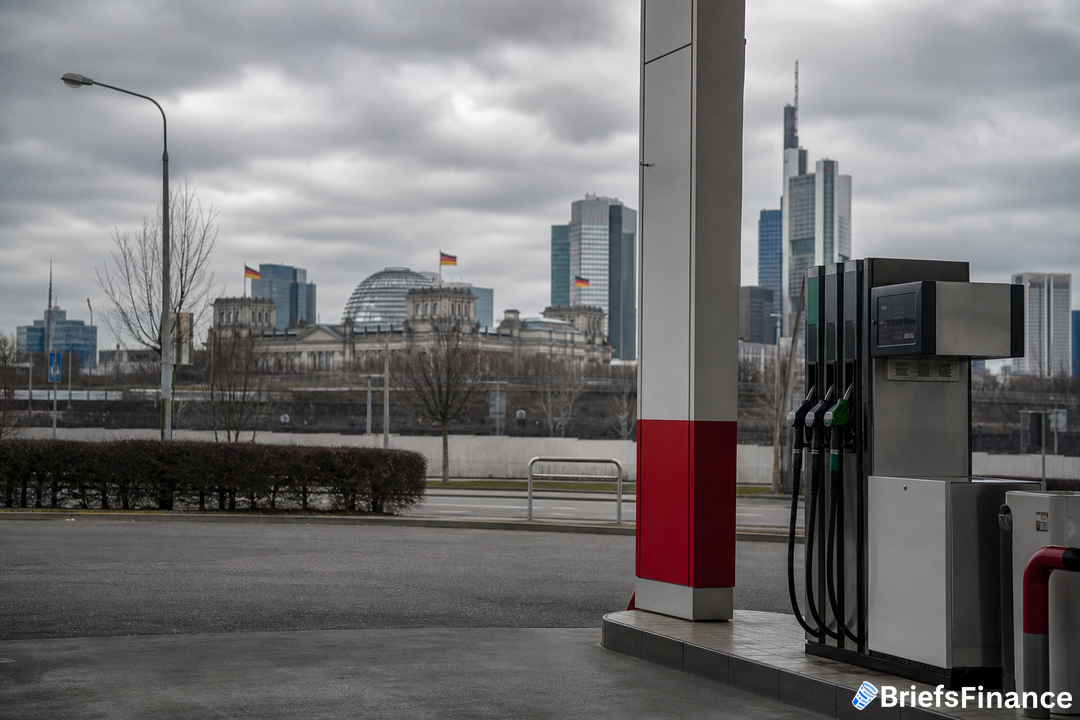
Germany hasn't dodged it. Investors are asking for the richest compensation since 2011 to hold its 30-year bonds. On the 10-year point, bund yields have climbed by 24 basis points from Aug. 4, reaching roughly 3.35%. The comparable US Treasury is up 14 basis points over that window.

Futures imply the ECB will deliver three additional quarter-point rate hikes over the next year, with the first anticipated at Thursday's meeting. For the US, markets price two hikes over the same period.

Energy is back in the driver's seat

Natural gas is steering the story. Since the Iran war began, prices have jumped over 120%, reaching a three-year high last week. Storage is at a record low for this time of year, raising the odds of a last-minute scramble to refill before winter. After sitting out the summer, governments and companies could reenter the market and push prices above €100 per megawatt-hour, about 40% above current levels.

That backdrop is feeding fears the ECB will have to keep tightening. A market-based read on euro-area inflation for the next 12 months is back to levels last seen in May. "Europe's energy dependence is back in focus," noted Ludovic Subran.

He is Allianz SE's chief investment officer as well as its chief economist. He said rising inflation expectations have lifted where investors think policy rates will sit, helping drive longer-dated yields higher.

"Europe is particularly exposed to a gas spike," said Mark Dowding, RBC Bluebay Asset Management's chief investment officer. "The reality is that poorer developing countries can't pay up and Europe essentially outbids them."

In the US, oil is the bigger inflation swing factor and is still about 20% below its April peak, a split that shows up in bond moves. Even if Washington and Tehran succeed in bringing back the peace agreement that fell apart in July, central banks remain wary of second-round effects as energy costs ripple through the economy. A "Super El Niño" in the coming months could also lift food inflation.

Politics is turning the screw

Budget season for 2027 is colliding with rising spending pressures and election calendars, and traders are watching closely.

France has lagged. Would-be successors to President Emmanuel Macron next year are offering sharply different plans to tackle a large debt load and a deficit above 5% of GDP. The extra yield investors demand to own French bonds over German bunds is near its widest since the euro area's 2012 debt crisis.

When conditions change, a steady investing plan helps you stay on track, so claim your free Always Be Buying E-Book

Italy is the contrast. Its borrowing costs have narrowed versus Germany's, a sign investors view Prime Minister Giorgia Meloni as bringing steadier politics and tighter fiscal discipline. She leads the longest-serving government since 1946 and faces an election next year.

Davide Oneglia, who is TS Lombard's director for European and global macro, warned of one risk: that she teams up with a new far-right party, creating a shakier coalition that skews more populist. "There are good reasons to think the market is not paying enough attention to political dynamics in Germany and Italy, leaving it exposed to 'bad surprises' and sudden repricing of risk/term premia when news hit the wire," he said.

Germany has its own flashpoints. Business leaders warn about rising populism after the Alternative for Germany won in Saxony-Anhalt on Sunday, posting its strongest result there to date, yet ending up three seats short of controlling the state legislature. Chancellor Friedrich Merz, already dealing with internal discontent in his conservative bloc, is under increasing pressure.

Bloomberg strategist Conor Cooper notes little immediate macro or fiscal impact even if AfD took state power, but says the reputational hit matters for bunds. Germany's safe-haven status rests on political stability, and although German 10-year yields have increased by less than most peers since the Iran war began, an AfD-led state could change that perception.

Rabobank's Michael Every says markets may be staring at a second structural shift, after Germany moved from strict fiscal limits to looser debt rules to fund major defense and infrastructure. "First, 'Germany will never borrow' became 'Germany is borrowing hugely'; could 'Germany is politically stable' now become 'Germany is politically unstable'?" he wrote. "We are looking at a possible near future where populists are no longer the angry minority but the majority," he added.

Where this leaves investors

Higher yields are tempting some buyers back in. Steve Ryder, a senior portfolio manager at Aviva Investors, has been increasing European exposure while hedging inflation risk due to energy's unpredictability. Kevin Zhao, who runs UBS Asset Management's division for global sovereign fixed income and currencies, has been purchasing long-dated German notes.

Plenty of this is global. Resilient US growth has weighed on Treasuries, and a capital tug-of-war amid heavy bond issuance from governments and tech firms is in the mix. David Zahn, who heads European fixed income at Franklin Templeton, says external forces account for a large share of Europe's move.

He is "pretty close" to buying longer-dated bonds, but wants the German 10-year nearer 3.5% first. "Global yields are rising and so Europe is not immune to that," he said. "I don't know what it's going to be to just stop yields rising."

For your wallet, the takeaway is straightforward: in Europe, gas prices, politics and global crosswinds are setting the level on government yields. If gas keeps stealing the spotlight, it will keep steering the story.

Disclosure

Recent News

1 2 3 69

Get Market Briefs delivered to your inbox every morning for free!

No fluff. No noise. No politics. Just finance news you can read in 5 minutes.

Blogs

September 4, 2026
An Interest Rate Hike in 2026? The Fed Just Broke Its Own Script
  • The Federal Reserve spent a year signaling cheaper money, and its new chairman just warned that an interest rate hike may be coming instead.
  • The Fed is stuck between high inflation and a weak job market, and fixing one makes the other worse.
  • Higher rates also reprice roughly a third of America's $40 trillion national debt this year, which is why Washington wants cuts so badly.
Read More
September 3, 2026
5 Passive Income Ideas That Pay You Whether You Work or Not
  • School teaches one formula: work, earn, spend. Stop working and the money stops, so the wheel never ends.
  • Five assets pay you without your labor - dividends, rent, interest, royalties, and the things you already own.
  • $80,000 a year of cash flow takes about $1 million invested at 8%, or roughly 20 years of $1,000 a month.
Read More
September 2, 2026
The Best Way to Invest 10k: Three Options To Transform 10K into 10 Million
  • Passive investing in stocks or real estate targets around 10% a year, and time in the market matters more than the price you get in at.
  • Active investing means putting your time in alongside your money, which raises the target to roughly 20% a year and raises the risk of losing it all.
  • Investing in yourself has no ceiling, because a new skill can create a new income that no market return can match.
Read More
September 1, 2026
The Tax Write Offs the Rich Are Using in 2026 While the IRS Shrinks
  • The 2026 tax brackets landed lower than they were headed, and the standard deduction jumped from a planned $8,350 to $16,100 for single filers.
  • New write offs for overtime, tips, seniors and car loan interest are live now, and most of them are written to expire in 2028.
  • About a third of IRS auditors have been fired, and four assets do most of the work for people who want income without a matching tax bill.
Read More
August 31, 2026
America Is Running Out of Debt Buyers. Treasury Bills Are the Government's Fix
  • The government took in about $5 trillion in taxes in 2025 and spent about $7 trillion, and the national debt is now over $40 trillion.
  • Investors, banks, and foreign countries are all lending less to the U.S., so starting September 9 the government plans to sell more short-term treasury bills and use that cash to buy back its long-term debt.
  • Government interest rates set the floor for your mortgage, your car loan, and your credit card, and short-term Treasury ETFs like SGOV are one way investors are playing it.
Read More
August 23, 2026
How to Get the Most From Your Guideline 401k
  • Guideline is a company that provides low-cost 401k plans, popular with small businesses and their employees.
  • A "Guideline 401k" follows the same core rules as any 401k: tax-advantaged growth, contribution limits, and often an employer match.
  • The biggest results come from capturing the full match, choosing low-cost funds, and picking Roth or traditional to fit your situation.
Read More
August 23, 2026
Principal 401k: What to Know About Your Plan
  • Principal is one of many companies that manage workplace 401k plans, so a "Principal 401k" is simply a 401k where Principal is the provider.
  • The rules of a 401k are the same no matter who runs it: pre-tax or Roth contributions, tax-advantaged growth, and often an employer match.
  • The biggest wins come from grabbing the full match, picking low-cost funds, and knowing whether Roth or traditional fits you.
Read More
August 23, 2026
What a Tariff Dividend Means for Your Money
  • A "tariff dividend" is the idea of taking money the government collects from tariffs and paying some of it back to citizens.
  • To judge the idea, you first need to know what a tariff is: a tax on imported goods, usually paid by the companies bringing them in.
  • Tariffs ripple through prices, businesses, and your investments, so the smart move is understanding those ripples, not just the headline.
Read More
August 23, 2026
No Tax on Overtime: How Overtime Pay Is Taxed
  • "No tax on overtime" refers to a tax break that lets certain workers deduct some overtime pay, lowering the income they get taxed on.
  • A deduction does not mean overtime is truly tax-free. It means part of that pay is subtracted before your tax is figured.
  • The bigger money lesson: how you earn money changes how it is taxed, and investors often get the friendliest treatment of all.
Read More
August 23, 2026
Reading the Silver Price Forecast for 2026
  • Nobody can honestly promise a specific silver price for 2026. Any exact number is a guess, so treat forecasts as opinions, not facts.
  • Silver is unusual because it is both a precious metal and an industrial metal, so its price answers to two very different forces.
  • Instead of chasing a forecast, learn the drivers - inflation, interest rates, recession fear, and industrial demand - so you can judge any prediction yourself.
Read More
1 2 3 26
Share via
Copy link