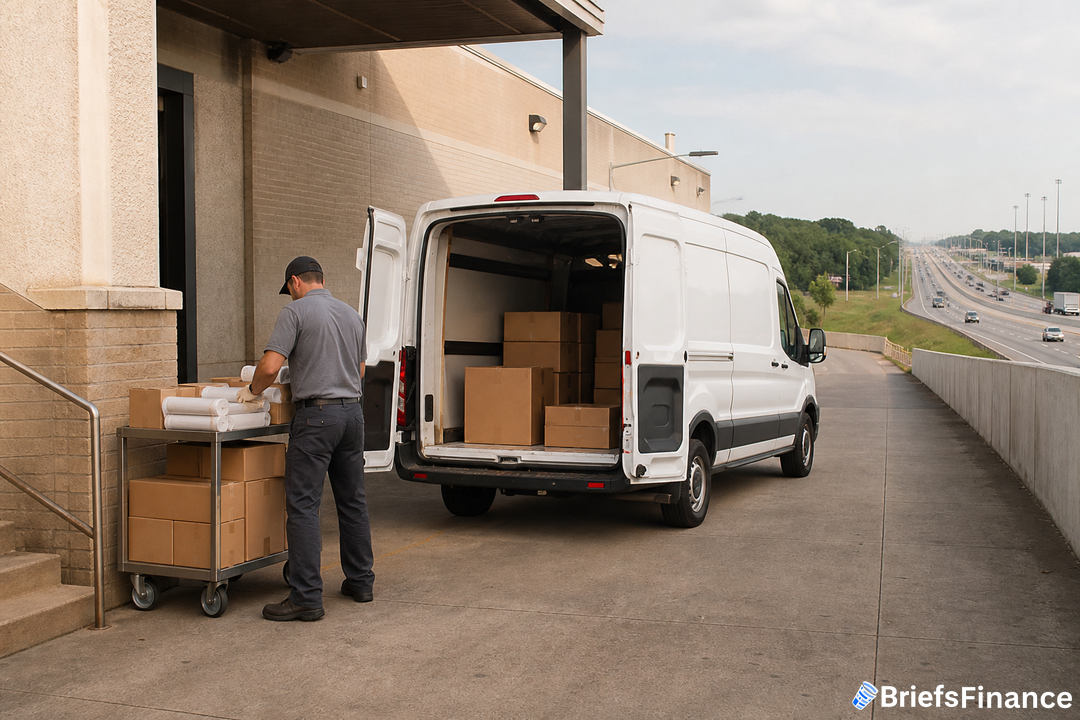
What Walmart is rolling out
Want to toss a cold coffee and a maple-glazed doughnut into the same order as paper towels and socks? Walmart wants you to tap one app for all of it. The retailer will initially deliver Dunkin' products from its own stores, then over the next year plans to extend delivery to most of Dunkin's approximately 10,000 U.S. locations, many of which sit outside Walmart entirely. The move builds on a similar tie up with in-store Subway restaurants.
The program runs through Walmart Restaurant Delivery, the same service that started with Subway. A Walmart spokesperson told CNBC, "We see this as a way to continue adding value and convenience for customers within a shopping experience they already know and trust. By pairing restaurant delivery with Walmart's vast assortment, we can create a delivery experience that gives customers more of what they want in one place."
Walmart is not shy about its intentions, describing itself as a "rapidly emerging contender in the restaurant delivery business."
The strategy underneath the doughnuts
This goes beyond simple pastry economics. At Tulane University, Hongseok Jang serves as an assistant professor of management science focused on online delivery, and he argued that Walmart's enormous shopper base, footprint, and logistics create real leverage over existing food-delivery platforms. "To me it seems that Walmart is testing its own delivery system to see if they can handle it, and if it is successful there will be a big competition between Walmart and Uber Eats and DoorDash," Jang said.
Jang added that a doughnut and coffee order on its own is not the profit engine, but it can spark shoppers to toss more into the cart through the Walmart app. He pointed to proximity as a built-in edge: 90 percent of Americans live within 10 miles of a Walmart, which makes it easier to pair a latte with, say, mouthwash or groceries.
Mike Danford - Adverio's co-owner and chief strategy officer at the e-commerce marketing agency that supports brands on Amazon, Walmart, and Target - distinguished between orders fulfilled inside a store and those dispatched from external restaurants. Delivering from a restaurant inside Walmart is just adding another item onto a basket that is already being staged, he noted, and pointed to the company's Spark Driver system - used by independent contractors to find gig deliveries - to illustrate the model. But once Walmart starts delivering from locations beyond its four walls, "the attachment breaks, and you're essentially running pure delivery economics against DoorDash and Uber Eats, who have already occupied that ground."
That attachment is the point. On a standalone basis, Danford said coffee and doughnuts are low ticket, time sensitive, and temperature sensitive, which makes single item delivery hard to make work. The upside is frequency: groceries happen weekly or monthly, while coffee can be daily.
Rates, prices and policy all end up in your budget eventually. Get the free Market Briefs daily newsletter and see it coming.
"That can easily increase the frequency of orders per customer. Furthermore, the doughnut and the coffee aren't the product. They're the reason someone opens the Walmart app at 6 or 7 a.m. instead of once a week to order a few grocery items," he said.
Early results and operational hurdles
Walmart's leadership has been pushing speed. On the Q2 call, CFO John David Rainey said, "Customers are looking for value and convenience and they want things fast, and that's where Walmart shines." In the U.S., deliveries under 30 minutes grew 48% during the quarter. Even so, recent sales softness weighed on the stock, a reminder of why adding new revenue streams matters.
Greg Cathey, a Walmart senior vice president, wrote this week that after the Subway service launched, close to 65% of restaurant orders arrived bundled with Walmart items that customers wanted quickly. He also said restaurant delivery is introducing more people to Express Delivery: in one out of five orders that combined Subway with Walmart items, the shopper was using Express Delivery for the first time, and close to 30% of those first-timers returned within 30 days.
Execution is the swing factor. Amrita Bhasin, the co-founder and CEO of Sotira, which runs an AI-powered supply chain platform, said Walmart will need to build delivery density and optimize routing to truly rival DoorDash and Uber Eats. "If one person in a rural area is ordering food at an odd or off-peak hour and the driver has to undertake that route for a single person, this complicates economics by driving up costs for the user and/or compressing margin for Walmart," Bhasin said.
Food is also less forgiving than dog food or toilet paper. Customers expect fast, hot or cold as promised, and reasonable prices.
R.J. Hottovy, who leads analytical research at Placer.ai, said the Dunkin' test will help cement Walmart's place in the space "assuming iced coffee doesn't arrive room temperature and hot coffee doesn't arrive at room temperature." He added, "Walmart's expansion into third-party delivery is more than an in-store partnership play. Extending delivery to Dunkin' locations beyond its own stores signals that Walmart wants to be a restaurant delivery marketplace, not just a landlord." Because Walmart already runs a network fulfilling from stores, he said its cost structure differs from pure plays. The goal is attachment, not a bigger single ticket: "Coffee and doughnuts are low-ticket purchases, but Walmart doesn't need a $6 Dunkin' order to work on its own - it needs to attach that order to an existing $80 grocery basket for the economics to work," he said.
The market read and what to watch for your wallet
The competitive backdrop even showed up next to a DoorDash stock snapshot: Last NYSE Arca price 211.71 with a change of -0.02 (-0.01%), and After Hours 211.73 with a change of -10.27 (-4.63%), labeled 09/04/26 EDT.
Bottom line for everyday shoppers: Walmart wants to be the place you open first, whether it is for a daily coffee or a weekly grocery run, and to make it easy to add more to the same delivery. What matters next is whether it can keep drinks at the right temperature, hit fast delivery times, and prove the model works when orders start from outside its own stores.