Free NewsletterPro Login

Warning: Undefined variable $stocks in /var/www/briefs.co/htdocs/wp-content/plugins/oxygen/component-framework/components/classes/code-block.class.php(133) : eval()'d code on line 448

Warning: foreach() argument must be of type array|object, null given in /var/www/briefs.co/htdocs/wp-content/plugins/oxygen/component-framework/components/classes/code-block.class.php(133) : eval()'d code on line 448

Warning: Undefined variable $funds in /var/www/briefs.co/htdocs/wp-content/plugins/oxygen/component-framework/components/classes/code-block.class.php(133) : eval()'d code on line 472

Warning: foreach() argument must be of type array|object, null given in /var/www/briefs.co/htdocs/wp-content/plugins/oxygen/component-framework/components/classes/code-block.class.php(133) : eval()'d code on line 472
/* the link was here */

U.S. Adds 162,000 Jobs in August as Unemployment Holds at 4.1%

Published Sep 4, 2026
Share:
Summary:
  • Payrolls rose by 162,000 in August, the strongest monthly gain since March, while unemployment stayed at 4.1%.
  • Labor force participation ticked up 0.2 percentage point as 683,000 people joined the labor force and employment rose by 569,000.
  • After the report, futures slipped and short-term Treasury yields jumped, with traders assigning roughly 60% odds to a quarter-point Fed hike on Sept. 15-16.

The headline numbers

Hiring snapped back in August. The Bureau of Labor Statistics reported a seasonally adjusted 162,000 increase in nonfarm payrolls, topping the 53,000 that Dow Jones' survey had penciled in and marking the biggest monthly add since March. The jobless rate matched forecasts at 4.1%, 0.2 percentage point lower than a year earlier.

The household survey backed up the strength: employment climbed by 569,000 and the labor force expanded by 683,000, lifting participation by 0.2 percentage point. The broader underemployment gauge that includes discouraged workers and involuntary part-timers dropped to 7.7% - 0.2 percentage point lower - its lowest since June 2025.

Earlier months were revised higher. July flipped to a 21,000 gain after initially showing a loss of 23,000, while June now stands at a 31,000 increase, 11,000 more than first reported.

Where jobs showed up

Gains were spread around. Restaurants and bars added 59,000 jobs, government education grew by 42,000, and factories added 16,000 positions. Health care, usually the leader, was up 13,000 in August compared with a 12‑month average of 32,000.

There were signs of strain in information-related industries, which cut 23,000 jobs and have averaged an 8,000 decline per month over the past year. Pay growth stayed steady: average hourly earnings rose 0.3% on the month, and 3.1% over the year, the latter a tenth above expectations.

Markets and the Fed's next move

Investors read the upside surprise as a possible nudge toward tighter policy. Stock futures slipped after the release, and yields rose sharply at the front end of the Treasury curve where Fed decisions bite the most. CME Group's FedWatch tool showed traders leaning toward about a 60% chance of a quarter-point hike at the Sept. 15-16 meeting.

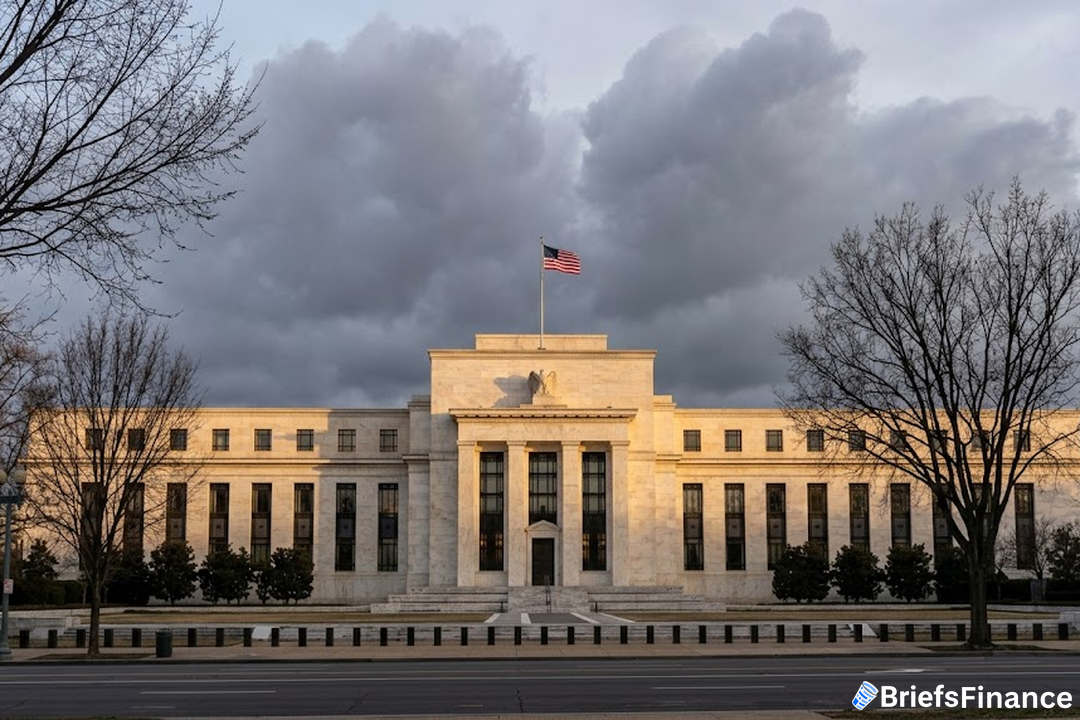
Fed officials have called the labor backdrop stable, and this report keeps the focus on next week's inflation data as the final say before the rate decision. Market expectations have swung: comments last week from Fed Chairman Kevin Warsh boosted odds of a hike, while this week's comments from Governor Christopher Waller and others added uncertainty. The FOMC hasn't changed the federal funds rate since three reductions in late 2025, and officials remain more concerned about inflation, which has run above the 2% target for roughly five and a half years.

Even when headlines change, steady saving and disciplined investing pay off, so download the free Always Be Buying E-Book

Producer prices arrive Thursday and consumer prices Friday. Waller said he would support leaving rates unchanged if the monthly readings continue to show inflation cooling. New York Fed President John Williams told CNBC he's taking a data-dependent, wait-and-see approach.

Governor Michael Barr likewise indicated that if inflation keeps moderating, he would favor staying on hold. Both Barr and Waller also made clear they would raise rates if upcoming data point the other way.

Economists weighed in as well. Chris Rupkey of Fwdbonds said the jobs landscape remains robust and is adding enough positions to keep growth in positive territory.

Politics and what this means for your money

President Donald Trump characterized the August figures as a strong jobs result and urged the Federal Reserve to lower, not raise, interest rates. In a social-media post, he pressed the central bank's leadership to act, argued that high rates put the U.S. at a disadvantage, and warned he would move to halt trade with deficit-counterpart countries unless the Fed cuts, citing a Supreme Court tariff ruling as backing for presidential authority.

Bottom line for your wallet: a sturdy job market plus cooler inflation would point to steady rates, while hotter price data could tilt the Fed toward a hike. That next move will ripple through borrowing costs and savings yields you actually feel, from credit cards to CDs. Keep an eye on Thursday's PPI and Friday's CPI for the cue.


Disclosure

Recent News

1 2 3 … 98

Get Market Briefs delivered to your inbox every morning for free!

No fluff. No noise. No politics. Just finance news you can read in 5 minutes.

Blogs

October 5, 2026
What Is the Briefs Connector? A Simple Guide
  • The Briefs Connector lets your favorite AI read Briefs research, like Pro reports and the Briefs Score.
  • Without it, an AI asked about investing can give answers that sound right but aren't backed by that research.
  • It explains the research, but it won't tell you what to buy or sell.
Read More
October 5, 2026
Is a Recession Coming? What the Last Five Rate Hiking Cycles Say
  • The Fed has started raising rates again, and in the last five hiking cycles going back to 1994, a recession never started while the hikes were underway.
  • The pain showed up where there was a bubble to pop - housing in 2008, dot-coms in 2000, the pandemic money-printing boom in 2022 - and usually after the hikes ended.
  • Private equity and private credit are feeling this cycle first, and how far the pain spreads depends on how high rates go and how long they stay there.
Read More
October 2, 2026
Fed Interest Rates May Rise Again in 2026 - and the Newest Culprit Is AI
  • Fed Governor Barr told a meeting our head of investing research attended that higher rates are likely in 2026, lower inflation may not come soon, and AI is now pushing prices up.
  • The same week, President Trump asked the biggest AI companies to police themselves under an accord that's morally but not legally binding, because the White House sees AI as a race with China.
  • Higher rates put downward pressure on asset prices and squeeze borrowers, but the way through hasn't changed: own investments, buy on a schedule, and treat downturns as discounts.
Read More
October 1, 2026
Housing Market 2026: Why Office Buildings Are Cracking Before Houses Do
  • Office buildings are selling for 80% to 95% off because their five-year loans are resetting at much higher rates while half-empty floors have gutted the income those buildings are valued on.
  • Housing is under pressure, not cracking: a $400,000 mortgage costs $975 more a month than at 3%, but six of every seven mortgages are still under 6% and those owners are staying put.
  • Whether pressure turns into cracks is a race between unaffordability and the economy, and either way Jaspreet's rule is to treat your house as a liability and buy only what you can afford.
Read More
September 30, 2026
Dividend Investing vs. Growth Investing: Why the Slower Portfolio Can End Up Bigger
  • "What stock should I buy?" is the wrong first question. Growth, income, or wealth preservation comes first, and the goal changes which stocks even make sense.
  • At $500 a month for 30 years, 13% growth builds about $1.75 million. 10% growth plus a reinvested 4% dividend builds a little more than $2.2 million and pays a little more than $80,000 a year.
  • Income investors have US dividend ETFs, REITs, and international dividend funds to study. Growth investors have the Nasdaq 100, AI and chip funds, and small caps. None of it is a recommendation.
Read More
September 29, 2026
Why Is Gold Going Down? A 5.2% Treasury Yield Just Took Its Job
  • President Trump rejected Iran's deal to reopen the Strait of Hormuz, oil prices jumped back up, and gold fell instead of rising.
  • Treasury yields hit their highest level in more than 20 years, so investors sold gold and bought Treasuries that pay interest.
  • Higher Treasury yields make the national debt, mortgages, car loans, and credit cards more expensive, with the Fed's next rate decision due October 28.
Read More
September 28, 2026
The Strategic Bitcoin Reserve: Why the Government Wants Bitcoin to Explode
  • The US government holds about 328,000 Bitcoin, worth roughly $25 billion, and since a 2025 executive order it keeps seized coins instead of selling them.
  • Washington wants a bigger pile of assets so its $40 trillion national debt looks smaller next to them, which lets it keep borrowing and spending.
  • Bitcoin's wild price swings, and a government holding a coin built to escape governments, are the two risks investors need to watch.
Read More
September 25, 2026
BRIEFS EXCLUSIVE: 43% Of Respondents Say Bills Outran Their Income Over Past Two Years
  • 43% of the 494 Market Briefs readers surveyed said their bills grew faster than their income over the past two years, even though 79% could cover a surprise $5,000 expense tomorrow.
  • Half of readers own gold or crypto, the two classic bets against a weaker dollar, and only 13% bought nothing at all in the last 12 months.
  • The median reader says it takes $150,000 a year to feel financially secure, about $62,000 above the U.S. median household income.
Read More
September 25, 2026
The Economy Is Booming. So Why Did Stocks and Bonds Fall Together?
  • S&P Global says the US economy is growing at its fastest rate since 2021, with corporate profits up 28.9% in a year, almost four times the historical average.
  • Stocks and bonds fell at the same time, which is not how the two markets normally behave, because Treasury yields above 5% now compete with stocks for investors' money.
  • Jaspreet Singh lays out three ways to invest through a shift like this: always be buying, buy the crash, or follow the money before it hits the headlines.
Read More
September 24, 2026
The 2026 Economic Reset Is Starting: Are We in a Recession, or Is the Pain Still Ahead?
  • The Federal Reserve has flipped from stimulating the economy to fighting inflation with higher interest rates, while the White House still wants growth at almost any cost.
  • The national debt tops $40 trillion, has outgrown the entire U.S. economy, and its interest payments are now the government's fastest-growing expense.
  • Higher rates bring pain for private equity, private credit, and speculative assets, but they open opportunities for investors holding cash, treasuries, and value assets.
Read More
1 2 3 … 28
Share via
Copy link