Fields burned, costs ballooned
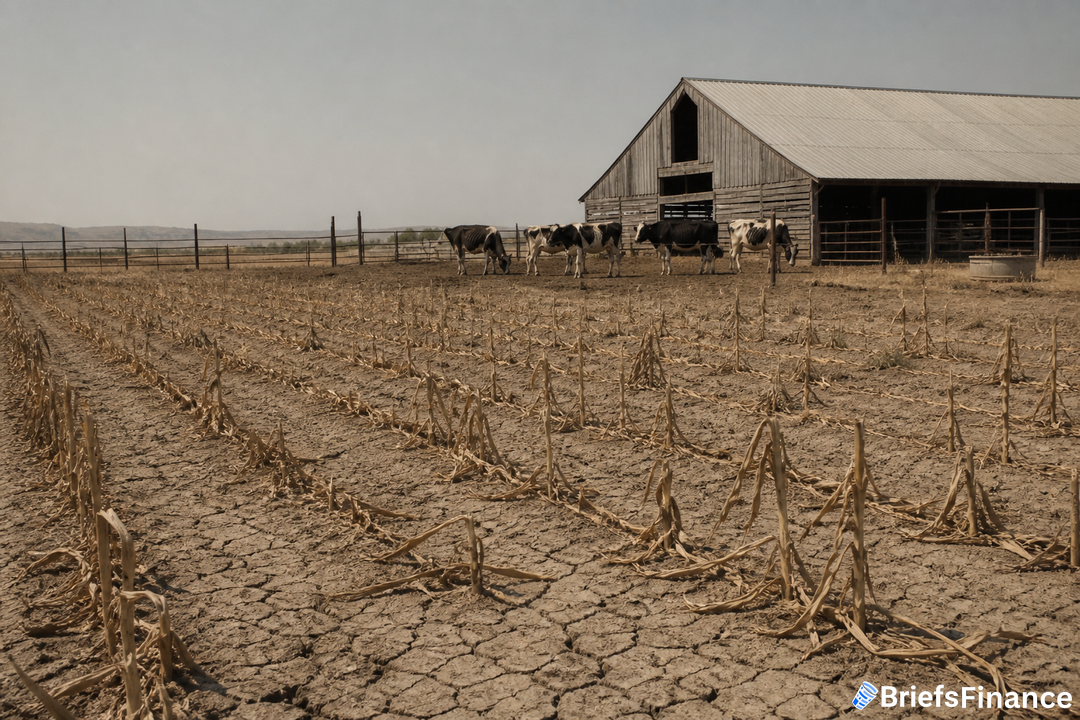
In Kilkenny, the rain is back, but farmer Denis Drennan says it will take ages for his grazed-out fields to bounce back from the heat. "It was the intensity of the heat that really dried out the ground. It's so burnt," he said.
"It's like when you come home from holiday and all your house plants are dead." With grass scarce, he has been dipping into fodder months earlier than normal.
"There's a triple whammy here. It's costing me a fortune to feed the cows. The cows are not as productive as they should be. But the bigger worry at the moment is that I'm eating into my fodder stocks for the winter." Costlier silage and concentrates have pushed his daily feed bill to €5.80 per cow, more than twice what he normally pays.
Ireland logged its driest July on record. Across the Channel, the UK had its hottest summer ever, while France endured a heat wave that ranked among its lengthiest and fiercest. The result across major cattle regions like France, Germany, Spain and Ireland: grass growth stalled and the usual summer grazing rhythm broke down.
Feed gets tight, prices get punchy
With less grass in the mix, feed markets are feeling the squeeze. Corn prices in Paris are sitting at a three-year high as a weak EU harvest tightens local supply and worries around the Black Sea add another layer of risk. The European Commission expects green corn yields to come in 12% below the five-year average. Soybeans are under strain too, with yields projected to drop 14%.
That leaves Europe leaning harder on imports. FEFAC, the group representing feed makers, reckons the bloc will need about an extra 7 million tons of corn this year to cover demand. Lower forage harvests could also swell the EU's bill for soy-based feed ingredients in 2027 by more than €1 billion.
And it is not just corn and soy. The heat hit alfalfa and sugar beets as well, cutting into the usual supply of leftovers that often end up as feed. "It's really a question of availability right now," said Fabrice Couturier, president of FRSEA Grand Est.
Understanding what moved a market beats knowing that it moved. Get the free Market Briefs daily newsletter and follow the drivers.
"There will be virtually no by-products - the residues left over after processing the plant - that can be utilized for animal feed."
Milk output slips, and the pressure spreads
Less feed and heat-stressed animals are already showing up in the milk line. In France, grass growth dropped by 50%, per Ludovic Blin, who holds the vice presidency at France's National Federation of Milk Producers. "We have some dairy farms where production decreased around 30%," he said. "If we don't have feed for animals, it's impossible to have milk production."
Some farmers are making hard calls. In Dorset, England, dairy farmer Sophie Gregory put it bluntly: "People are already killing cows ready for the winter, knowing they won't be able to feed them." The UN's Food and Agriculture Organization noted dairy prices are edging higher, with its global gauge up 2.3% in August after four straight monthly declines. Meanwhile, the EU's cattle herd is heavily concentrated, with 71.6 million head in 2025 and France alone accounting for almost a quarter, amplifying the impact where animals are clustered.
The global backdrop and what to watch for your wallet
Europe's rising import needs are arriving at an awkward moment. The Black Sea grain export corridor has been badly disrupted as tensions between Moscow and Kyiv intensify, threatening access to Ukrainian supplies and compounding a thin EU harvest. That combination is part of why Paris corn hit a three-year peak, according to Euronext.
Back in Ireland, Drennan says the usual safety valve has vanished. In past years, he and others could bring in hay or alfalfa from France.
"No one has any surplus. This is the problem," he said. "But we don't have that option this year. So we're in real trouble for the winter months ahead."
Why it matters for your money
Feed is a big line item in dairy and meat production, so pricier corn and soy plus thinner forage can ripple into grocery bills. The UN dairy index just ticked up, and if imports cannot plug that extra 7 million tons of corn Europe is hunting for, the pressure on milk and meat supplies could linger. Keep an eye on weather into autumn, import flows via the Black Sea, and whether farmers start shrinking herds. Those signals will tell you how much staying power this squeeze has, and how much of it might show up in your weekly shop.