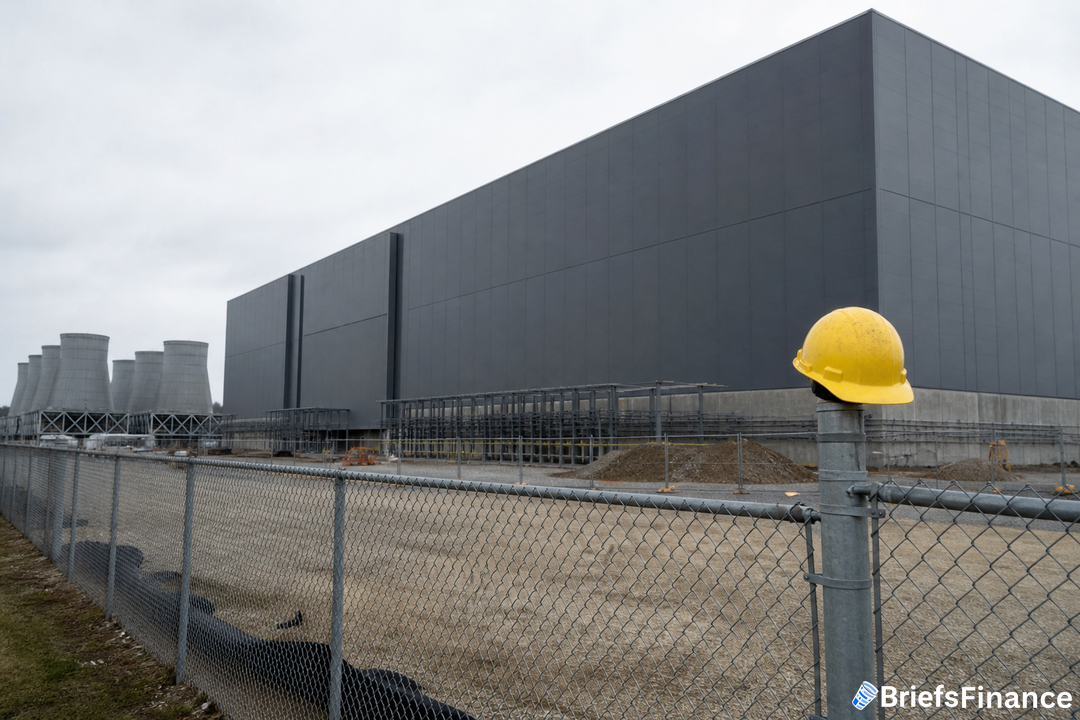
A union training pipeline feeding Data Center Alley
At Local 26's training facility, fourth-year apprentices wire up devices from diagrams during their limited classroom time. As Jimmy Herrera put it to the room, "Plug everything in how it's shown in the picture, make sure that it starts and we're able to stop it." Their classroom sessions total roughly two days each month, with the remainder spent working on live projects.
In Chantilly, Virginia - an area widely referred to as Data Center Alley - Herrera's current post is with a contracting firm. He said a fresh shipment of equipment had landed and the team was starting to tie everything in. The tasks are intricate, and he likes that.
The boom shows up on his timesheet and at home. His week ballooned to 60 hours, earning overtime at time and a half and double time in addition to his $43-per-hour fourth-year apprentice pay. With a 7-year-old daughter, he is saving for a home. On his next paycheck: "It's going to look good."
Why the union is backing data centers
The wave of construction has been a major lift for Local 26. Roughly half of members' current assignments are at data centers. "We haven't seen this kind of growth for skilled tradespeople in generations," said political coordinator Don Slaiman, calling it "the opportunity now for blue-collar workers to get another crack at getting into the middle class."
Slaiman spent years fighting to preserve union jobs as blue-collar communities were hit hard. "I would love to bring back all the American industry that was offshored. That's not happening, but this is an industry of tomorrow being formed today," he said.
Years ago, Virginia paved the way with zoning rules and tax breaks, and since then hundreds of facilities have gone up, nearly all with union labor. As Slaiman put it, "We build 97% of them."
The backlash and how the union is responding
Herrera knows the projects spark pushback. He has seen online criticism over the vast energy and water they use, the constant hum, and pollution from backup generators, among other concerns.
Slaiman now spends hours at local council meetings, making the case to officials and residents who are firmly against new sites. He points to technology aimed at reducing water and energy use and to wider economic openings beyond electrical work. "These things are cash registers, basically," he said, citing Loudoun County, where levies on servers and gear housed within the facilities have paid for new schools, libraries, and rec centers, along with a reduction in property taxes.
When local projects shape communities, staying informed about the broader economy matters, so sign up for the free Market Briefs today.
Yet resistance is spreading.
"It's both parties now. It's the right and the left. It's really a fever that's caught hold," Slaiman said.
Gallup recently found 7 in 10 Americans do not want AI data centers built in their area. Most centers Local 26 has built serve cloud storage, banking, and streaming, but the union also points to a massive AI project in southern Virginia described as a $100 billion investment.
Chris Brooks - now in the union's business operations and a veteran of a 1999 data center job - has watched members do well through the boom. Lately, though, he sees headlines about moratoriums because "people don't want data centers." His take: "I'd rather have a data center in my community than another neighborhood full of people." And he adds a reminder that nothing lasts forever.
What this means for your portfolio and workers
For labor, these builds translate to steady shifts and premium pay; for municipalities, they can generate substantial tax revenue. Loudoun County's tax on servers and equipment funded public facilities and a property tax cut, while close to half of Local 26's current workload is at data centers, with a planned $100 billion AI build in southern Virginia on the horizon.
The bottom line: demand for compute is fueling construction, but opposition is mounting. Your read on local permitting, new water and power saving tech, and whether projects are general cloud or AI specific will shape how durable this build cycle looks for contractors, suppliers, and the tax bases tied to them.
Because livelihoods and local work intersect with big economic trends, get concise context each morning with the free Market Briefs newsletter.