Free NewsletterPro Login

Modern Way pitches container grain route via Abkhazia to Turkey

Published Oct 23, 2026
Share:
Summary:
  • Four people say logistics operator Modern Way is proposing to move wheat and other farm goods from Abkhazia's Ochamchire port to Turkey using containers.
  • The terminal aims to start shipments to Turkey's Gebze once a quality inspection service is launched by the end of next month, according to a Modern Way employee.
  • With attacks between Russia and Ukraine largely halting flows from both countries' grain hubs, wheat hit a three-year high in August, spurring efforts to find alternative routes.

The pitch

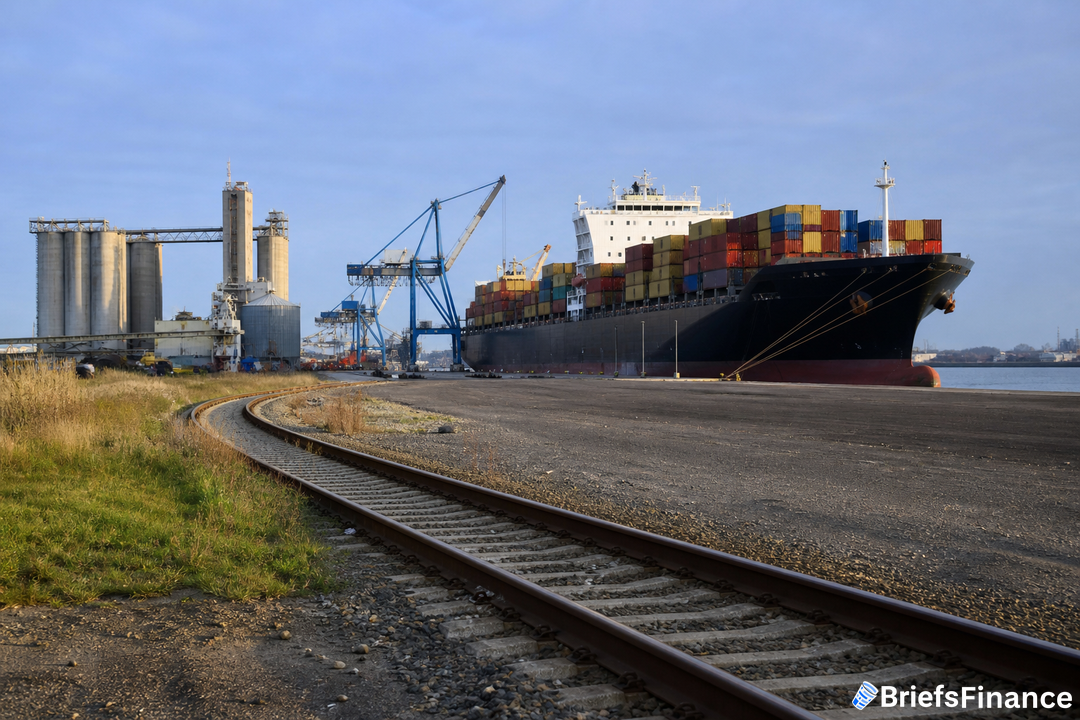
Four people with knowledge of the talks said Modern Way has proposed moving wheat and other agricultural cargo via Abkhazia's Ochamchire port, and that several Russia based traders and brokers are weighing containerized shipments to Turkey. The terminal can begin moving grain to Gebze in Turkey once a quality inspection service opens by the end of next month, a Modern Way employee said, asking not to be named.

The company moves containers by sea and rail, lists offices in Russia and China, and also offers air freight and storage, per its website. Emailed questions went unanswered by Modern Way; by the administration of the Ochamchire port; by Abkhazia's economy ministry; and by Russia's transport and agriculture ministries.

Why this workaround now

Russia normally accounts for about one-fifth of the global wheat trade, and roughly 90 percent of its exports move through Black Sea ports. Attacks between Russia and Ukraine have largely stalled shipments from both countries' primary grain hubs, pushing wheat to a three year peak in August and forcing a scramble for new routes. The disruption has squeezed revenues for farmers and traders, while Moscow has applied both pressure and incentives to preserve Russia's market lead.

So far that has meant reaching for the Arctic port of Murmansk, using Baltic ports, and railing grain to the Far East. Traders have also increased the use of containers running across Russia to ports as far apart as St Petersburg and Vladivostok, but these channels have not met needed volumes to date. "Russia's willingness to consider virtually every available export outlet indicates that security and continuity of supply are becoming almost as important as conventional freight economics," said Swithun Still, a consultant with decades in the grain trade. It "tells us how seriously exporters are taking the disruption to their traditional Black Sea logistics." Data from ProZerno show Russia's wheat exports have fallen since August as attacks shut the country's main hubs.

When global trade routes can affect supply chains, stay informed with our free Market Briefs newsletter that summarizes markets in minutes

How it would operate - and the limits

Ochamchire is small, and loading grain into containers is costly and uncommon, usually used for higher value or perishable foods like spices and bananas. By comparison, bulk carriers for grain can top 100,000 tons, while freight specialists at Kpler say a standard 20 foot container holds about 23 tons and requires extra time and handling.

Even with those hurdles, containers have gained ground in recent months as rail subsidies and a slump in domestic wheat prices, with unsold supplies building up on farms, help offset higher freight bills. "Container shipments have moved into this economic gap," said Arkady Zlochevsky, head of the Russian Grain Union. "But they are more expensive, so nobody sees them as a long-term solution for cargoes of this size."

The backdrop and the investor angle

Abkhazia is a Kremlin backed separatist region that most countries consider part of Georgia. The region split from Tbilisi in the 1990s, and Russia recognized it as independent in 2008 following a short war with Georgia. Russia financed completion of the Ochamchire container port last year as one element of a wider push to diversify Black Sea logistics. How many traders choose the Ochamchire route remains uncertain, said people familiar with the matter.

The bottom line: Russia is testing every outlet it can find, but alternatives have not matched Black Sea capacity, and containerized grain remains a costlier stopgap.

Because geopolitics and logistics often ripple through prices, sign up for Market Briefs for a five minute digest of markets and economy

Disclosure

Recent News

1 2 3 … 109

Get Market Briefs delivered to your inbox every morning for free!

No fluff. No noise. No politics. Just finance news you can read in 5 minutes.

Blogs

October 23, 2026
Are We in a Recession? 5 Threats to the Economy and Where the Money Is Moving
  • The S&P 500 is up about 13% this year, but without AI it's in a bear market, with nearly 40% of its companies down more than 20% for four months or longer.
  • Jackson, Briefs Finance's head of investing research, sees five threats: rising interest rates, sticky inflation, an economy propped up by AI, a struggling UK, and high oil prices.
  • The opportunities he's watching mostly sit outside the dollar: rising economies like Brazil and Indonesia, US-backed emerging market bonds paying 7% to 9%, and the shifts that fear creates.
Read More
October 16, 2026
How Boring Math Makes You Rich: The Briefs Money Spreadsheet, Explained
  • Briefs Money shows you what to do with every paycheck, and in what order: how much to spend, save, and invest, when to build an emergency fund, and which debt to pay off first.
  • The Climb to Wealth course walks you through the system step by step, and the Personal Finance Spreadsheet is where you track your own numbers.
  • Investing is one piece of building wealth. The system that gets money to your investments, and keeps it there, decides the outcome.
Read More
October 16, 2026
Common Investing Mistakes: Why a Stock Grade Is One Tool, Not the Whole Toolkit
  • The Briefs Score shows growth, income, and wealth preservation investors how well a stock fits their goal, with a separate letter grade for each one.
  • The most common mistake is treating the letter as an instruction. An A tells you a stock scores well for one goal, not that you should buy today.
  • Research works best as one input in a process you own. The grade shows how a stock stacks up. You supply the goal, the timeline, and the rules for being wrong.
Read More
October 16, 2026
How to Read a Company's Numbers Without a Finance Degree (Using Briefs Terminal)
  • Briefs Terminal lets you size up any public company in about ten minutes: what the stock costs, what it earns, how fast sales are growing, and what it pays you, all on one page.
  • It lines those numbers up against the company's closest competitors for you, so you can tell if a number is impressive or just average.
  • Below that are the income statement, balance sheet, and cash flow statement from the company's SEC filings, the latest news, and transcripts of its earnings calls.
Read More
October 16, 2026
What Type of Investor Am I? The Three Investor Archetypes, Explained
  • Briefs sorts its stock grades and monthly reports by three investor goals: growth, income, and wealth preservation. Pick yours and you know which report and which grade to read first.
  • Growth investors want stocks that beat the S&P 500. Income investors want to get paid in cash. Wealth preservation investors want stocks that hold up when the market drops.
  • The same stock can score an A- for one goal and a D- for another, so picking your goal comes before picking any stock.
Read More
October 16, 2026
How to Build a Stock Watchlist That Isn't Just Stocks You Heard About
  • A watchlist on Briefs Terminal lets you group stocks by the idea you're tracking and follow each one's price, one-day move, and 52-week high and low in one place.
  • Each list has its own name and description, so you always know why a stock is on it, and you can make as many lists as you have ideas.
  • The monthly growth, income, and wealth preservation reports under the Briefs Research tab hand you new themes to track that you didn't hear about online.
Read More
October 16, 2026
How to Choose an ETF That Matches Your Idea (Using the ETF Planning Tool)
  • The ETF planning tool takes an idea like "I want to invest in fast food companies," asks what you mean, and finds the ETFs that match, with the reasons, the holdings, and the sources.
  • Build a Plan then shows what your money could grow to in those ETFs over the years you choose, with conservative, expected, and optimistic estimates next to the S&P 500.
  • It gets you from an idea to an actual plan without researching dozens of companies one at a time.
Read More
October 16, 2026
Is This Stock a Good Buy? How to Use the Briefs Score to Tell If a Stock Fits the Way You Invest
  • The Briefs Score shows growth, income, and wealth preservation investors how well a stock fits their goal, with a separate letter grade for each one.
  • One stock can score very differently for each. Nvidia showed an A- for growth and a D- for income, because it grows fast and pays almost no dividend.
  • Seven sub scores under each grade show what earned the letter, so you can see exactly where a stock is strong or weak for your goal.
Read More
October 16, 2026
How to Tell an Asset From a Liability: The One Question to Ask Before You Buy Anything
  • The typical American household earned more in 2025 than in any year on record, yet only 30% of Americans say they could pay a surprise $1,000 bill from savings, so the problem isn't income but what the income gets spent on.
  • An asset puts money in your pocket and a liability takes money out, and the wealthy buy assets first, then let the assets pay for the fun stuff.
  • Before you buy anything, ask one question: does this put money in my pocket, or take money out of my pocket? Then you need a plan for the money you keep.
Read More
October 16, 2026
How to Build Your First $2,000 Emergency Fund and Wipe Out Every Debt Over 10%
  • Your first money goal isn't investing, it's $2,000 in its own account named Do Not Touch, built by moving 10% of every paycheck into it automatically.
  • More than a third of American adults couldn't cover a $400 surprise bill with cash or savings, according to the Federal Reserve, and that's how one bad day turns into years of credit card payments.
  • Once the $2,000 is there, attack every debt charging more than 10% interest, highest rate first, because you can't out-invest a 22% credit card so paying it off is the investment.
Read More
1 2 3 … 29
Share via
Copy link










