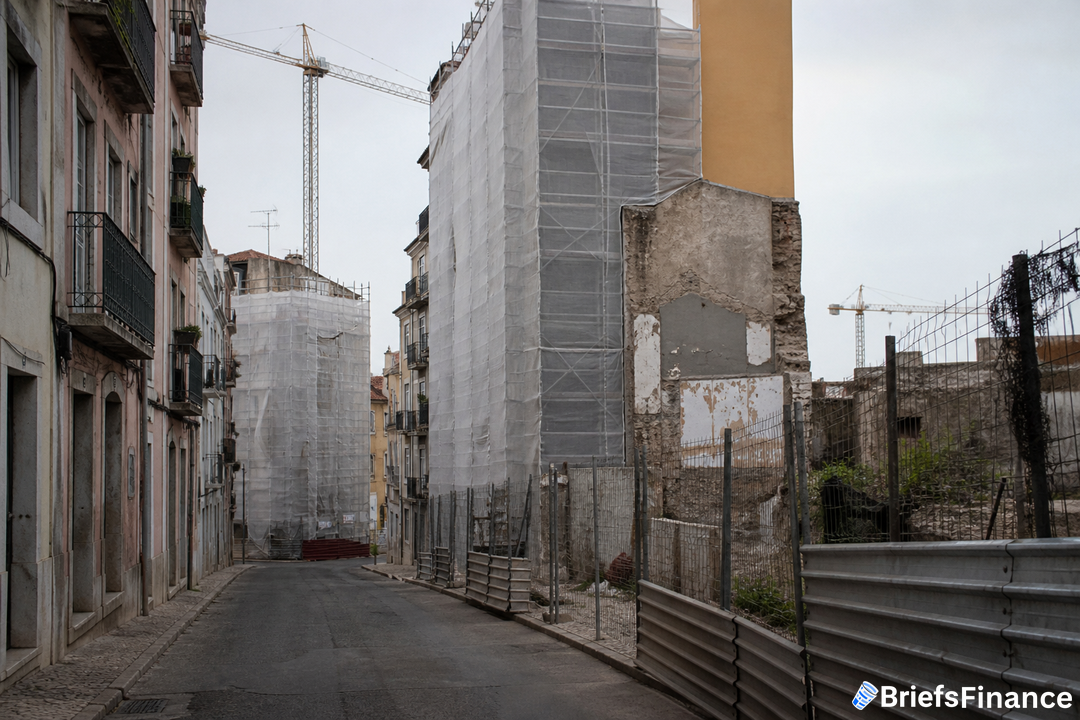
What the governors said in Lisbon
Álvaro Santos Pereira, speaking in Lisbon late Thursday, said the shortfall is around 300,000 homes and pushed for supply first solutions. "The solutions have to come from the supply side. We have to build considerably more," he said.
José Luis Escrivá, at the same event, described the same imbalance. "The key thing is that we are facing an imbalance between very strong demand and supply that has been very sluggish," he said, citing population gains, migration and economic growth in Spain. He added that tourism is adding pressure in both countries.
The numbers behind the squeeze
Portugal currently delivers roughly 27,000 new dwellings a year - far below the 126,000 completed in 2002, the National Statistics Institute reports. In both countries, homebuilding remains under pre global financial crisis levels even as demand from locals and immigrants keeps climbing.
Portugal posted the EU's fastest annual house price increase in the second quarter, per Eurostat. Prices rose 16.5% in Portugal, 12.1% in Spain and 4.7% across the bloc. The European Commission reports that in Portugal, only about 2% of the total housing stock is social housing; Spain's proportion stands between 1.5% and 1.7%, compared with roughly 7% for the EU overall.
When housing and policy issues affect everyday life, stay informed with our free Market Briefs newsletter delivered in minutes.
Local pressures and what to watch
Santos Pereira said Portugal is "facing problems attracting labor" to construction and pressed for faster licensing and less bureaucracy to expand supply quickly. Both officials declined to discuss rising debt and EU inflation because of the blackout period before the ECB's next policy meeting.
Housing- and cost-of-living protests are proliferating throughout Europe. Demonstrators in Madrid and Lisbon have erected encampments in public areas to draw attention to affordability pressures, as rents outpace incomes for many residents.
Why this matters for investors
Escrivá said Spain's market today differs from the run-up to the 2010 crisis, noting that households, companies and real estate developers carry comparatively modest debt burdens. "While prices are rising sharply, the situation does not currently pose a major concern for financial stability," he said. The bottom line: tight supply, strong demand and thin social housing are supporting prices in Iberia, a backdrop that can lift construction and building suppliers while keeping affordability under pressure for your portfolio's tenants and customers.
If you want clear context on what matters for your finances, sign up for Market Briefs to get concise updates.