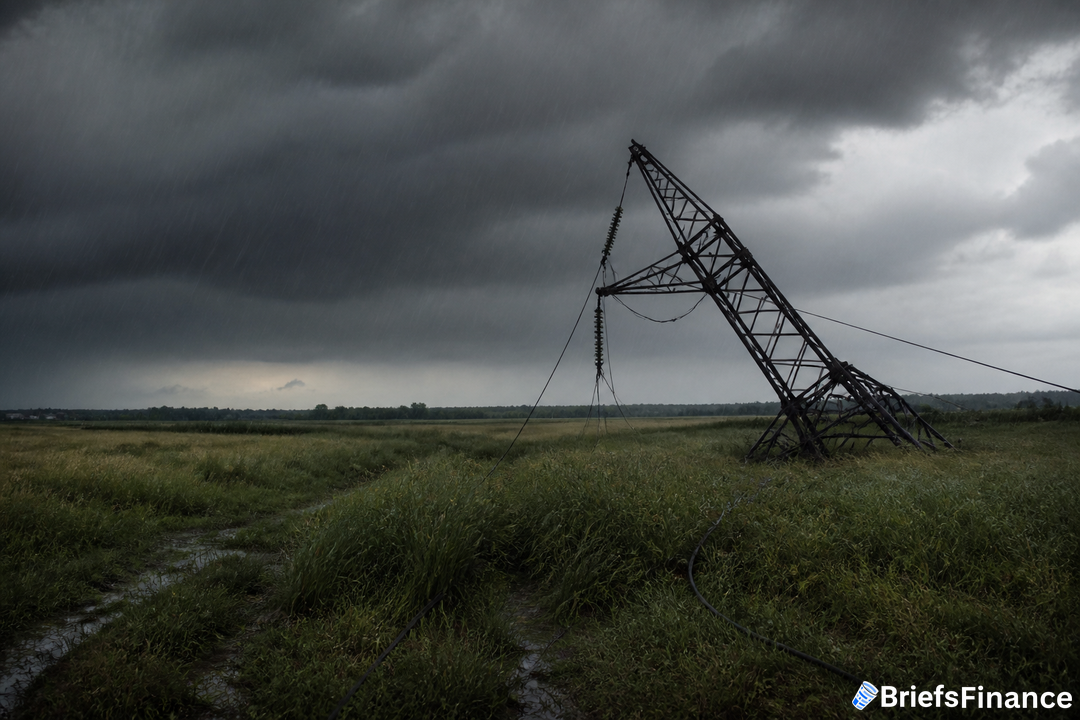
What happened on the ground
Storm Austen hit Friday with hurricane force in parts of western France, knocking out power to almost 300,000 customers and disrupting roads and railways. Enedis said Brittany was worst affected with nearly 150,000 cut off, while Normandy had 88,800, Pays de la Loire 49,600 and Hauts-de-France almost 8,000. Since Wednesday, the company has deployed more than 2,000 personnel and dispatched several hundred additional technicians to the hardest hit areas.
The system swept the English Channel with heavy rain, and Météo-France warned that along parts of France's coastline, gusts could hit 140 kilometers per hour - on par with a Category 1 hurricane. Amber weather alerts stretch from northwest Spain through France and into the western portion of Germany, and near the Harz Mountains in northern Germany there is a red alert for high winds.
Transport was hammered across the region. On the Channel Islands, airports serving Jersey, Guernsey and Alderney shut down until Friday afternoon, and cancellations and delays mounted at Paris airports, according to Flightradar24. France's Transport Minister Philippe Tabarot said on X that disruptions affected multiple roads and rail services around Paris as well as in Normandy, Brittany and Hauts-de-France. In the UK, about 20,000 people in southwest England lost power, National Grid said.
When energy and weather stories affect everyday life, sign up for our free Market Briefs to stay informed.
How the storm moved energy markets
Austen is the first named storm of the autumn, and its wind blast is flooding grids with cheap power just as natural gas trades at the highest levels since the 2022 energy crisis. BloombergNEF expects wind speeds in key European power markets to run 31 percent above the 10 year average through Nov. 4, helping offset stronger heating demand and weaker solar generation.
Germany, Europe's largest power market, is poised to hit a new wind generation record on Friday and may nearly meet total demand on Sunday, though curtailments and must-run generation could cap realized output. According to Kpler SA, German power is set at €29 per megawatt-hour for Saturday and close to zero for Sunday, the weakest since April. In France, day-ahead prices are seen around €17 on Sunday, the weakest since June, as wind trims the need for more expensive gas fired plants. The UK felt the downdraft too, with Saturday's day-ahead settlement at £37 per megawatt-hour, which is under half of the year-to-date average on Epex Spot.
The next storms and what to watch
Another system, Storm Boelo, is due this weekend and is forecast by the UK Met Office to track over Northern Ireland, Scotland and northern England. Amber weather warnings start Saturday, with coastal gusts that could reach 129 kilometers per hour and heavy rain.
The bottom line: rapid wind bursts can crush wholesale power prices, even as outages raise operational risk for utilities and transport. For your portfolio, watch how surging renewables, gas plant dispatch and grid constraints play off each other in the days after major weather events.
If you want a calm daily update on the economy and markets, subscribe to the free Market Briefs newsletter.