What happened this week
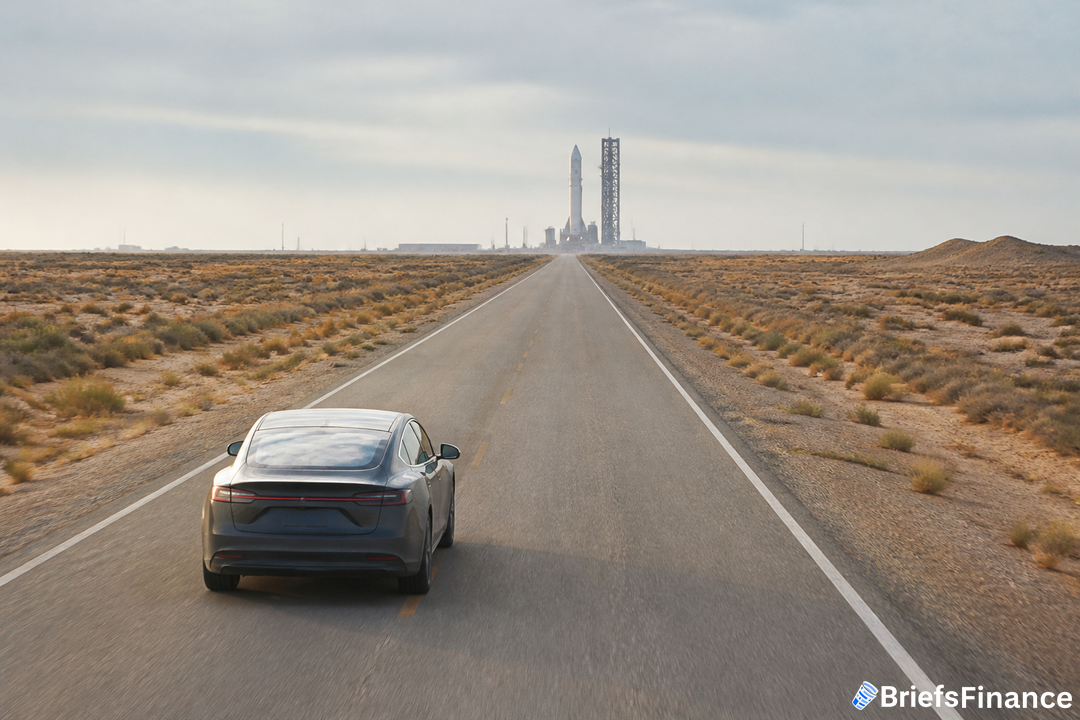
Musk put a lid on fresh commentary Wednesday, a day after he endorsed the idea on SpaceX's third quarter call. "Do I think it would be a good idea? Yes," he said Tuesday, noting that each company has established a special committee to explore a potential transaction.
He also warned he was "tap dancing through a minefield" by discussing the topic publicly. The spotlight on a tie-up outshone Tesla's earnings details, which featured lower automotive revenue and an even sharper decline in the energy business. Musk now emphasizes Tesla's outlook on robotaxis and humanoid robots rather than on car sales, yet the self-driving system remains in development, Robotaxi is still in its earliest stages, and Optimus is far from high-volume production.
How markets and analysts reacted
By Thursday's close, Tesla was down 3% on the day and 17% year to date. SpaceX sank 9%, giving back all of Wednesday's gains and sliding under the opening print from its June market debut.
William Blair's team framed the push as primarily about governance, not synergies. "We fully respect the overlap and collaboration potential, but view this is a truly unique case where Musk runs both companies almost as if they are one entity already," they wrote, adding, "We are hard-pressed to find a material opportunity that could only be achieved by an official combination."
Voting power and deal mechanics
The math favors SpaceX as the buyer. SpaceX is near a $2 trillion market cap, versus about $1.5 trillion for Tesla, which would point to a stock swap with SpaceX as acquirer and could maximize Musk's control over a combined firm.
Control today is starkly different across the two. At SpaceX, Musk has 10 to 1 supervoting shares and nearly 80% voting control. The company calls itself a "controlled company" in its IPO prospectus and said Class A holders do not have the same "protections afforded to shareholders of companies that are subject to all of the corporate governance requirements" of Nasdaq.
At Tesla, the latest proxy shows Musk beneficially owns 19.8% of shares. On SpaceX's call, Musk said that at Tesla "we will need a 50% vote of all shares - not just those who vote - but of all shareholders, and that's quite a high hurdle." He also described himself as a "conflicted party," saying he cannot join discussions between the two sides.
When headlines raise more questions than answers, sign up for the free Market Briefs newsletter to get clear daily context
The regulatory gauntlet
Even if both boards align, the approvals list is long. Former Tesla director Steve Westly told CNBC's David Faber on Thursday he expects the companies could move quickly to unveil a proposal, ideally "before the elections if they possibly can," with midterms less than two weeks away. "What are regulators going to say, and what will SpaceX have to do to get this done," he said.
Eric Talley, a Columbia Law professor, said a merger could help calm investor angst over how initiatives in robotics and AI are split between the companies. "That caused dyspeptic feelings amongst shareholders, and some lawsuits," he said. "I do think that shareholders of both companies stand to gain in resolving this, and it also protects against litigation over divided loyalties."
China looms large. Westly noted it is vital to Tesla's manufacturing base and made up 22% of last year's revenue. Talley said China's national security regulator would likely pay special attention, pointing to "probably hundreds of thousands of Teslas, computers on wheels, driving around right now," while SpaceX's Starlink sends data to the U.S. government. Kevin Li of Counterpoint Research in Beijing wrote that "Antitrust scrutiny, national security considerations (given SpaceX's military contracts), and cross-border regulatory reviews all present significant challenges."
The Musk playbook and why it matters
Supporters of the "Muskonomy" contend it's logical to place EVs and humanoid robots in the same corporate ecosystem as programs focused on reusing rockets, satcom capabilities, and AI. Musk has already been combining assets: earlier this year, SpaceX acquired xAI in an agreement that put the combined entity at $1.25 trillion in value and set it up for a record IPO. Last year, he brought together xAI and X, formerly Twitter, which he bought for $44 billion in 2022. In August, SpaceX finalized a $60 billion acquisition of AI coding startup Cursor.
The week before he floated the merger idea, Musk showed a refreshed Tesla Roadster that hovers using SpaceX tech. The reveal went out via livestream from a SpaceX test site, fueling speculation already in circulation. Tesla and SpaceX did not respond to requests for comment.
What this means for your portfolio
The bottom line: the merger narrative is now part of the investment case for both stocks. Prices already reacted, while Tesla's core results showed pressure in autos and energy. Key swing factors are straightforward to list and hard to clear: a Tesla vote requiring 50% of all shares outstanding, Musk's 19.8% Tesla stake versus nearly 80% voting control at SpaceX, and regulatory reviews spanning antitrust and national security in the U.S. and China. Add relative size - roughly $2 trillion for SpaceX and about $1.5 trillion for Tesla - and you have the contours of any eventual proposal, plus the hurdles it must clear.
Because every investor benefits from a little clarity, join our free Market Briefs for five minute updates on the economy and markets