Free NewsletterPro Login

AI's data center buildout is minting jobs for electricians, welders, and HVAC techs

Published Oct 24, 2026
Share:
Summary:
  • AI's physical footprint is fueling hiring across trades that keep facilities running for Anthropic, Meta, Amazon, OpenAI, and more.
  • ZipRecruiter says the average minimum listed pay for data center roles jumped 125.1% year over year to nearly $208,000; postings for welders and pipefitters climbed 164%.
  • Cushman & Wakefield estimates that adding 100 megawatts of data center capacity supports nearly 1,300 local jobs, around $110 million in yearly pay, $344 million in total output, and $187 million in regional GDP.

The hiring boom you probably did not expect

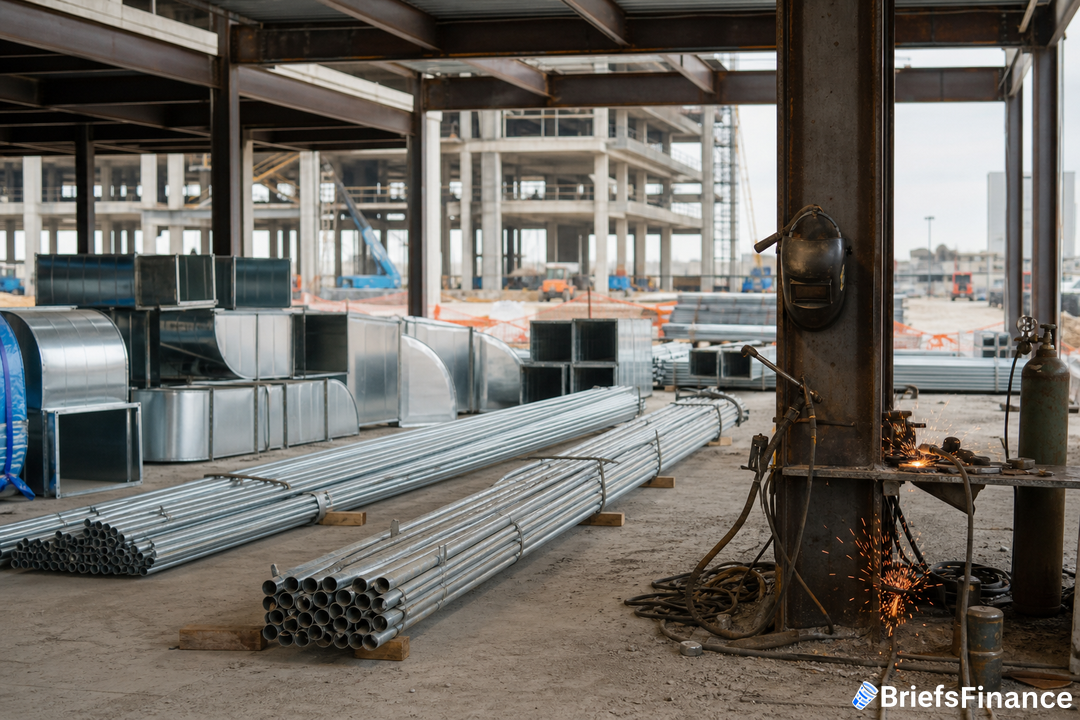
Talk about AI and jobs usually lands on automation. The part that gets missed: building and running the hardware behind AI takes people. As the likes of Anthropic, Meta, Amazon, and OpenAI scale up, the demand spills into HVAC technicians, construction crews, line workers, pipefitters, and more.

"These are occupations that are becoming increasingly important to the AI economy," said Maria Flynn, president and CEO of Jobs for the Future. She noted data centers are just one piece, with knock-on needs for transportation upgrades and a modernized power grid. "We are seeing major sources of demand that are converging at the same time," Flynn said.

Justin Sinkovich at Columbia College Chicago called the all-displacement storyline "incomplete." AI cannot pour concrete, wire substations, or install cooling, water, and piping systems.

Pay, scale, and where the jobs are

The paychecks are real. Flynn said an apprentice technician can make $40,000 to $60,000, while seasoned electricians can top $100,000. ZipRecruiter's Nicole Bachaud is seeing even bigger numbers at the high end: the average minimum pay posted for data center jobs surged 125.1% from a year ago to nearly $208,000. "This is suggesting that highly specialized, top-tier engineering roles are pulling the overall average up drastically," she said.

The lift is not just for engineers. Bachaud said postings for welders and pipefitters are up 164% year over year. She cautioned that as more centers are built, a small sample can magnify moves, but even a few roles per site add up as construction spreads.

The growth is not even across the map, either. Houston and Birmingham stand out, and places with room to build and fewer regulatory hurdles are positioned to keep attracting projects. Translation: tradespeople in Birmingham likely face a stronger market than those in Boston.

Big checks are landing in specific states. The work has to be local. "These projects create demand for on-site workers and therefore cannot be offshored or conducted remotely, unlike manufacturing and software," he added. He also sees a longer arc where AI helps enable smarter, more distributed energy systems, spurring demand for controls, batteries, microgrids, and related infrastructure.

Cushman & Wakefield puts some bounds on the spillovers. By its estimates, each additional 100 megawatts of data center capacity supports close to 1,300 jobs in the surrounding economy, roughly $110 million in annual pay, about $344 million in total output, and around $187 million in regional output after accounting for local value added.

Local tensions, tax fights, and whether the benefits stick

The national mood is chilly. Gallup reports that 70% of Americans do not want a data center in their area, and a New York Times/Siena survey done this month found roughly two-thirds opposed across party lines. Even in a fast-building state like Texas, 57% of voters said they would oppose one in their community, per the Texas Politics Project, a shift some analysts say could aid Democrats in the state. According to Data Center Watch, resistance spreading this year has led to at least 75 projects, totaling roughly $130 billion, being stalled or pushed back.

Policy pushback is following. Texas Governor Greg Abbott recently paused grid approvals for data centers and halted new environmental permits. In New York, Governor Kathy Hochul put in place the country's inaugural state-level prohibition on adding new data centers.

When industries reshape how things are built, stay informed with the free Market Briefs that summarizes markets in five minutes

The tensions helped prompt Oracle to submit a "force majeure" filing connected to its New Mexico data center associated with the broader Stargate AI initiative, seeking to delay payment if the site is not up and running by 2028. The project has faced community pushback in the run-up to the midterms as well as environmental objections, though Oracle says it is still on schedule.

Economists warn against counting chickens too early. Michael Hicks of Shenandoah University said backlash often stems from overpromising. "Most of the backlash is the result of developers being untruthful with local officials about potential effects, developers have woefully overpromised jobs and given tax breaks that are beyond obscene," he said. Longer term, he added, "Permanent labor market effects are muted.

Brookings research comes to a similar conclusion on nuance: construction brings local gains, but the size varies widely and depends on facility type, such as hyperscalers versus colocation sites. The researchers also flagged that the policy debate is moving faster than the hard evidence.

Taxes may be the quiet headline. Hicks said that if communities tax data centers at household rates, the property base can soar. He cited Loudoun County, Virginia, where average property tax bills have fallen by $3,400 since 2020 amid a massive buildout.

That influx can lower tax bills or pay for measures to mitigate noise and stress on the electrical grid. Meanwhile, some states are offering large tax incentives that critics say are unnecessary and may boomerang.

The investor angle

In plain English: the AI buildout is a jobs engine for skilled trades and select engineers, and suppliers tied to cooling, power, and construction see real demand. But the gains are uneven by geography and face polling headwinds, permitting pauses, and election-year politics that can slow starts or stall sites.

The bottom line: watch where projects concentrate - places like Houston and Birmingham today - and track policy moves like Texas's moratorium and New York's ban. For companies exposed to data center construction, grid upgrades, HVAC, and piping, revenue timing will follow those shovels, even as long-run local job effects look strongest during the build phase.

Because local hiring and infrastructure affect many lives, get the free Market Briefs newsletter for a quick daily economic update

Disclosure

Recent News

1 2 3 … 110

Get Market Briefs delivered to your inbox every morning for free!

No fluff. No noise. No politics. Just finance news you can read in 5 minutes.

Blogs

October 23, 2026
Are We in a Recession? 5 Threats to the Economy and Where the Money Is Moving
  • The S&P 500 is up about 13% this year, but without AI it's in a bear market, with nearly 40% of its companies down more than 20% for four months or longer.
  • Jackson, Briefs Finance's head of investing research, sees five threats: rising interest rates, sticky inflation, an economy propped up by AI, a struggling UK, and high oil prices.
  • The opportunities he's watching mostly sit outside the dollar: rising economies like Brazil and Indonesia, US-backed emerging market bonds paying 7% to 9%, and the shifts that fear creates.
Read More
October 16, 2026
How Boring Math Makes You Rich: The Briefs Money Spreadsheet, Explained
  • Briefs Money shows you what to do with every paycheck, and in what order: how much to spend, save, and invest, when to build an emergency fund, and which debt to pay off first.
  • The Climb to Wealth course walks you through the system step by step, and the Personal Finance Spreadsheet is where you track your own numbers.
  • Investing is one piece of building wealth. The system that gets money to your investments, and keeps it there, decides the outcome.
Read More
October 16, 2026
Common Investing Mistakes: Why a Stock Grade Is One Tool, Not the Whole Toolkit
  • The Briefs Score shows growth, income, and wealth preservation investors how well a stock fits their goal, with a separate letter grade for each one.
  • The most common mistake is treating the letter as an instruction. An A tells you a stock scores well for one goal, not that you should buy today.
  • Research works best as one input in a process you own. The grade shows how a stock stacks up. You supply the goal, the timeline, and the rules for being wrong.
Read More
October 16, 2026
How to Read a Company's Numbers Without a Finance Degree (Using Briefs Terminal)
  • Briefs Terminal lets you size up any public company in about ten minutes: what the stock costs, what it earns, how fast sales are growing, and what it pays you, all on one page.
  • It lines those numbers up against the company's closest competitors for you, so you can tell if a number is impressive or just average.
  • Below that are the income statement, balance sheet, and cash flow statement from the company's SEC filings, the latest news, and transcripts of its earnings calls.
Read More
October 16, 2026
What Type of Investor Am I? The Three Investor Archetypes, Explained
  • Briefs sorts its stock grades and monthly reports by three investor goals: growth, income, and wealth preservation. Pick yours and you know which report and which grade to read first.
  • Growth investors want stocks that beat the S&P 500. Income investors want to get paid in cash. Wealth preservation investors want stocks that hold up when the market drops.
  • The same stock can score an A- for one goal and a D- for another, so picking your goal comes before picking any stock.
Read More
October 16, 2026
How to Build a Stock Watchlist That Isn't Just Stocks You Heard About
  • A watchlist on Briefs Terminal lets you group stocks by the idea you're tracking and follow each one's price, one-day move, and 52-week high and low in one place.
  • Each list has its own name and description, so you always know why a stock is on it, and you can make as many lists as you have ideas.
  • The monthly growth, income, and wealth preservation reports under the Briefs Research tab hand you new themes to track that you didn't hear about online.
Read More
October 16, 2026
How to Choose an ETF That Matches Your Idea (Using the ETF Planning Tool)
  • The ETF planning tool takes an idea like "I want to invest in fast food companies," asks what you mean, and finds the ETFs that match, with the reasons, the holdings, and the sources.
  • Build a Plan then shows what your money could grow to in those ETFs over the years you choose, with conservative, expected, and optimistic estimates next to the S&P 500.
  • It gets you from an idea to an actual plan without researching dozens of companies one at a time.
Read More
October 16, 2026
Is This Stock a Good Buy? How to Use the Briefs Score to Tell If a Stock Fits the Way You Invest
  • The Briefs Score shows growth, income, and wealth preservation investors how well a stock fits their goal, with a separate letter grade for each one.
  • One stock can score very differently for each. Nvidia showed an A- for growth and a D- for income, because it grows fast and pays almost no dividend.
  • Seven sub scores under each grade show what earned the letter, so you can see exactly where a stock is strong or weak for your goal.
Read More
October 16, 2026
How to Tell an Asset From a Liability: The One Question to Ask Before You Buy Anything
  • The typical American household earned more in 2025 than in any year on record, yet only 30% of Americans say they could pay a surprise $1,000 bill from savings, so the problem isn't income but what the income gets spent on.
  • An asset puts money in your pocket and a liability takes money out, and the wealthy buy assets first, then let the assets pay for the fun stuff.
  • Before you buy anything, ask one question: does this put money in my pocket, or take money out of my pocket? Then you need a plan for the money you keep.
Read More
October 16, 2026
How to Build Your First $2,000 Emergency Fund and Wipe Out Every Debt Over 10%
  • Your first money goal isn't investing, it's $2,000 in its own account named Do Not Touch, built by moving 10% of every paycheck into it automatically.
  • More than a third of American adults couldn't cover a $400 surprise bill with cash or savings, according to the Federal Reserve, and that's how one bad day turns into years of credit card payments.
  • Once the $2,000 is there, attack every debt charging more than 10% interest, highest rate first, because you can't out-invest a 22% credit card so paying it off is the investment.
Read More
1 2 3 … 29
Share via
Copy link










