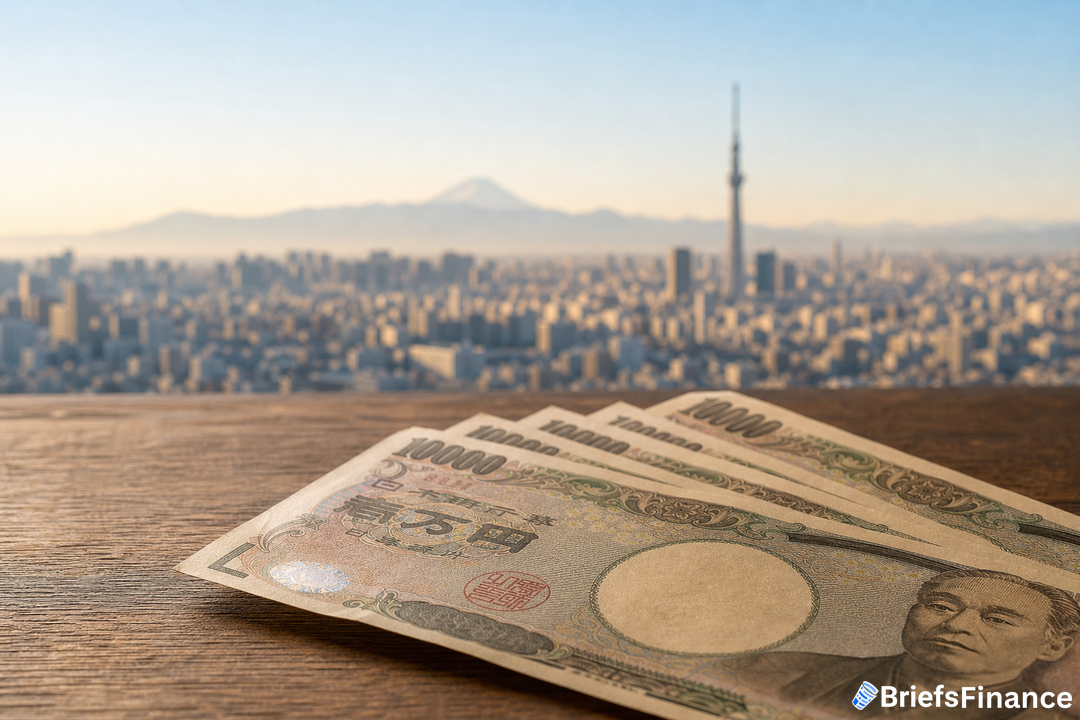
What happened to the yen
The yen sprinted to 154.06 per dollar in London, its strongest since February and above the high set after Japan and the US coordinated to prop it up. That jump extends a rebound that left the currency up 2.4% last week.
Why it moved
There was no obvious catalyst. Some traders pointed to the US holiday drying up liquidity and magnifying moves, while others focused on the decisive drop through 155. At State Street Investment Management, senior fixed income strategist Masahiko Loo commented, "The yen's break below 155 is significant given the level previously acted as a floor following past intervention episodes."
Positioning and flows amplified the swing. One trader with direct knowledge of the flows said a cluster of large stop-loss orders under 155 was triggered, forcing options desks to sell dollars and accelerating the yen's gains. Options were pointing in the same direction: on Friday, FX volatility touched the highest level since January, propelled by expectations around forthcoming BOJ and Federal Reserve meetings, while the cost to insure against yen appreciation hovered near cycle peaks.
Fundamentals helped too. The yen's rally kicked off last week as traders upped bets on BOJ rate increases and questioned how durable the prior joint intervention would be. Talk of the Government Pension Investment Fund potentially shifting its asset mix added to the tailwinds. Loo added that the start of a new month typically brings active real-money portfolio reallocations, which appear to be giving the yen another nudge.
What officials and strategists said
Caution flags are up. "Since the market tends to move sharply when New York is closed, we should remain vigilant for any downward pressure," said Motonari Sakai, who oversees foreign-exchange and financial-products trading as chief manager at Mitsubishi UFJ Trust & Banking. He also flagged levels to watch: "The downside target for USD/JPY is the February low of 154 yen. If it breaks below that, there are no notable downside targets until the low 152-yen range."
Japan's top FX official, Atsushi Mimura, said Friday his fighting stance on the yen remains unchanged. Separately, "some deterrence has been established" at 160 per dollar, said Geoff Yu, senior strategist at BNY. Van Luu, who heads Russell Investments' FI and FX solutions strategy, added, "It feels like this could be the start of something bigger," noting the effect of the first intervention had faded and that this latest leg appears more organically driven.
Understanding what moved a market beats knowing that it moved. Get the free Market Briefs daily newsletter and follow the drivers.
Strategists also highlighted broader trends. With oil prices sliding, Japan's terms of trade have improved, helping push USD/JPY beneath 155 at a time when domestic fundamentals appear somewhat firmer, according to Bloomberg macro strategist Skylar Montgomery Koning.
What this means for your portfolio
The yen's rebound after briefly sliding past 160 per dollar last week highlights nerves going into the BOJ's Sept. 18 policy decision, where a rate hike is widely expected. BOJ board member Hajime Takata kept investors guessing, saying a 25-basis-point move "is not necessarily set in stone," and suggesting more broadly that consecutive rate increases could also be on the table.
For anyone with yen in the picture - international funds, global expenses, even travel plans - this is a fast tape with pricier hedges and bigger intraday swings. Central bank signals, early-month portfolio flows, and tripwire levels like 155 are steering the action, which can make moves in dollar-yen feel quicker and larger than what we have been used to.