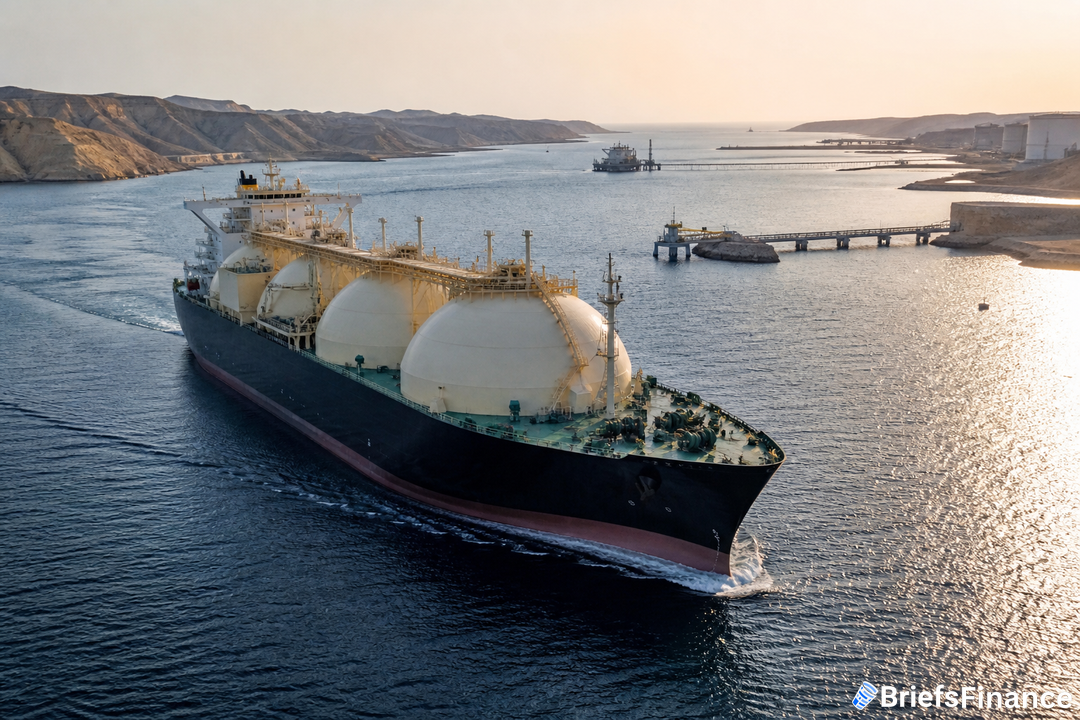
A rare move toward Hormuz
Ship-tracking data compiled by Bloomberg showed the Al Marrouna closing in on the Strait of Hormuz on Monday, listing Port Qasim in Pakistan and a possible arrival as soon as Thursday. If it proceeds, this would mark the first visible try at moving LNG out of the chokepoint since July. Whether it actually crosses is still uncertain, especially after another Qatari LNG vessel was attacked more than two months ago.
Qatar shuffles its fleet and keeps a pilot flame burning
Several empty Qatari LNG carriers have pivoted back toward the Persian Gulf, hinting that the producer is staging vessels for a restart of exports via Hormuz despite a recent US-Iran flare-up. After an attack on one of its tankers in late July, Qatar has largely frozen outbound sailings and has prolonged force majeure covering LNG cargoes destined for European and Asian buyers through the autumn, a step that has contributed to higher prices. At the same time, Qatar has kept loading LNG onto idle ships within the Gulf and continued sending fuel to Kuwait. That approach manages storage, keeps parts of its giant export system running at minimum rates, and preserves QatarEnergy's ability to ramp faster if tensions ease.
Prices jump and geopolitics swirl
European and Asian gas prices surged in recent days to the highest levels in more than three years, driven by fresh tanker strikes and ongoing snags to Qatari exports. Iran stated earlier Monday that an agreement with Oman to oversee shipping in the Hormuz strait is imminent. Traders are weighing whether that would tighten Tehran's grip on the waterway and what it might mean for a US response.
Rates, prices and policy all end up in your budget eventually. Get the free Market Briefs daily newsletter and see it coming.
Why this matters for your energy bill
If Qatari cargoes start moving again, it could ease the squeeze for price-sensitive South Asian buyers already dealing with shortages and power blackouts. For everyone else, steadier flows and clearer shipping lanes tend to take some heat off global gas prices. If flows stay snarled, expect the opposite.