What Volkswagen announced
Volkswagen said Monday it has a preliminary agreement with Aurelius Capital to refocus Osnabrück from carmaking to defense manufacturing. Finalization still depends on signed contracts, sign-off from the appropriate company governing bodies, and clearance from regulators. VW said it will share details on projects, timing, and employment as they are ready.
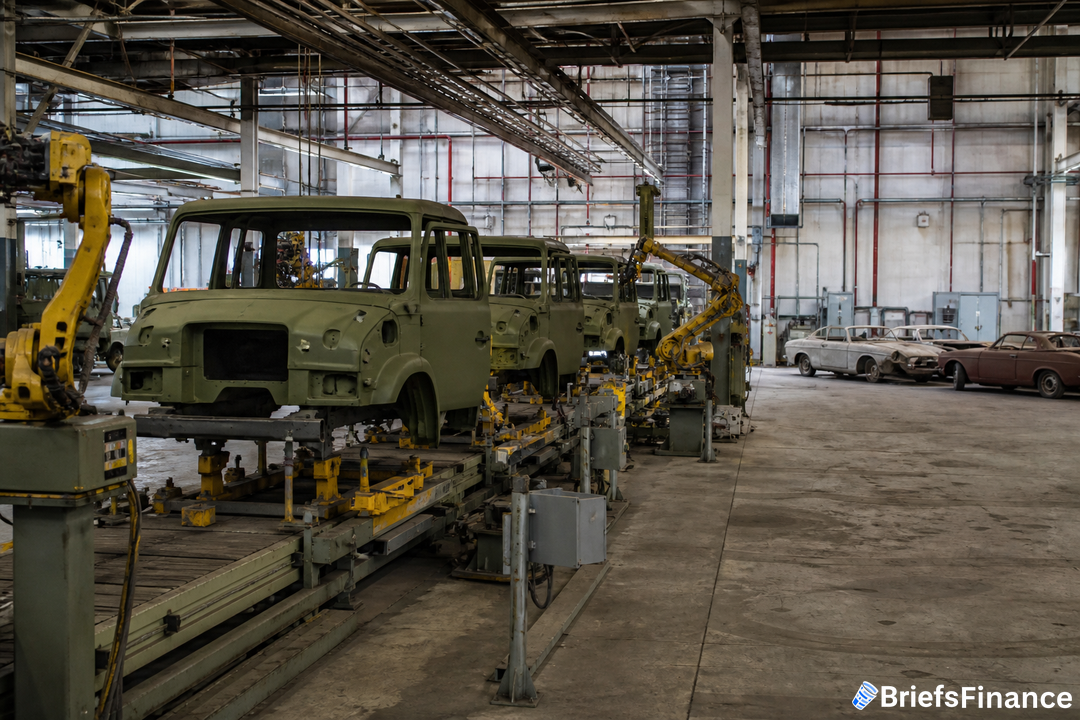
The site, which employs about 2,300 people, dates back 125 years and is slated to end vehicle production next year. It is also set to lose its final VW model when the T-Roc Cabriolet rolls off the line for the last time in 2027, pushing management to find a new industrial role. "We are taking an important step towards opening up a new industrial future for the site," CEO Oliver Blume said.
What gets built and with whom
The first anchor project would be a collaboration with Rafael Advanced Defense Systems to potentially make systems and components for air defense serving Germany and Europe. Last month, Bloomberg News said an agreement was nearing to build support gear for Rafael's Iron Dome - such as heavy-duty vehicles to carry missiles, launchers, and power generators. Rafael's Yoav Tourgeman said, "We are building a long-term industrial relationship with our German partners with the idea that the technology will be fully produced in Germany, to protect Germany and Europe."
The structure avoids a direct joint venture between Volkswagen and Rafael, which may have eased opposition from the Qatar Investment Authority. QIA, holding roughly 17% of VW's voting power and two seats on the supervisory board, has reservations tied to tensions with Israel that intensified after the Gaza conflict erupted in October 2023.
Markets move every day, and most of it never reaches you in time. Get the free Market Briefs daily newsletter and stay ahead of it.
Wider efforts and other potential deals
Volkswagen's broader overhaul, agreed with labor last week, targets trimming about 500,000 vehicles a year of excess capacity in Europe. Worker representatives have pushed back against closures. Blume has said the company will look for investors, industrial partners, and alternative uses where replacement vehicle programs do not pencil out. Osnabrück shows how outside partners and new product types can provide a path, though similar solutions for other plants without follow-on work have not yet materialized.
Separately, the Frankfurter Allgemeine Zeitung reported Monday that VW is working on a cooperation agreement with Poland's WB Group to modify Amarok pickups in Osnabrück for military applications. The plan reportedly covers about 4,000 units set up to mount drone launchers or command-and-surveillance modules for artillery systems. FAZ also said WB intends to work with VW's MAN truck brand, which is part of Traton SE, and that the modified pickups will debut at the MSPO defense fair in Kielce starting Tuesday.
Volkswagen and WB declined to comment. WB said it typically presents updates on new defense and security products at MSPO.
What this means for your money
Global stockpiles of air defense hardware have been drained, with pressure attributed to the US-Israeli war targeting Iran and to Russia's full-scale invasion of Ukraine, which could lift demand for systems like Iron Dome. For VW, turning a car plant into a defense hub relieves some restructuring strain and keeps a major German factory busy. For you, it is a real-time example of old-line manufacturers rewiring capacity for where demand is showing up, which can ripple through local suppliers and jobs just as much as it does earnings reports.