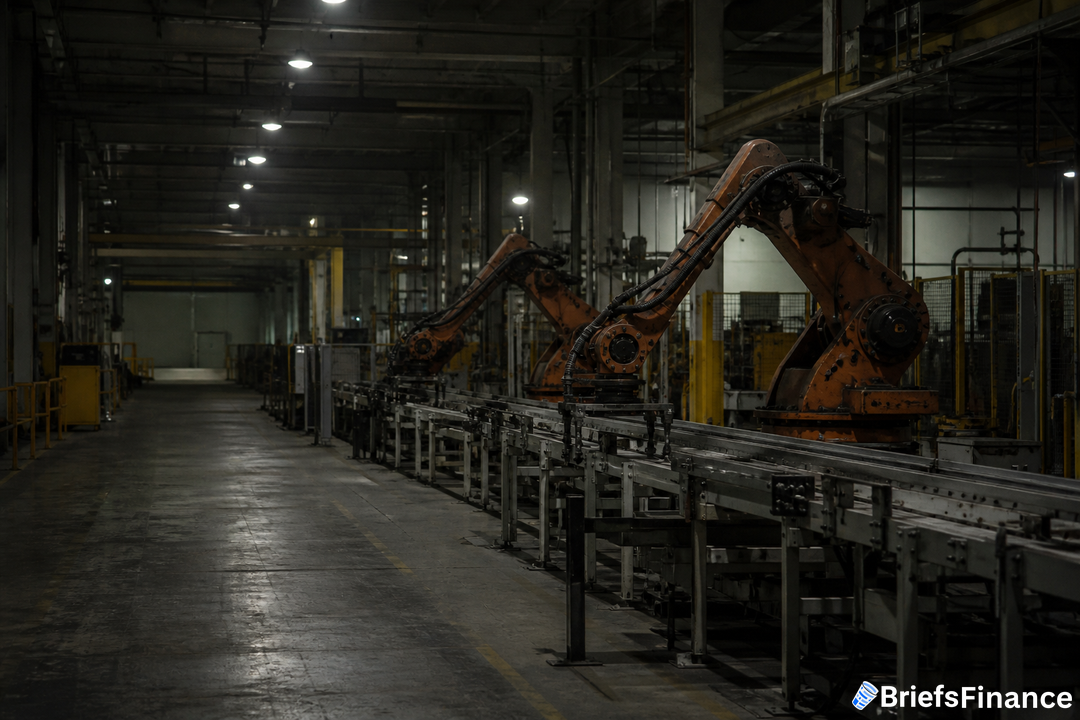
Industrial Output Slips Back
Germany's factories hit reverse in July, with output down 1.1% against expectations for a small increase. June's initially reported uptick was revised to flat. On a smoother three-month view, production was 0.4% higher than in the preceding period, but July's drop was the steepest since August 2025. The backward step underscores how uneven Germany's post-malaise recovery remains.
Cars, Orders, and Corporate Cuts
The statistics office pinned much of the July weakness on the auto sector, citing a production pause that stretched over several weeks. Even as that one-off drags, other corners of industry are perking up: factory orders rose for a third month in July, with builders of ships, rail equipment, and aircraft seeing the biggest lift. The car business, by contrast, continues to struggle.
Volkswagen's latest response to soft China sales, high costs, and idle capacity shows how tough it is. Last week, Volkswagen's supervisory board approved an extensive restructuring plan that will introduce 50,000 additional layoffs, with roughly half located in Germany.
Rates, prices and policy all end up in your budget eventually. Get the free Market Briefs daily newsletter and see it coming.
Outlook And What It Means For Your Money
After a run of better data, Bundesbank chief Joachim Nagel said last week that this year's growth could land around 1%, roughly twice what was expected three months earlier. Support from efforts to repair public infrastructure, bolster the armed forces, and channel funds into digital capacity helped lift second-quarter growth above expectations, with further acceleration anticipated.
The Economy Ministry cautioned on Monday that while manufacturing held up reasonably well in the second quarter despite higher energy costs, the fallout from the ongoing Middle East conflict is increasingly weighing on activity. It added that the outlook for a broader industrial rebound through year-end remains muted. Commerzbank's Joerg Kraemer noted that if you strip out the auto sector's one-off shutdown, output is essentially moving sideways at a low level, and he argued there will be no convincing recovery without a better business climate and more corporate investment.
Politics are in the mix, too. Economic strains have helped lift far-right support, with Alternative for Germany easily beating Chancellor Friedrich Merz's Christian Democrats in Saxony-Anhalt over the weekend. And if you like to go deeper, the weekly Everybody's Business podcast breaks down the big economic questions in plain English.
For your wallet, the takeaway is simple: manufacturing remains choppy, autos are a weak spot, but steady order growth in other heavy industries hints at some underlying demand. That mix can keep Germany's recovery on track, just not in a straight line.