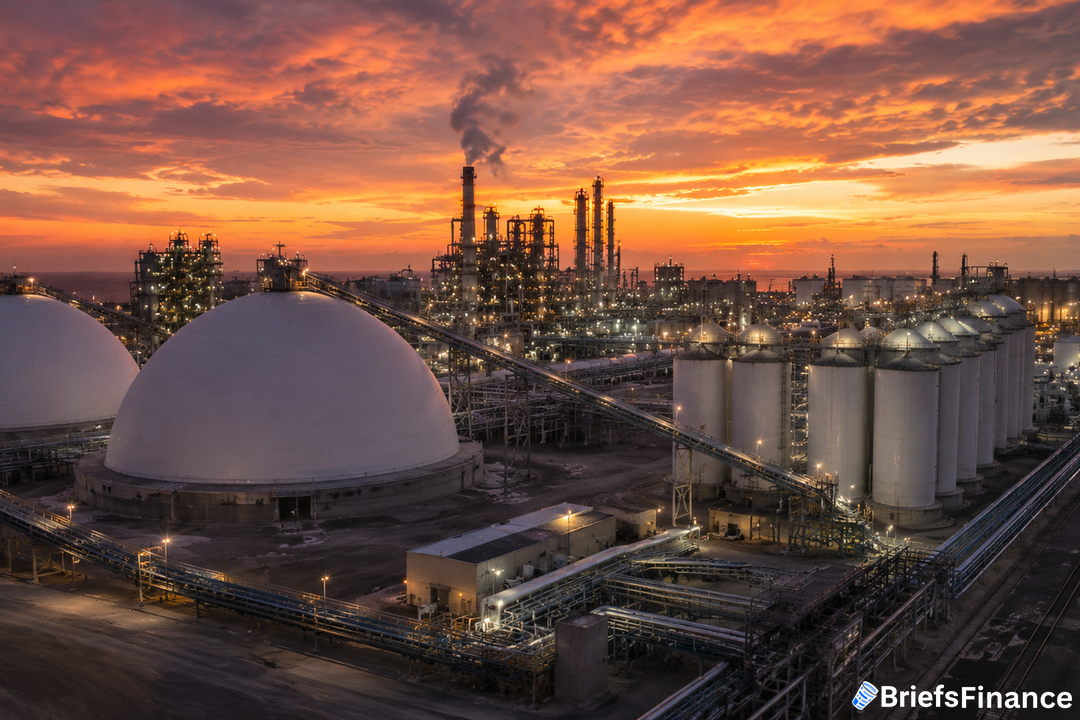
Rising fertilizer prices are being driven by Hormuz Strait disruptions that are constricting global supplies and straining agricultural markets.
The Middle East's fertilizer exports - amounting to about a quarter of the world's urea - rely heavily on the Strait of Hormuz as a vital shipping corridor. Amid the conflict, Iran halted ammonia production. Qatar halted output of urea, ammonia, and sulfur after its facilities were damaged.
India, too, cut back on urea and ammonia production due to reduced LNG availability. China's stricter export policies have further boosted prices. Sulfur prices have doubled since January, raising input costs.
Get your free investing masterclass bonus when you join Market Briefs, our free daily newsletter
In Morocco, OCP brought forward planned upkeep at its phosphate plants, probably reacting to sulfur and ammonia market disruptions.
Urea, a nitrogen fertilizer, recorded the largest gains. The World Bank anticipates urea increasing by almost 60% this year, then declining in 2027 once Middle East shipments rebound and natural gas costs drop.
In April, DAP (diammonium phosphate) prices climbed over 10%, reversing earlier stability. For DAP, the bank forecasts a near 6% rise in 2026 followed by a 10% decline in 2027, as new production facilities begin operating.
Muriate of potash (MOP) prices increased more than 5% in the first quarter and stood almost 17% above year‑ago levels. The bank forecasts MOP will rise about 12% in 2026 before easing 6% in 2027. Analysts expect supply to stay ample through 2026 and 2027, thanks to increased exports from Belarus after U.S. sanctions were relaxed, together with larger shipments from Russia, Canada and Laos.
The bank predicts prices will soften in 2027 as shipments rebound and new output enters the market. Yet upside risks remain if high energy costs endure and Hormuz‑related shipping and production problems stretch past the third quarter of 2026. During 2021 and 2022, fertilizer prices soared 100% and 55% respectively, when supplies were disrupted from Russia and Belarus.
These price surges are likely to ripple through global food production. Farmers, especially in import-dependent regions of Asia and Africa, face sharply higher input costs that could reduce crop yields and drive up food prices. The World Bank has previously linked fertilizer price spikes to worsening food insecurity, particularly for staple grains like rice and wheat, whose production relies heavily on urea and phosphates.
If Middle East shipping troubles persist, trade curbs expand, and input costs - notably natural gas - stay elevated, urea prices could exceed their 2022 average. Regarding DAP, a fresh round of Chinese export limits or an extended Hormuz closure could severely upset worldwide fertilizer flows. Over the longer horizon, substantial new capacity - particularly in Canada, the top global potash producer and exporter - could push potash prices even lower.
Subscribe to Market Briefs, our free daily newsletter, and claim your bonus investing masterclass