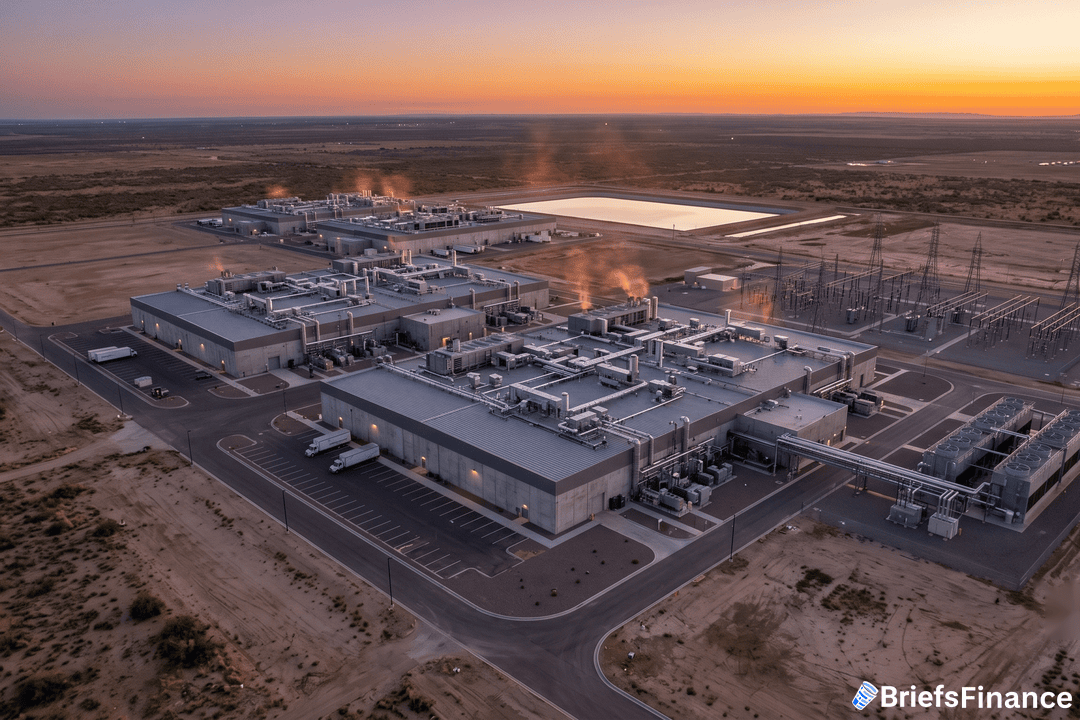
The greenhouse gas emissions of Amazon.com Inc. and Alphabet Inc.'s Google spiked in 2025, pointing to a growing problem for the hyperscalers: reconciling their climate goals with the massive amount of energy required to power AI, much of it still generated from fossil fuels.
The Numbers Behind the Spike
The company said its emissions from buying electricity rose 34%. Amazon attributed the rise to data center builds and delivery-related fuel consumption, according to its sustainability report.
Its Scope 1 emissions from its own operations, excluding purchased electricity, went up 20% compared to 2024, due in part to its expanding data center portfolio, the company said in its own sustainability report. Google reported a 25% rise in Scope 3 or supply-chain emissions from 2024 that it attributed mostly to hardware manufacturing and data center construction.
Other tech giants are also struggling. Microsoft Corp. pledged to match 100% of its hourly electricity consumption with purchases of zero-carbon energy by 2030. Bloomberg News reported earlier this year that the company has weighed scaling back the commitment because of data center expansion.
Get your free investing masterclass bonus when you join Market Briefs, our free daily newsletter
Microsoft and Meta Platforms Inc., in their most recent reports published last year, cited emissions jumps of 23% and 64% respectively. Meta set a net-zero target for 2030 across its entire value chain.
Data centers' hunger for power is helping drive up utility bills and spurring investment in US fossil fuel infrastructure, including natural gas power plants. SpaceX is using gas turbines to run its AI data centers in Tennessee and Mississippi.
Why AI Is the Culprit
Artificial intelligence requires enormous computing power. Every query, every model training session, and every data center server draws a huge amount of electricity. Much of that power still comes from coal and natural gas plants. Data center construction, hardware manufacturing, and fuel used for deliveries also add to emissions.
Sasha Luccioni, co-founder and chief scientific officer of Sustainable AI Group, put it bluntly: "We're essentially in a climate crisis and we should not be having emissions growth at all, arguably, and yet the data centers are going in the opposite direction."
Google acknowledged the problem in its own report. The company said its path to net-zero will not be linear, "given our AI infrastructure build out is currently accelerating faster than the grid is decarbonizing." Kara Hurst, Amazon's chief sustainability officer, said in its report: "While the speed and scale of AI adoption is unique - and the change is happening faster and more broadly than anything else we've encountered in our lifetimes - the need to stay stubborn on our vision and flexible on the details is familiar territory."
What to Watch
In spring, shareholders submitted proposals requesting that Amazon, Alphabet, and Google clarify how they plan to balance rising AI power needs with their climate pledges. The proposals failed to secure majority votes.
Subscribe to Market Briefs, our free daily newsletter, and claim your bonus investing masterclass