The Numbers Behind the Selling Spree
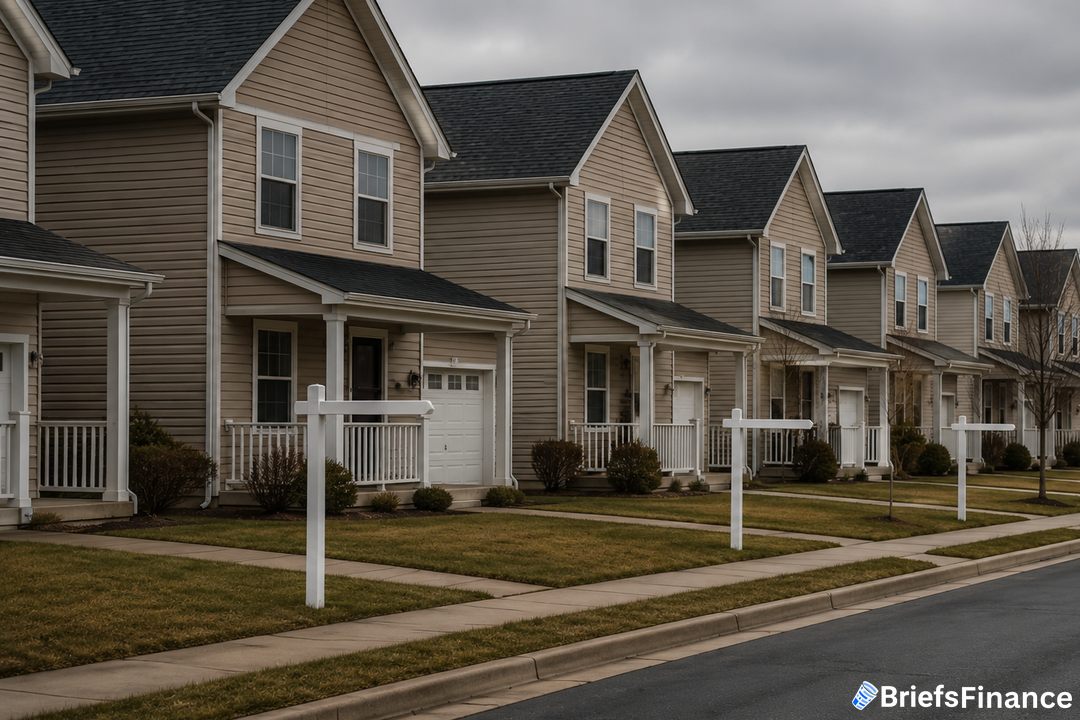
Wall Street landlords are putting rental homes on the market. The total asking price for those homes is $3.1 billion.
The rise coincides with a recent law that prohibits large-scale investors from buying single-family rental properties. Under the law, any entity that owns 350 or more such homes is considered an institutional investor and can no longer buy additional ones, unless it falls under specific exceptions, including build-to-rent. In the past, the industry commonly used a threshold of 1,000 homes. The law does not require investors to unload their existing properties.
Legislators accused these buyers (many paying entirely in cash) of driving up costs and pushing out ordinary homebuyers. The push for a prohibition received support from both parties. These major players began acquiring properties after the 2008 financial crisis.
The group of investors holding at least 350 properties collectively owns about 589,000 homes, representing 3.9% of the nation's 14 million single-family rental units. These investors are responsible for about 40% of net sales so far this year.
Get the market news that matters in a five-minute read with Market Briefs, our free daily newsletter
The new law, which took effect earlier this year (2026), replaced a previous informal threshold of 1,000 homes used by regulators. Lawmakers argued that large cash buyers were crowding out individual purchasers, driving up home prices. The legislation gained bipartisan support and is part of a broader effort to curb institutional ownership of single-family homes.
For context, their combined portfolio still totals roughly 400,000 homes.
VineBrook is offering roughly one-tenth of its portfolio - around 1,900 homes - for a total of $285 million. Invitation Homes has 549 homes for sale, AMH has 536, and Progress Residential has 143.
What Landlords Are Doing Instead
The largest landlords are already shifting their focus there. AMH began constructing its own rental houses in 2017. To date, the company has built over 14,000 rental units across 180 communities.
Stephen Scherr, co-president of Pretium (the parent company of Progress Residential), said: "We can buy build-to-rent, which is a predominant component of new housing. We can buy under various other exceptions including rent-to-renovate, where we improve the housing stock or we buy under a homeownership boost, where we give people an opportunity to transition where they want from renters to owners." He also said: "There is broad recognition now both by the White House and lawmakers, in an overwhelming majority, that private capital has a very big role to play for a component of the American population that wants to rent a home."
Price Cuts on Institutional Listings
Parcl Labs data shows that 38.7% of for-sale homes have had price cuts, while 54% of institutional listings have been reduced. Starting in early May, the typical discount has grown from roughly 3.1% to 4% of the list price. Among investors owning 350+ properties, 54% of their listings have been marked down.
Jason Lewris, co-founder of Parcl Labs, said: "The rate of for-sale change is something to keep an eye on. These numbers won't materialize into actual dispositions for months given how long the sales cycle can be, but it's the fastest read into institutional behavior." He added: "From what we can tell, given where U.S. home prices are, some of this is attributed to shifts in strategy - collect high dollar values off of top U.S. home values by culling underperforming assets and redirect that capital towards growth areas, i.e. build-to-rent, for example. The next six to eight weeks will be telling."
Join Market Briefs, our free daily newsletter, for a quick daily rundown of the markets