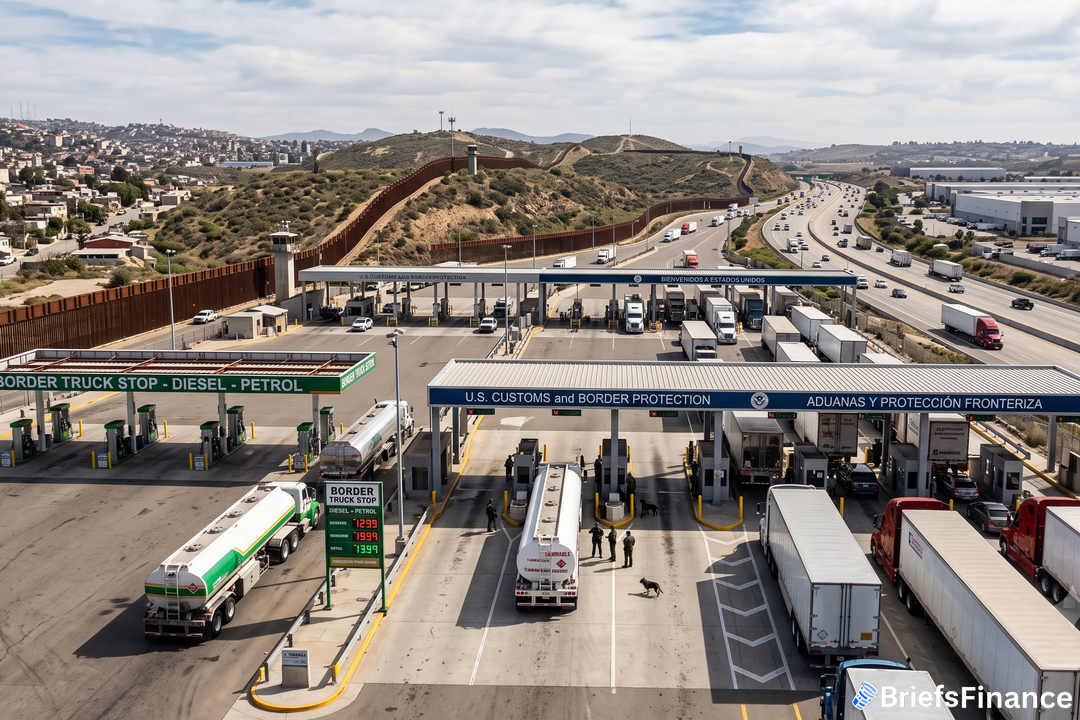
Drug cartels in Mexico have found a new cash cow: stealing fuel. The United States just hit the people who help them do it. On June 30, 2026, the Treasury Department announced sanctions on two individuals and nine companies linked to the Jalisco Nueva Generación (CJNG) cartel.
The Sanctions List
Oscar Guillermo Juraidini Silva allegedly employed front companies for the CJNG and falsely declared fuel imports to avoid paying Mexican import duties. J. Refugio Ruiz Villagomez is accused of owning companies that give kickbacks to criminals who oversee border crossings between the U.S. and Mexico. The two individuals are alleged to have moved tens of millions of dollars via the U.S. financial system with third parties tied to the CJNG.
The nine sanctioned companies include transportation, financial services, and real estate firms owned or controlled by the two men.
Why Fuel Smuggling Pays So Well
Fuel smuggling has become the cartel's biggest source of income after drugs. Mexico's outdated refineries are unable to satisfy the country's need for diesel and gasoline. Over 60% of the fuel consumed domestically comes from imports, mostly from the United States. That creates an opportunity for illegal cross-border trade.
Get your free investing masterclass bonus when you join Market Briefs, our free daily newsletter
The CJNG cartel has diversified into this trade. This illicit activity takes advantage of Mexico's reliance on imported fuel.
The cartels use a network of corrupt port officials, front companies, and false invoices to avoid detection. While drugs remain their primary business, the lower risk and high profit margins of fuel smuggling have made it an increasingly attractive alternative.
A Growing Crackdown
In recent months, Mexican President Claudia Sheinbaum has broadened the country's collaboration with American authorities to address this issue. This sanctions action is part of that effort. The U.S. Treasury's move targets not only the individuals directly involved but also the financial infrastructure that enables the smuggling. By freezing assets and cutting off access to the U.S. banking system, officials hope to disrupt the cartel's revenue stream.
The CJNG's expansion into fuel smuggling is part of a broader diversification of cartel operations. With traditional drug trafficking facing increased pressure from law enforcement, groups are seeking lower-risk, high-revenue activities. Fuel theft and smuggling exploit gaps in Mexico's energy infrastructure and tax enforcement.
The U.S. Treasury's sanctions target the financial arteries of these operations, aiming to choke off funding that supports violence and corruption. This approach aligns with ongoing binational efforts to undermine cartel economies.
Related: Analysis of Sheinbaum's Fuel-Smuggling Investigation and Its Potential Pitfalls.
Subscribe to Market Briefs, our free daily newsletter, and claim your bonus investing masterclass