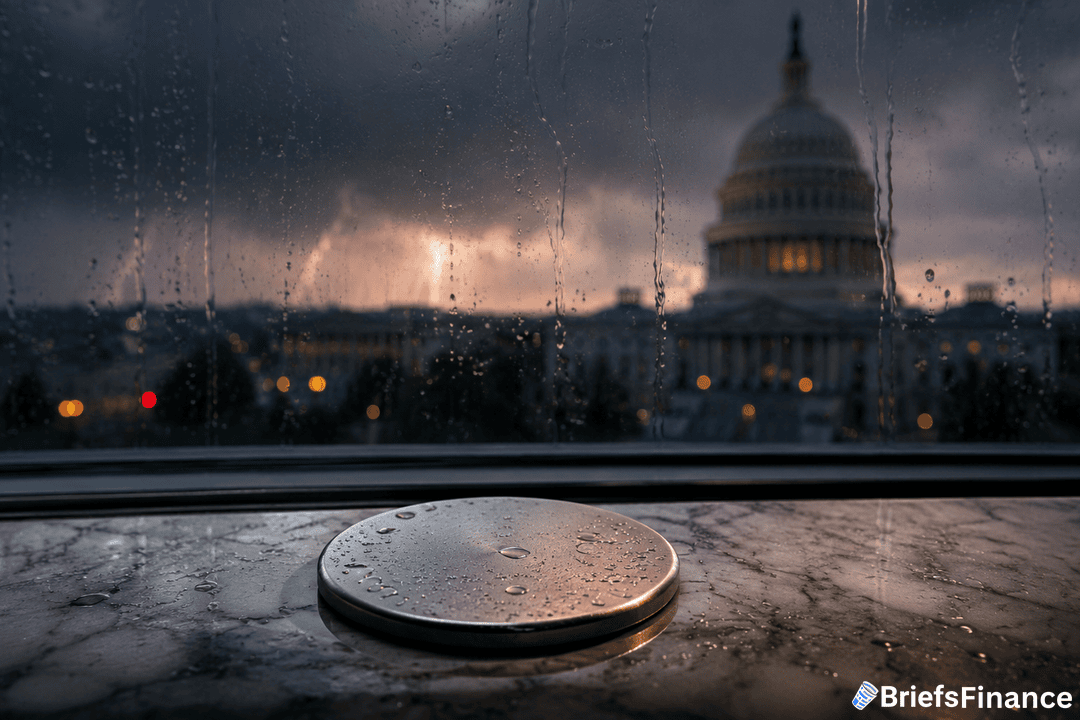
The Senate just voted to block a U.S. digital dollar. The odd part is that the Fed was never building one.
What The Bill Does
On paper, this is a housing law. It passed the Senate 85-5 on Monday night, and the aim is cheaper homes.
The vote was lopsided, a rare show of agreement. The bill is bipartisan, with Senate Banking Chair Tim Scott among its lead authors.
It tries to add new housing and lower costs for families. It also makes it harder for big Wall Street firms to buy up homes.
The House passed its own housing bill earlier this year. This version blends the two together.
But it carries a surprise rider, and that rider bans a digital dollar. In full, this is a central bank digital currency, or CBDC.
Think of a CBDC as digital cash made by the government. It would act like a government stablecoin, a coin tied to a steady value like the dollar.
Republicans pushed for the ban. They fear a digital dollar would let the government watch how people spend.
We break down what moves like this mean for your wallet in Market Briefs - five minutes each morning, plus a free investing masterclass when you join.
A Ban On Something That Doesn't Exist
Here is the strange part: the Fed never started a digital dollar project. It had only ever studied the idea, never tested it.
Its new chair, Kevin Warsh, calls the idea a "bad policy choice." So the ban mostly locks in a stance the Fed already held.
The ban is also short, and it ends in 2030. Lawmakers pushed it into the bill anyway.
Former Fed chair Jerome Powell once gave it a softer read. He said banks would run it, not the government.
That cuts against the spy fears that critics keep raising. But the bill text still goes wide.
It blocks the Fed from issuing a digital dollar, even through a bank. It even covers anything that works much like one.
Everyone Else Is Going The Other Way
Washington is shutting this door, but other big economies are not. The European Central Bank is building a digital euro.
A test run starts next year, and a full launch is set for 2029. China has gone further, and it already runs a digital yuan.
That yuan comes straight from its central bank. So the U.S. is stepping back just as its rivals push ahead.
For critics, that is the point. They see a digital dollar as a privacy risk, not a prize.
Supporters of the ban say it guards everyday spending. They also want the dollar to stay in private hands.
What To Watch
The bill now goes to the House. A vote could come as soon as Tuesday.
Its 85-5 Senate vote was the easy part, since the House still has to agree. If the House says yes, the bill reaches President Trump.
He already signed an order banning CBDC work in January 2025. Back then, he called a digital dollar a threat to privacy.
Until at least 2031, a U.S. digital dollar is off the table.
Want the money story behind the headlines each morning? Read Market Briefs free and get a 45-minute investing course thrown in as a bonus.