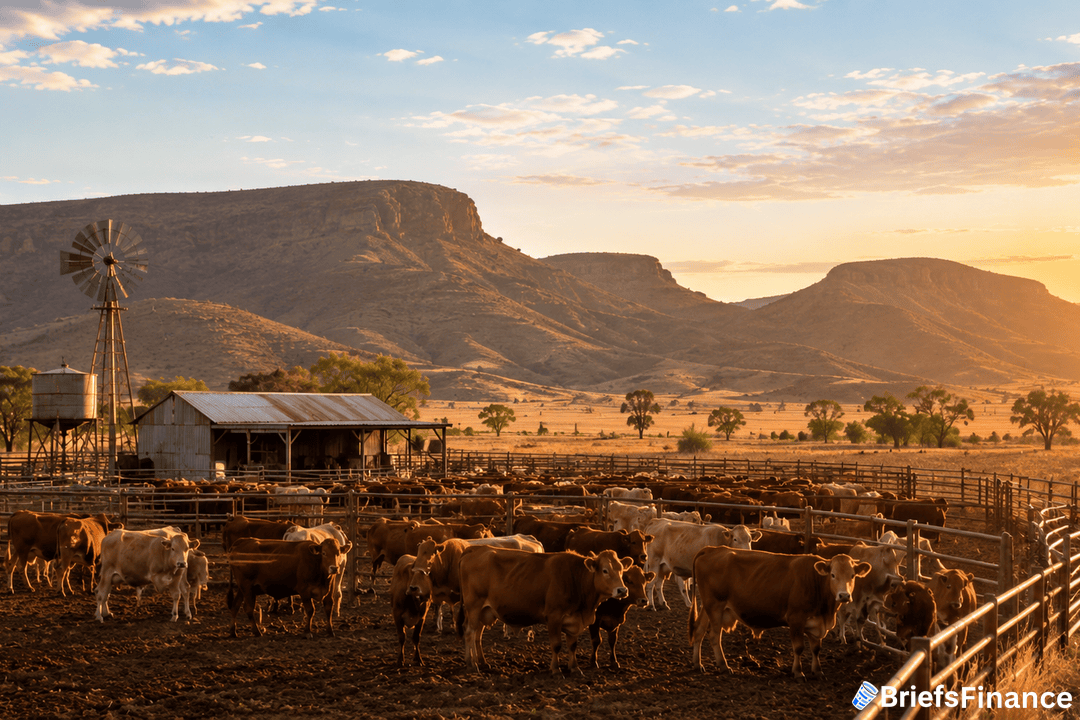
Australia just sold so much beef to China that it ran out of room - six months early.
China's Ministry of Commerce confirmed Friday that Australian beef shipments hit 100% of their 2026 safeguard quota on June 18. Starting Saturday, every extra kilo of Australian beef heading to China carries an additional 55% tariff that stays in place for the rest of the year.
The Quota That Sounded Comfortable Until It Wasn't
China set Australia's 2026 beef quota at roughly 200,000 tonnes back in December. It was supposed to last all year.
By June 1, Australian exporters had already used 90% of it, and on June 18 they crossed the line entirely. The 55% surcharge stacks on top of existing duties and effectively wipes out the zero-tariff preferences negotiated under the China-Australia Free Trade Agreement, which normally makes Australian beef cheaper for Chinese importers.
For an exporter, that's the difference between competing on price and being priced out. China is one of Australia's biggest beef customers.
If you like stories about how policy moves actually hit your portfolio, Market Briefs covers them every weekday morning, and you'll grab a free 45-minute investing masterclass when you sign up.
Why China Set The Trap In The First Place
China didn't pick a fight with Australia specifically - it built a fence around the whole industry.
The quota is part of a three-year safeguard system that kicked in on January 1, 2026 and runs through 2028. It covers six big beef suppliers: Brazil, Argentina, Uruguay, New Zealand, Australia, and the U.S., with each country getting its own ceiling.
The reason is simple: Chinese cattle and beef prices have been falling since 2023, and the country's farmers have been getting squeezed by cheaper imports.
Think of it as a doorway with a width limit. Once enough cargo has come through, the doorway narrows for the rest of the year - and Australia just hit the limit first.
What Happens To The Industry Now
Australian beef exports to China won't stop. But for the next six months, anything sent there has to swallow a tariff load that ranks among the steepest in global red meat trade.
For comparison, Brazil was only at 50% of its quota as of early May, according to MOFCOM. That gap is a real advantage - some Australian volume will likely reroute to Japan, South Korea, and the Middle East, while Brazilian exporters pick up share inside China.
Australia also has a fallback: the U.S. market, where Australian beef remains tariff-free under a deal signed in late 2025 and where shipments hit a record last year.
What To Watch
For investors, the read is in the cattle complex - the broader market of beef producers and processors. Australian beef stocks will feel the pressure first, and Brazilian beef stocks could be the offset.
The 2026 quota system was supposed to last a year. Australia just proved it doesn't have to. Now every other big exporter is counting its remaining tonnes.
Five minutes a day, every weekday morning - that's the Market Briefs newsletter, and joining gets you a free investing course as a bonus.