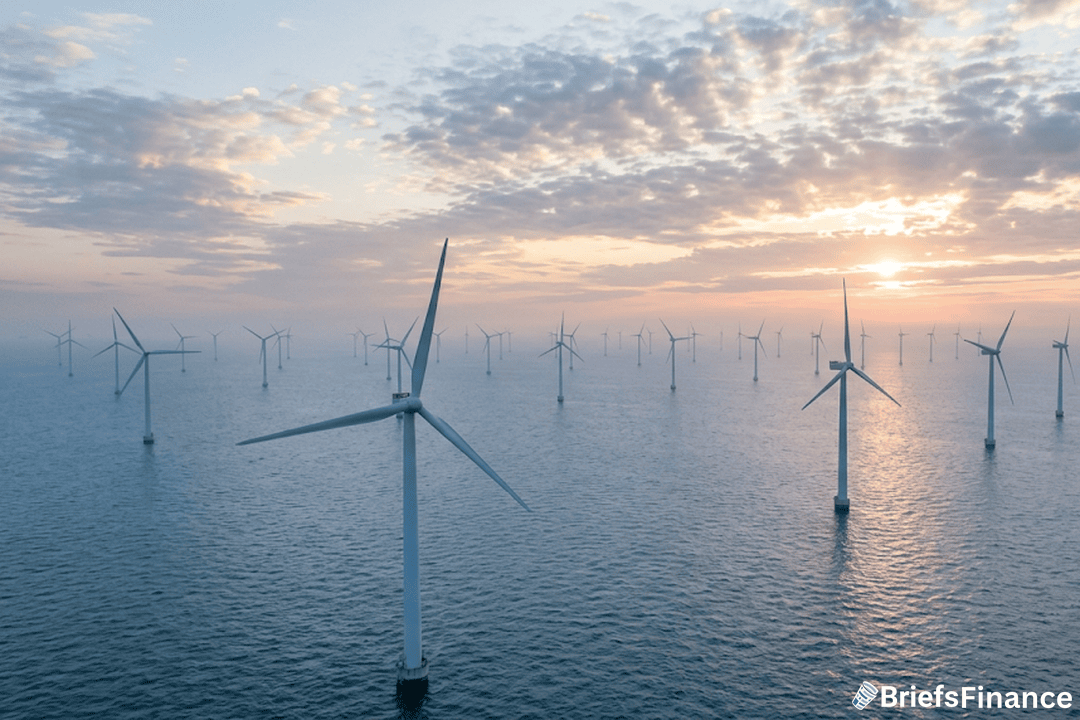
The modern wind industry was built in Europe. Now its own rules may be stopping it from defending that lead.
Vestas CEO Henrik Andersen says European competition laws are checking the wrong thing. Regulators only look at whether a merger hurts competition inside Europe, not whether it helps European companies compete globally. That, he argues, is blocking the cross-border deals the industry needs to survive.
"Europe could punch above its weight, but I think we are punching below our weight right now," Andersen said.
Europe was once home to the world's leading turbine manufacturers, hosting the biggest producers. The European Union has also been a pioneer in setting renewable energy targets, which helped create a robust domestic market for wind power. However, the global competitive landscape has shifted dramatically over the past decade, and the industry now struggles to maintain its edge.
The Scale Problem
Here is the issue in plain terms. To win big global contracts, a company needs to be huge. It needs factories, supply chains, and enough cash to take on projects everywhere at once.
European turbine makers like Vestas originally had that advantage. They invented much of the technology and scaled it up first.
Get the free Always Be Buying eBook and learn the simple system for building wealth on any income
But Chinese rivals have spent years catching up, and they have done it the old-fashioned way. They offer lower prices. Chinese manufacturers have been trying to break into major Western European markets for years, and they have already locked in substantial orders across Central Asia, the Middle East, and parts of Eastern Europe.
That has eaten into the market share that European firms once controlled. Andersen's fix is simple in theory: let European companies merge with each other to build one or two giants big enough to fight back.
"Size matters and that's the only thing," he said.
The Regulatory Wall
The problem is that Brussels is not cooperating. Andersen said there is no sign that will change. He compared the situation to waiting for a party that may never start. "I'm not wearing my dance shoes until we have music we can dance to," he said.
This is not a new debate. European politicians have talked for years about building "champions" in strategic industries, companies big enough to stand up to American tech giants and Chinese manufacturers. But talk has not turned into action, and the wind industry is running out of time.
The numbers show why it matters. As of August 12, 2026, the gap between Chinese and European wind manufacturers has widened to the point where European firms are being priced out of growth markets entirely. The technology may have been invented in Europe, but the scale is now being built in China.
What This Means for Your Portfolio
For investors, this is a story about which companies get to own the future of energy. Wind power is not a niche bet anymore. It is a core part of how the world plans to generate electricity, and the companies that build the turbines are positioned to cash in for decades.
If European regulators loosen up and allow mergers, the remaining European players could become much more valuable. They would have the size to compete on price, and they already have the technology and reputation. If the rules stay as they are, the market may keep drifting toward Chinese manufacturers, and European wind stocks could keep losing ground.
Either way, the next few years will decide who wins. The technology race is already over, and Europe won it. The manufacturing race is still open, and right now, Europe's own rulebook is the biggest obstacle in its way.
Download the free Always Be Buying eBook and start putting your money to work today