Free NewsletterPro Login
Free Live Investors Workshop
Seats limited
Tue, Sep 29.
The dollar is losing value.
Here’s how investors can still profit.
Hosted By
Jaspreet Singh
Founder, Briefs Finance
X

Warning: Undefined variable $stocks in /var/www/briefs.co/htdocs/wp-content/plugins/oxygen/component-framework/components/classes/code-block.class.php(133) : eval()'d code on line 448

Warning: foreach() argument must be of type array|object, null given in /var/www/briefs.co/htdocs/wp-content/plugins/oxygen/component-framework/components/classes/code-block.class.php(133) : eval()'d code on line 448

Warning: Undefined variable $funds in /var/www/briefs.co/htdocs/wp-content/plugins/oxygen/component-framework/components/classes/code-block.class.php(133) : eval()'d code on line 472

Warning: foreach() argument must be of type array|object, null given in /var/www/briefs.co/htdocs/wp-content/plugins/oxygen/component-framework/components/classes/code-block.class.php(133) : eval()'d code on line 472
/* the link was here */

Microsoft's New Texas Data Center Will Run On Gas, Off The Grid

Published Jun 23, 2026
Share:
Summary:
  • Chevron signed a 20-year deal to power Microsoft's Project Kilby data center in West Texas with natural gas.
  • The site will use about 2.7 gigawatts of power, enough to power more than 530,000 Texas homes.
  • The plant will not connect to the public grid, and power is set to start flowing in 2028.

Microsoft spent years buying clean energy for its data centers. So its newest move is a real turn.

The company is now teaming up with Chevron to power a giant new site with natural gas. And that plant will not even touch the public grid.

A Private Power Plant For AI

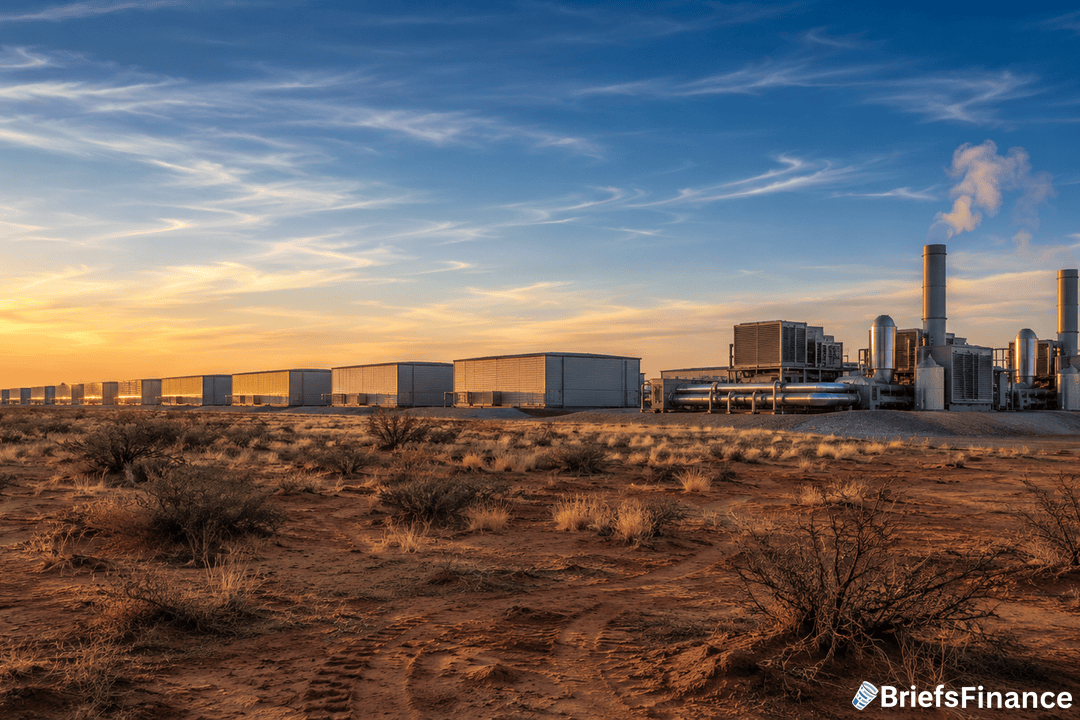
Chevron will fuel a Microsoft data center called Project Kilby. The site sits in Reeves County, out in West Texas.

The deal between them runs a full 20 years. It locks in gas for two decades.

The plant should pull about 2.7 gigawatts of power. That is enough to power more than 530,000 Texas homes.

In other words, that is a whole city's worth of power for one site. That is why Microsoft needs its own supply.

Most of that power comes from big gas turbines. GE Vernova is building them, with more from Caterpillar.

None of it will plug into the local grid. The power is set aside for the data center alone.

Think of it like digging your own well. You skip the city water line and pump your own.

The site gets a private supply, walled off from the public. That keeps it separate from nearby homes.

We unpack the energy bills behind the AI boom every morning in Market Briefs - it takes five minutes, and you get a free investing masterclass when you join.

Why Microsoft Turned To Gas

Microsoft has long leaned on clean power like wind and solar. That helps make up for the pollution its data centers create.

But AI needs power around the clock. Wind and solar do not run around the clock.

So Microsoft is now after steadier sources. It turned to nuclear once before.

In 2024 it backed the restart of the Three Mile Island nuclear plant in Pennsylvania. Gas is simply the next step in that hunt.

The reason is simple math. Microsoft plans to spend $190 billion this year, much of it on data centers.

That is 61% more than it spent last year. All those chips need power that will not blink.

Gas can run them day and night. Clean power alone could not keep up.

Why Build Off The Grid

Going off the grid also buys speed. Hooking a huge site to the public grid can take years.

A private plant lets Microsoft skip that line. It can build power and computing side by side.

The setup leans on cheap local fuel. Chevron can pipe in gas from the nearby Permian Basin.

That is the big oil and gas field in West Texas. It sits right next door to the project.

Chevron's new energy chief says the plant will not fight local users for power. Any extra it makes can later flow to the grid.

What To Watch

Project Kilby has not broken ground yet. Chevron expects to make a final call on it later this year.

If it moves ahead, power would start flowing in 2028. That timeline could still shift.

The bigger story is the shift in strategy. The company that once championed clean power is now buying gas for its AI.

Watch whether other tech giants follow it off the grid.

Want this kind of breakdown on the companies powering AI every morning? Join 350,000+ investors reading Market Briefs and get a 45-minute investing course thrown in as a bonus.

Disclosure

Recent News

1 2 3 … 88

Get Market Briefs delivered to your inbox every morning for free!

No fluff. No noise. No politics. Just finance news you can read in 5 minutes.

Blogs

September 29, 2026
Why Is Gold Going Down? A 5.2% Treasury Yield Just Took Its Job
  • President Trump rejected Iran's deal to reopen the Strait of Hormuz, oil prices jumped back up, and gold fell instead of rising.
  • Treasury yields hit their highest level in more than 20 years, so investors sold gold and bought Treasuries that pay interest.
  • Higher Treasury yields make the national debt, mortgages, car loans, and credit cards more expensive, with the Fed's next rate decision due October 28.
Read More
September 28, 2026
The Strategic Bitcoin Reserve: Why the Government Wants Bitcoin to Explode
  • The US government holds about 328,000 Bitcoin, worth roughly $25 billion, and since a 2025 executive order it keeps seized coins instead of selling them.
  • Washington wants a bigger pile of assets so its $40 trillion national debt looks smaller next to them, which lets it keep borrowing and spending.
  • Bitcoin's wild price swings, and a government holding a coin built to escape governments, are the two risks investors need to watch.
Read More
September 25, 2026
BRIEFS EXCLUSIVE: 43% Of Respondents Say Bills Outran Their Income Over Past Two Years
  • 43% of the 494 Market Briefs readers surveyed said their bills grew faster than their income over the past two years, even though 79% could cover a surprise $5,000 expense tomorrow.
  • Half of readers own gold or crypto, the two classic bets against a weaker dollar, and only 13% bought nothing at all in the last 12 months.
  • The median reader says it takes $150,000 a year to feel financially secure, about $62,000 above the U.S. median household income.
Read More
September 25, 2026
The Economy Is Booming. So Why Did Stocks and Bonds Fall Together?
  • S&P Global says the US economy is growing at its fastest rate since 2021, with corporate profits up 28.9% in a year, almost four times the historical average.
  • Stocks and bonds fell at the same time, which is not how the two markets normally behave, because Treasury yields above 5% now compete with stocks for investors' money.
  • Jaspreet Singh lays out three ways to invest through a shift like this: always be buying, buy the crash, or follow the money before it hits the headlines.
Read More
September 24, 2026
The 2026 Economic Reset Is Starting: Are We in a Recession, or Is the Pain Still Ahead?
  • The Federal Reserve has flipped from stimulating the economy to fighting inflation with higher interest rates, while the White House still wants growth at almost any cost.
  • The national debt tops $40 trillion, has outgrown the entire U.S. economy, and its interest payments are now the government's fastest-growing expense.
  • Higher rates bring pain for private equity, private credit, and speculative assets, but they open opportunities for investors holding cash, treasuries, and value assets.
Read More
September 23, 2026
Are We in a Recession? Without AI, America Might Already Be in One - and Washington Knows It
  • The White House attributes about three quarters of U.S. economic growth to AI, and many believe the economy would already be in a recession without it.
  • Washington has three reasons it cannot let the AI boom slow down: staying the world's superpower, outgrowing $40 trillion in national debt, and protecting a government stock portfolio worth billions.
  • Every market goes through booms and busts, and investors who understand the cycle get to buy the downturn instead of panic-selling with the crowd.
Read More
September 22, 2026
Will Interest Rates Go Down in 2026? Where the Money Moves Either Way
  • The Fed is leaning toward higher rates to fight 4% inflation, while the White House and a cracking job market push the other way.
  • If rates rise, money has tended to move toward short-term Treasuries, floating-rate loans, energy, banks and dividend payers.
  • If rates fall, it has tended to move toward gold, silver and Bitcoin, real estate, small caps, the S&P 500 and speculative bets.
Read More
September 21, 2026
How the Federal Reserve Makes Money - and Why It Just Posted Its Biggest Loss Ever
  • For 109 years the Federal Reserve created money, lent it to the U.S. government and handed the interest it collected back to Washington - almost $1 trillion in the decade starting in 2011.
  • Pandemic-era lending locked the Fed into earning about 2% on trillions of dollars while it now pays banks around 4%, producing a record loss of hundreds of billions in 2026.
  • The Fed covers its losses by creating money and the government covers its lost revenue by borrowing, and both feed the inflation that eats at the dollars in your account.
Read More
September 18, 2026
Kevin Warsh Just Defied Trump: What the Fed Rate Hike Means for Your Money
  • The Fed raised rates for the first time since 2023 in a unanimous vote led by Kevin Warsh, the chairman President Trump appointed to cut them.
  • Higher rates make the $40 trillion national debt, business loan resets and mortgages more expensive, but they strengthen the dollar and pay investors holding cash.
  • The war with Iran is pushing up oil, grocery and chip prices, another hike is likely in 2026, and recession talk is about to get louder.
Read More
September 17, 2026
Why America Bailed Out the Yen: The Japan Carry Trade, the Dollar and Your Mortgage Rate
  • In July 2026 the US sent money to steady the yen because Japan is the largest foreign owner of US debt, and Washington needs Japan to keep lending.
  • For decades the Japan carry trade let Wall Street borrow yen at essentially 0% and pour it into US stocks, real estate and Treasuries, and rising Japanese rates are shutting that off.
  • A weaker yen means fewer buyers for the dollar and for US debt, which pushes Treasury rates up and drags mortgage, car loan and credit card rates up with them.
Read More
1 2 3 … 27
Share via
Copy link












