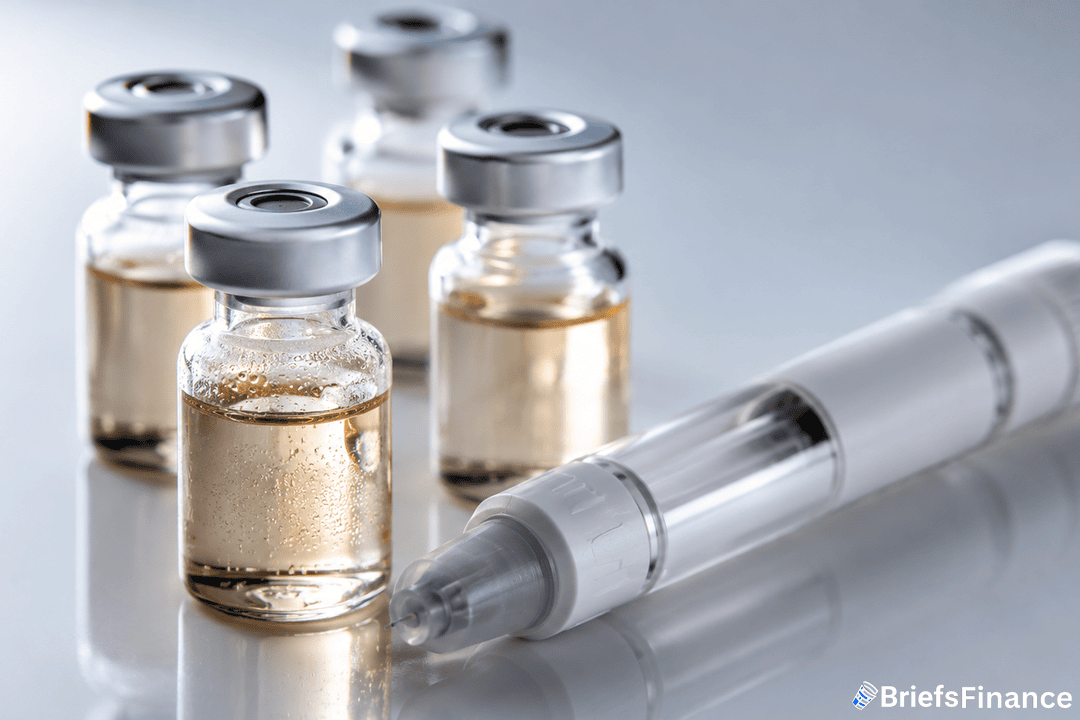
AbbVie just agreed to pay $10.9 billion for Apogee. The catch is that Apogee's main drug is not even on the market yet.
AbbVie still paid nearly 50% above its recent stock price. And the payoff will not reach profits until 2032.
What AbbVie Gets In Apogee
The prize is a drug called zumilokibart. It treats the swelling behind problems like serious eczema and asthma.
What makes it special is how rarely you take it. Patients may need just one shot every three or six months.
Compare that to Dupixent, a big seller from Sanofi and Regeneron. That drug is usually injected every two weeks.
So far fewer shots is a real selling point. Doctors and patients often prefer an easier schedule.
The market for these skin and lung drugs is huge. A strong new option could earn billions a year.
That edge is why AbbVie paid up. It offered $135.11 a share for Apogee.
The stock then jumped 47% before the market even opened. Analysts were not shocked by the move.
One at RBC said the deal makes sense. Apogee had long been seen as a likely buyout target.
Big pharma is in a buying frenzy as patents run out, and we break down what deals like this mean for investors in Market Briefs - five minutes each morning, plus a free investing masterclass when you sign up.
The Patent Clock Behind The Deal
AbbVie has a problem coming. Its older blockbuster Humira lost its patent shield.
Humira was once the best-selling drug in the world. Losing that shield left a huge hole to fill.
Sales of it then fell 49% as cheaper copies poured in. That is a brutal drop for any product.
Now two newer stars face the same fate. Skyrizi and Rinvoq head toward that same edge down the road.
Those two are now AbbVie's top sellers. Protecting that growth is the whole point.
Think of a patent like a fence around a drug. Once it comes down, rivals rush in and prices drop.
So AbbVie keeps shopping to stay ahead. It spent $10.1 billion on cancer-drug maker ImmunoGen.
It also bought brain-disease firm Cerevel. Apogee is just the latest move in that hunt.
Why The Price Looks Steep
Paying nearly 50% over market is a lot. But it shows how badly AbbVie wants a rival to Dupixent.
The deal is also a long game. AbbVie says it will not add to adjusted profits until 2032.
There is real risk here, too. Apogee is still years from selling the drug.
It must first finish its trials. Then it must win approval from regulators.
For now, the main business is still strong. That unit made over $30 billion in 2025, up 14% from the year before.
What To Watch
The deal is expected to close in the third quarter. The bigger biotech buying wave shows no sign of slowing.
Watch for more drug makers to chase deals as their top sellers near the patent cliff.
If you like seeing the why behind the headlines, get Market Briefs in your inbox each morning - it's a quick read, and a 45-minute investing course comes with it.