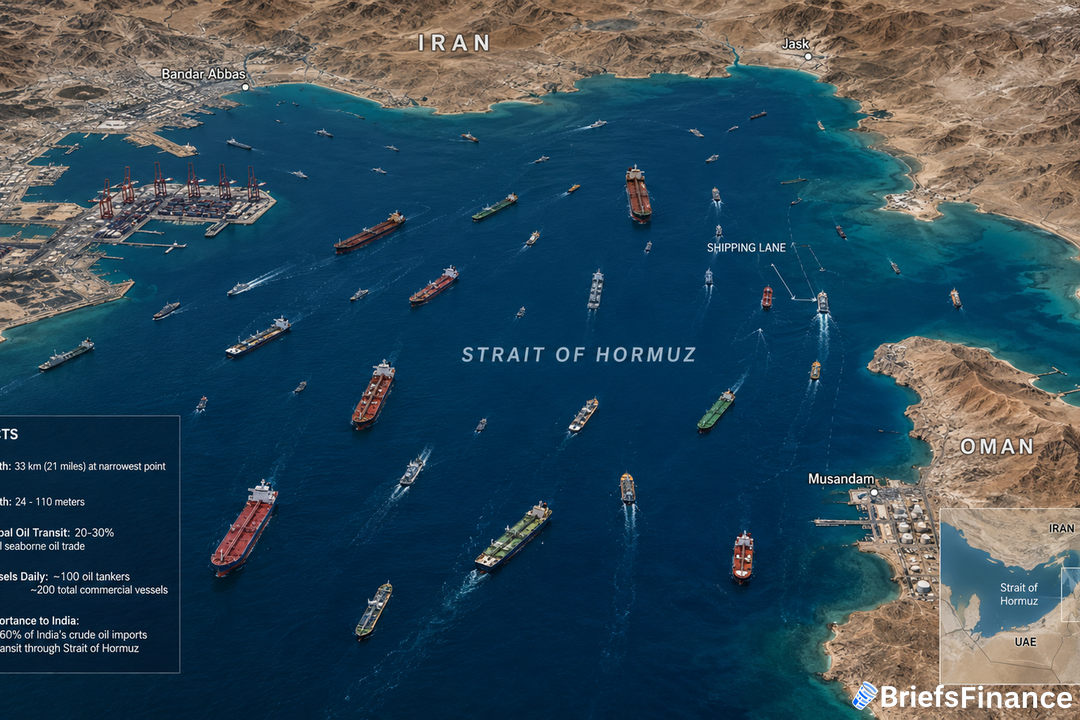
India imports almost all its crude oil. A war in the Middle East blocked its main shipping route and sent prices soaring. Following negotiations between Washington and Tehran, crude prices have declined. That shift is improving India's economic outlook.
Oil Prices Drop, Easing Inflation Risks
That blockade pushed crude prices higher and raised the risk of inflation.
However, after Washington and Tehran commenced negotiations, crude oil prices began to fall. Crude now trades at $69.47 a barrel, up 1.81% on the day. Lower oil prices reduce inflation pressure on India.
They also ease the strain on the country's external balance, according to the June review by the Department of Economic Affairs. The department said, "concerns over external stability should dissipate gradually" after talks between the US and Iran began.
Get your free investing masterclass bonus when you join Market Briefs, our free daily newsletter
The Reserve Bank of India faced a weaker case for an interest rate hike because inflationary pressures were easing.
Bond Inflows Surge, Equity Next?
Index-eligible bonds are those that meet the criteria to be included in global bond indexes, making them easy for foreign investors to buy.
The recovery in demand followed India's introduction of tax incentives for overseas buyers of government bonds and steps to strengthen the rupee. International investors have been accumulating Indian sovereign debt. The government review also noted that "it is a matter of time before equity flows turn positive as concerns over the global artificial intelligence bubble mount."
The blockade of the Strait of Hormuz in early 2026 demonstrated this vulnerability. The conflict underscored the need for a national strategy to hold buffer stocks of vital goods and raw materials, the government said.
What to Watch
The government said the conflict showed India needs a national policy to hold buffer stocks of critical raw materials. That would help during future supply shocks. The review pointed out that precipitation trends are growing more erratic, prompting a policy focus on water preservation and encouraging climate-adapted farming. Forecasts indicate that monsoon rains will pick up in July and August 2026.
India's reliance on imported oil has long made it vulnerable to geopolitical shocks. The recent blockade sent crude prices spiking, worsening the country's trade deficit and fueling inflation. With the subsequent diplomatic progress, oil prices have eased, providing relief to both consumers and the government's fiscal position. The $5.2 billion bond inflow in June reflects renewed confidence among foreign investors, who are now eyeing India's debt market as a stable bet amid global uncertainty.
Overseas investors have been purchasing Indian sovereign bonds, and equity inflows could become positive soon. Newly signed trade pacts are projected to boost foreign capital inflows as well. The easing of Middle East risks has given India room to focus on these longer-term challenges.
Subscribe to Market Briefs, our free daily newsletter, and claim your bonus investing masterclass