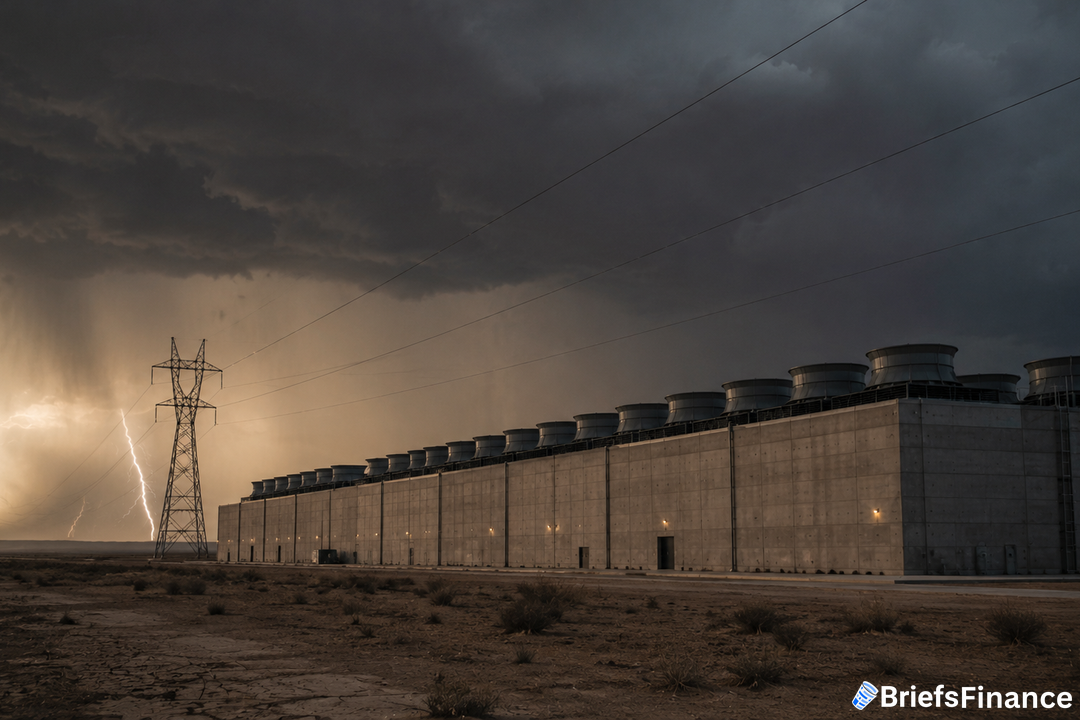
AI data centers need enormous amounts of electricity and cooling to run. Yet heat waves and storms are intensifying the strain on facilities that already operate at high temperatures.
Severe Weather Hits Data Center Construction
Zurich's builders' risk portfolio - insurance that covers projects during construction - now sees a third of its losses from severe weather. Patrick McBride, Zurich's head of international construction, says "severe weather is no longer something that can be treated as a background exposure." He notes that a single mile of exposed assets can be worth $3 billion. "Now we have $3 billion worth of assets with over a mile worth of exposure to these events," McBride said.
According to Joe Macejak, who leads U.S. property digital infrastructure for Marsh, climate risks are bound to affect the digital infrastructure revolution. "It's not a matter of 'if' climate risks will impact the digital infrastructure revolution, but rather how clients and stakeholders in the digital infrastructure industry identify, quantify, and manage these climate risks within their respective tolerances," Macejak said.
Heat Strains Cooling and the Grid
Cooling makes up around 40% of data centers' energy use even at normal temperature. Every degree Celsius that operators raise the chiller temperature cuts cooling energy costs by about 4%, according to Nvidia. That is why Nvidia's new AI servers can run their cooling liquid at 45 degrees Celsius - much hotter than before.
But extreme heat puts simultaneous pressure on data centers and the electricity networks they depend on. Mishal Thadani, CEO of Rhizome, said, "Extreme heat stresses data centers and the grid they rely on at the same time." He adds, "Data centers need the most energy exactly when the grid has the least available to give." In Turin, Italy, temperatures hitting roughly 38°C (100°F) in May led to thermal strain on the city's buried power lines, triggering multiple blackouts.
Data center operators are adapting. Microsoft designs facilities with redundant systems and real-time monitoring to handle extreme conditions. A Microsoft spokesperson says the company ensures reliability "in a wide range of environmental conditions, with site selection, redundant systems, and real-time monitoring helping manage risks from extreme heat and severe weather." Johnson Controls' Aaron Lewis says innovation is speeding up.
"We're finding ways to transfer the heat more effectively. The pace of innovation driven by the data center boom is going to allow us to operate under some of these conditions far into the future," Lewis said.
What to Watch
Operators are redesigning data centers to tolerate higher temperatures and more severe weather. Insurers like Zurich and risk analysts are focusing on identifying climate risks to protect billions in investments. The industry is racing to adapt, but the clock is ticking.