Free NewsletterPro Login
Free Live Investors Workshop
Seats limited
Tue, Sep 29.
The dollar is losing value.
Here’s how investors can still profit.
Hosted By
Jaspreet Singh
Founder, Briefs Finance
X

Warning: Undefined variable $stocks in /var/www/briefs.co/htdocs/wp-content/plugins/oxygen/component-framework/components/classes/code-block.class.php(133) : eval()'d code on line 448

Warning: foreach() argument must be of type array|object, null given in /var/www/briefs.co/htdocs/wp-content/plugins/oxygen/component-framework/components/classes/code-block.class.php(133) : eval()'d code on line 448

Warning: Undefined variable $funds in /var/www/briefs.co/htdocs/wp-content/plugins/oxygen/component-framework/components/classes/code-block.class.php(133) : eval()'d code on line 472

Warning: foreach() argument must be of type array|object, null given in /var/www/briefs.co/htdocs/wp-content/plugins/oxygen/component-framework/components/classes/code-block.class.php(133) : eval()'d code on line 472
/* the link was here */

US-Iran War Talks Pause After US Strikes, Oil Falls 4%

Published Jun 28, 2026
Share:
Summary:
  • Negotiations to end the US-Iran war paused on June 28, 2026, after US fighter jets struck 10 Iranian military targets.
  • Brent crude oil futures settled at $71.99, down 4.34%, and US West Texas Intermediate crude oil futures ended at $69.23, down 3.74%.
  • A 60-day ceasefire was supposed to be in effect during talks, but both sides accused each other of breaking it.

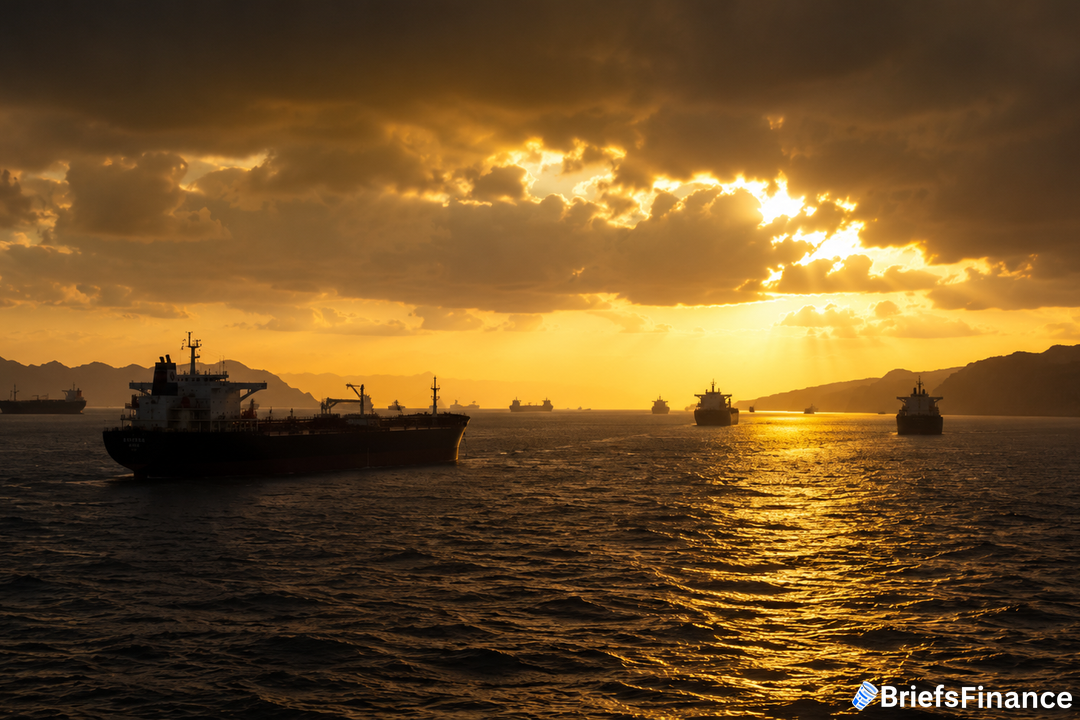
A ceasefire meant to bring peace instead sparked fresh fighting. Hours after talks began, US jets hit Iranian targets, and Iran struck commercial ships. Crude prices dropped sharply because concerns about supply diminished.

Context of the Conflict

The war between the US and Iran erupted on February 28, 2026, following a series of maritime incidents. Oil prices had consistently stayed above $70 per barrel until the recent ceasefire breakdown, with WTI crude last below that threshold on February 27. A memorandum of understanding was signed just over a week ago between Presidents Trump and Pezeshkian, aiming for a durable peace, but the ceasefire has proved fragile.

Ceasefire Breaks Down

The US and Iran had agreed to stop attacks and meet later that week, according to Axios. But on June 28, an unmanned aerial vehicle struck the Panamanian-flagged vessel M/T Kiku. That tanker was carrying over two million barrels of crude oil through the Strait of Hormuz. Furthermore, Iran attacked the Singapore-flagged freighter Ever Lovely in the strait near Oman's coast.

US Central Command reported early Sunday that American warplanes struck ten Iranian military installations near the Strait of Hormuz, after which President Donald Trump threatened Iran with annihilation, saying: "There may come a point when we are no longer able to be reasonable, and will be forced to militarily complete the job that we very successfully started. If that happens, the Islamic Republic of Iran will no longer exist!"

Get your free investing masterclass bonus when you join Market Briefs, our free daily newsletter

A senior Trump administration official pushed back, saying: "Nothing has been cancelled. Technical talks regarding the implementation of [memorandum of understanding] are on track for the coming days as planned."

Regional Fallout

Overnight, both Kuwait and Bahrain reported that missiles and drones were heading toward their territory. Kuwait's military stated that its air defense systems were "confronting hostile missile and drone attacks." Bahrain's Ministry of Foreign Affairs condemned "the renewed Iranian aggression against its territory, targeting it again with a number of ballistic missiles and drones, in a dangerous escalation." The statement added: "What Tehran is doing is not a passing act, nor an isolated incident, but rather a deliberate approach and a systematic pattern of repeated aggression."

The United Arab Emirates and Qatar, both frequent targets of Iranian projectiles, criticized Iran's strikes on Bahrain and Kuwait, calling them breaches of sovereignty and international law. Saudi Arabia likewise condemned the Iranian attacks and the threat to navigation in the Strait of Hormuz.

Even with the heavy assaults, CentCom reported that ships are still moving through the vital waterway.

According to CentCom, the American attacks targeted Iranian military assets including surveillance gear, communications networks, anti-aircraft positions, drone depots, and mine-laying equipment.

On Friday, US forces attacked Iran following Trump's claim that the Islamic Republic had committed a "foolish violation" of the ceasefire by using drones against ships in the strait.

The recent fighting comes more than seven days after President Trump and Iranian President Masoud Pezeshkian had inked a memorandum of understanding aimed at establishing a durable peace between the two countries.

What to Watch

Negotiators are still in Switzerland and could restart talks when permitted. Oil prices will likely stay sensitive to any new attack or ceasefire move.

Subscribe to Market Briefs, our free daily newsletter, and claim your bonus investing masterclass

Disclosure

Recent News

1 2 3 … 88

Get Market Briefs delivered to your inbox every morning for free!

No fluff. No noise. No politics. Just finance news you can read in 5 minutes.

Blogs

September 29, 2026
Why Is Gold Going Down? A 5.2% Treasury Yield Just Took Its Job
  • President Trump rejected Iran's deal to reopen the Strait of Hormuz, oil prices jumped back up, and gold fell instead of rising.
  • Treasury yields hit their highest level in more than 20 years, so investors sold gold and bought Treasuries that pay interest.
  • Higher Treasury yields make the national debt, mortgages, car loans, and credit cards more expensive, with the Fed's next rate decision due October 28.
Read More
September 28, 2026
The Strategic Bitcoin Reserve: Why the Government Wants Bitcoin to Explode
  • The US government holds about 328,000 Bitcoin, worth roughly $25 billion, and since a 2025 executive order it keeps seized coins instead of selling them.
  • Washington wants a bigger pile of assets so its $40 trillion national debt looks smaller next to them, which lets it keep borrowing and spending.
  • Bitcoin's wild price swings, and a government holding a coin built to escape governments, are the two risks investors need to watch.
Read More
September 25, 2026
BRIEFS EXCLUSIVE: 43% Of Respondents Say Bills Outran Their Income Over Past Two Years
  • 43% of the 494 Market Briefs readers surveyed said their bills grew faster than their income over the past two years, even though 79% could cover a surprise $5,000 expense tomorrow.
  • Half of readers own gold or crypto, the two classic bets against a weaker dollar, and only 13% bought nothing at all in the last 12 months.
  • The median reader says it takes $150,000 a year to feel financially secure, about $62,000 above the U.S. median household income.
Read More
September 25, 2026
The Economy Is Booming. So Why Did Stocks and Bonds Fall Together?
  • S&P Global says the US economy is growing at its fastest rate since 2021, with corporate profits up 28.9% in a year, almost four times the historical average.
  • Stocks and bonds fell at the same time, which is not how the two markets normally behave, because Treasury yields above 5% now compete with stocks for investors' money.
  • Jaspreet Singh lays out three ways to invest through a shift like this: always be buying, buy the crash, or follow the money before it hits the headlines.
Read More
September 24, 2026
The 2026 Economic Reset Is Starting: Are We in a Recession, or Is the Pain Still Ahead?
  • The Federal Reserve has flipped from stimulating the economy to fighting inflation with higher interest rates, while the White House still wants growth at almost any cost.
  • The national debt tops $40 trillion, has outgrown the entire U.S. economy, and its interest payments are now the government's fastest-growing expense.
  • Higher rates bring pain for private equity, private credit, and speculative assets, but they open opportunities for investors holding cash, treasuries, and value assets.
Read More
September 23, 2026
Are We in a Recession? Without AI, America Might Already Be in One - and Washington Knows It
  • The White House attributes about three quarters of U.S. economic growth to AI, and many believe the economy would already be in a recession without it.
  • Washington has three reasons it cannot let the AI boom slow down: staying the world's superpower, outgrowing $40 trillion in national debt, and protecting a government stock portfolio worth billions.
  • Every market goes through booms and busts, and investors who understand the cycle get to buy the downturn instead of panic-selling with the crowd.
Read More
September 22, 2026
Will Interest Rates Go Down in 2026? Where the Money Moves Either Way
  • The Fed is leaning toward higher rates to fight 4% inflation, while the White House and a cracking job market push the other way.
  • If rates rise, money has tended to move toward short-term Treasuries, floating-rate loans, energy, banks and dividend payers.
  • If rates fall, it has tended to move toward gold, silver and Bitcoin, real estate, small caps, the S&P 500 and speculative bets.
Read More
September 21, 2026
How the Federal Reserve Makes Money - and Why It Just Posted Its Biggest Loss Ever
  • For 109 years the Federal Reserve created money, lent it to the U.S. government and handed the interest it collected back to Washington - almost $1 trillion in the decade starting in 2011.
  • Pandemic-era lending locked the Fed into earning about 2% on trillions of dollars while it now pays banks around 4%, producing a record loss of hundreds of billions in 2026.
  • The Fed covers its losses by creating money and the government covers its lost revenue by borrowing, and both feed the inflation that eats at the dollars in your account.
Read More
September 18, 2026
Kevin Warsh Just Defied Trump: What the Fed Rate Hike Means for Your Money
  • The Fed raised rates for the first time since 2023 in a unanimous vote led by Kevin Warsh, the chairman President Trump appointed to cut them.
  • Higher rates make the $40 trillion national debt, business loan resets and mortgages more expensive, but they strengthen the dollar and pay investors holding cash.
  • The war with Iran is pushing up oil, grocery and chip prices, another hike is likely in 2026, and recession talk is about to get louder.
Read More
September 17, 2026
Why America Bailed Out the Yen: The Japan Carry Trade, the Dollar and Your Mortgage Rate
  • In July 2026 the US sent money to steady the yen because Japan is the largest foreign owner of US debt, and Washington needs Japan to keep lending.
  • For decades the Japan carry trade let Wall Street borrow yen at essentially 0% and pour it into US stocks, real estate and Treasuries, and rising Japanese rates are shutting that off.
  • A weaker yen means fewer buyers for the dollar and for US debt, which pushes Treasury rates up and drags mortgage, car loan and credit card rates up with them.
Read More
1 2 3 … 27
Share via
Copy link












