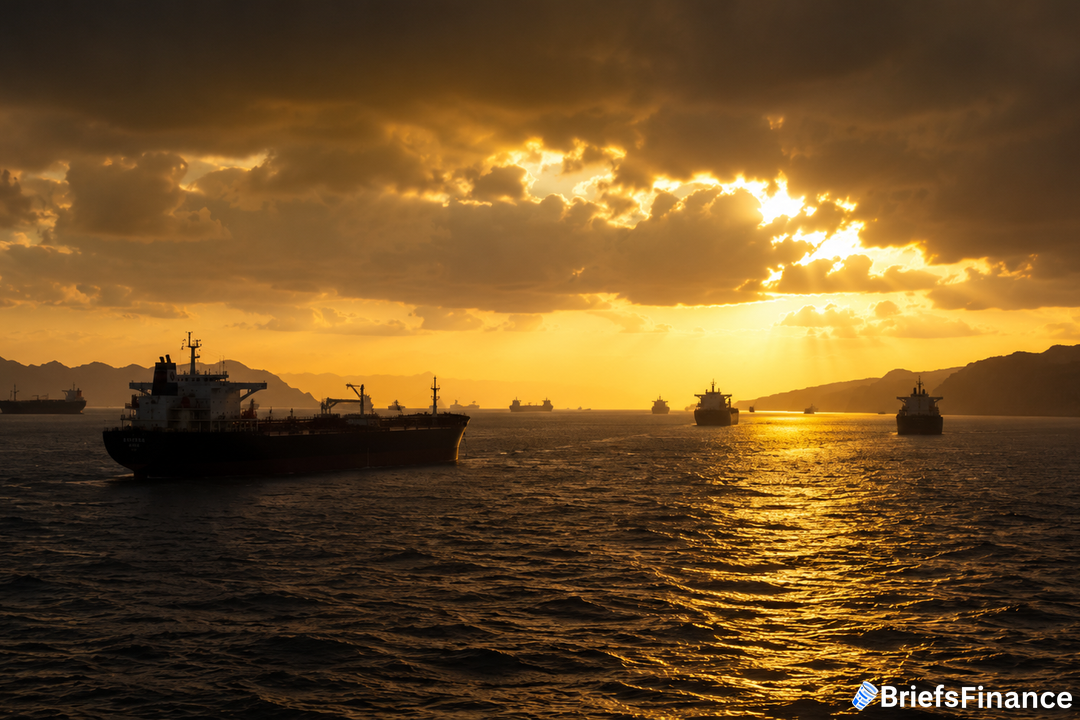
A ceasefire meant to bring peace instead sparked fresh fighting. Hours after talks began, US jets hit Iranian targets, and Iran struck commercial ships. Crude prices dropped sharply because concerns about supply diminished.
Context of the Conflict
The war between the US and Iran erupted on February 28, 2026, following a series of maritime incidents. Oil prices had consistently stayed above $70 per barrel until the recent ceasefire breakdown, with WTI crude last below that threshold on February 27. A memorandum of understanding was signed just over a week ago between Presidents Trump and Pezeshkian, aiming for a durable peace, but the ceasefire has proved fragile.
Ceasefire Breaks Down
The US and Iran had agreed to stop attacks and meet later that week, according to Axios. But on June 28, an unmanned aerial vehicle struck the Panamanian-flagged vessel M/T Kiku. That tanker was carrying over two million barrels of crude oil through the Strait of Hormuz. Furthermore, Iran attacked the Singapore-flagged freighter Ever Lovely in the strait near Oman's coast.
US Central Command reported early Sunday that American warplanes struck ten Iranian military installations near the Strait of Hormuz, after which President Donald Trump threatened Iran with annihilation, saying: "There may come a point when we are no longer able to be reasonable, and will be forced to militarily complete the job that we very successfully started. If that happens, the Islamic Republic of Iran will no longer exist!"
Get your free investing masterclass bonus when you join Market Briefs, our free daily newsletter
A senior Trump administration official pushed back, saying: "Nothing has been cancelled. Technical talks regarding the implementation of [memorandum of understanding] are on track for the coming days as planned."
Regional Fallout
Overnight, both Kuwait and Bahrain reported that missiles and drones were heading toward their territory. Kuwait's military stated that its air defense systems were "confronting hostile missile and drone attacks." Bahrain's Ministry of Foreign Affairs condemned "the renewed Iranian aggression against its territory, targeting it again with a number of ballistic missiles and drones, in a dangerous escalation." The statement added: "What Tehran is doing is not a passing act, nor an isolated incident, but rather a deliberate approach and a systematic pattern of repeated aggression."
The United Arab Emirates and Qatar, both frequent targets of Iranian projectiles, criticized Iran's strikes on Bahrain and Kuwait, calling them breaches of sovereignty and international law. Saudi Arabia likewise condemned the Iranian attacks and the threat to navigation in the Strait of Hormuz.
Even with the heavy assaults, CentCom reported that ships are still moving through the vital waterway.
According to CentCom, the American attacks targeted Iranian military assets including surveillance gear, communications networks, anti-aircraft positions, drone depots, and mine-laying equipment.
On Friday, US forces attacked Iran following Trump's claim that the Islamic Republic had committed a "foolish violation" of the ceasefire by using drones against ships in the strait.
The recent fighting comes more than seven days after President Trump and Iranian President Masoud Pezeshkian had inked a memorandum of understanding aimed at establishing a durable peace between the two countries.
What to Watch
Negotiators are still in Switzerland and could restart talks when permitted. Oil prices will likely stay sensitive to any new attack or ceasefire move.
Subscribe to Market Briefs, our free daily newsletter, and claim your bonus investing masterclass